The 1960s File Feature
A Boy Named Sue
A Boy Named Sue: Johnny Cash's Live Recording That Conquered the Pop Charts The story of how "A Boy Named Sue" became one of the most unlikely pop hits of 19…
01 The Story
A Boy Named Sue: Johnny Cash's Live Recording That Conquered the Pop Charts
The story of how "A Boy Named Sue" became one of the most unlikely pop hits of 1969 is inseparable from the story of how it was recorded: live, before a prison audience, with Cash performing from a sheet of paper because he had not yet memorized the words. The song had been given to Cash by the poet and cartoonist Shel Silverstein just days before the historic concerts at San Quentin State Prison in California, and Cash decided to perform it almost on impulse. What he could not have predicted was that the San Quentin recording would become one of the defining moments of his career, a seven-minute spoken-word story-song that the inmates greeted with an eruption of laughter and identification that the microphones captured in full.
Shel Silverstein, who was already known for his work in Playboy and for his children's poetry collections, had written "A Boy Named Sue" as a comic narrative about a man searching for the father who gave him a girl's name and abandoned him. Silverstein performed the song himself in folk clubs and knew it was funny, but he and those who heard his versions also understood that it required a particular kind of performance authority to elevate it beyond a novelty. When he offered it to Cash, he was betting that Cash's specific gravity, his baritone, his ability to make any story sound like personal testimony, would transform the song into something beyond comedy.
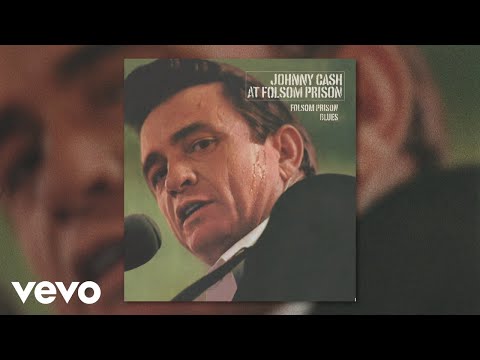
The San Quentin concert took place on February 24, 1969. Columbia Records released the live album Johnny Cash at San Quentin in June 1969, and "A Boy Named Sue" was extracted as the single that would accompany it. The combination of the live album and the single created a commercial event of the first order, one that demonstrated how completely Cash had reinvented his commercial fortunes with the prison concert format he had pioneered the previous year at Folsom Prison. The San Quentin album's success confirmed that the Folsom approach was not a fluke but a deliberate and repeatable strategy.
"A Boy Named Sue" reached number two on the Billboard Hot 100, an astonishing chart position for a seven-minute comedic narrative performed live in a prison. The song was held from the top spot, but its performance on the pop charts, which Cash had not regularly penetrated in some years, confirmed that the San Quentin material had reached an audience far beyond Cash's established country base. On the Billboard Country chart, the song performed even better, reaching number one on the country singles chart, a simultaneous crossover achievement that few country artists had managed with a single track of such unconventional length and format.
The production challenges were entirely those of the live recording. Cash's voice was in excellent form that evening, and the San Quentin audience, composed predominantly of men who had navigated difficult lives, responded to the song's themes with an authenticity that no studio crowd could have provided. When Cash reached the fight scene in the middle of the narrative and the inmates roared with recognition and approval, the recording engineers captured something that transcended normal pop production values. That audience noise became a feature rather than a liability, part of the song's irreducible atmosphere.
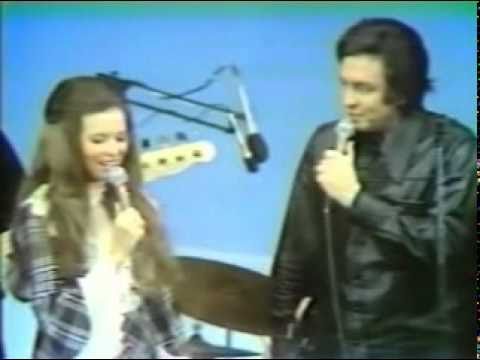
The song arrived at a transitional moment in Cash's career and in American popular culture. He had recently launched The Johnny Cash Show on ABC television, a program that brought him into millions of American living rooms each week and reestablished him as a mainstream cultural figure rather than a regional country act. "A Boy Named Sue" benefited from that visibility, reaching listeners who might not have sought out a Cash recording but who heard the song through television exposure and radio airplay simultaneously. The single was certified gold, confirming its commercial significance in an era when certification thresholds were high.
Critics at the time noted the song's formal innovation: it was essentially a short story set to music, closer to the oral storytelling traditions of American folk and country than to conventional pop song structure. Cash's reading of Silverstein's text demonstrated a complete mastery of comic timing, which surprised some observers who associated him primarily with the brooding gravity of his prison songs and hymns. The laughter the song generated was not nervous or awkward but genuine, a testament to Cash's ability to fully inhabit the comic register without sacrificing any of his inherent authority.
The song's themes resonated with particular force at San Quentin because many in the audience had their own complicated histories with absent or negligent fathers, with names and identities imposed on them without their consent, and with the violence that accompanied survival in hostile environments. Silverstein's comic treatment of those themes did not diminish their weight but rather made them approachable in a context where direct emotional address might have been unwelcome. The laughter the song produced was partly the laughter of recognition.
Silverstein's authorship of "A Boy Named Sue" brought him significant additional attention and helped establish his reputation as a songwriter whose abilities extended beyond his children's book work. He went on to write for other major artists, but his association with Cash's version of the song remained one of the most celebrated chapters in his creative biography. For Cash, the song stood as proof that his artistic range was considerably wider than his most devoted fans had perhaps realized, encompassing not only the dark majesty of "Folsom Prison Blues" and "Ring of Fire" but also the sharp comic storytelling of a Shel Silverstein narrative.
02 Song Meaning
Names, Fathers, and the Making of Men: The Meaning of "A Boy Named Sue"
"A Boy Named Sue" operates simultaneously as comic entertainment and as a serious exploration of male identity, paternal abandonment, and the unexpected ways hardship can produce resilience. Shel Silverstein's narrative follows a man who has spent his entire life bearing the weight of a humiliating name his father gave him before walking out of his life. The anger that name has generated, and the toughness that surviving it has built, form the psychological core of the song.
The father's logic, revealed in the climactic confrontation scene, turns the song's apparent moral upside down. Rather than apologizing for the cruelty of the name, the father explains that he gave his son a name that would force him to develop toughness, knowing he would not be around to protect him. This reasoning is simultaneously monstrous and, within the song's comic framework, almost defensible. Silverstein wrote the resolution with deliberate ambivalence: the son accepts the logic even as he acknowledges the injustice, and he decides not to take revenge. What he does decide, with darkly comic finality, is that if he ever has a son himself, he will name him something entirely different.
The song engages directly with American masculine mythology, particularly the idea that hardship and combat are the proper forges for masculine identity. The narrator's odyssey of bar fights and hardscrabble survival echoes the Western frontier mythology that Cash himself had explored throughout his career. By framing it as comedy, Silverstein made the mythology available for examination in a way that straight-faced treatment would not have permitted. The audience at San Quentin, many of whom had navigated precisely those kinds of formative hardships, understood this dimension immediately.
Cash's delivery transformed the text's comedic potential into something more complex, because his voice carried the weight of genuine experience with abandonment, addiction, and survival that gave even the comic passages an undertone of real feeling. Listeners in 1969 heard not only Silverstein's wit but also Cash's autobiography leaking through the character's story. That layering of performer and text was something Cash achieved regularly, but rarely more effectively than here.
The song also functions as a meditation on the arbitrariness of names and identities. The name "Sue" is not the narrator's choice but an imposition from someone who then absented himself. The struggle to survive that imposition, to build a self in spite of a label designed to invite ridicule, has a resonance well beyond its comic surface. For listeners who had experienced their own forms of externally imposed identity, whether through race, class, regional origin, or family circumstance, the song offered an oblique but genuine recognition.
Within Cash's catalog, "A Boy Named Sue" represents the comedic pole of his artistic range, a demonstration that the same voice capable of devastating seriousness in "Hurt" or "Man in Black" could handle Silverstein's timing with equal precision. The song permanently expanded the perceived scope of what a Johnny Cash recording could be, and it remains one of the most distinctive entries in an already remarkable discography. Its continued popularity as a live performance touchstone confirms that the combination of Silverstein's wit and Cash's authority created something genuinely irreducible, a piece of American comedy that also tells a real story about fathers, sons, survival, and the strange gifts that hardship sometimes leaves behind.
→ More from Johnny Cash
View all Johnny Cash hits →


→ More from the 1960s File
View all 1960s hits →




Keep digging