The 1950s File Feature
Don't Take Your Guns To Town
Don't Take Your Guns to Town — Johnny Cash Tells a Story That Never Gets OldEarly 1959, and country music operated as a space where narrative mattered enormo…
01 The Story
Don't Take Your Guns to Town — Johnny Cash Tells a Story That Never Gets Old
Early 1959, and country music operated as a space where narrative mattered enormously: where a song that told a story with moral weight and vivid characters could hold an audience the way a short story in a magazine might, passing from radio to jukebox to kitchen table conversation without losing anything in the translation. Johnny Cash, who was still only twenty-six years old but already one of the most compelling voices on the Sun Records roster, understood this instinctively. He had a knack for the plain-spoken tale that concealed real emotional complexity beneath its apparent simplicity, and no song in his catalog demonstrates that knack more cleanly than this one.
Cash at the Turn of His Career
By the time Don't Take Your Guns to Town arrived, Cash had already released a run of records that established the template for his entire artistic identity: the low, authoritative baritone; the churning, rhythmically insistent backing of the Tennessee Two; the preference for stories about working people, outcasts, and men in moral jeopardy. He was on the cusp of a major professional transition, moving from Sun Records to Columbia in a deal that would give him greater creative latitude and a substantially larger promotional apparatus. The timing gave this particular song an additional charge: it arrived as evidence that his creative gifts were deepening rather than settling into comfortable patterns.
The Song's Architecture
The track follows a young man named Billy Joe, too proud and too young to accept his mother's warnings, heading to town with his guns and meeting the consequences that she had foreseen. The narrative is spare in the way that the best folk and country storytelling always is: every line doing real work, nothing wasted, no detail present for decoration alone. Cash's vocal delivery doesn't editorialize or signal the moral explicitly; he simply tells what happened and trusts the listener entirely to feel the weight of the ending. That trust is itself a form of respect for the audience, and audiences returned it generously over the months the song stayed in rotation.
Chart Performance and Country Music Legacy
Don't Take Your Guns to Town debuted on the Billboard chart on January 19, 1959, entering at number 71 and climbing steadily over the following weeks. It peaked at number 32 on April 6, 1959, and spent eleven weeks on the chart overall. That eleven-week run for a country record in 1959 represents sustained, substantial audience engagement: radio programmers kept spinning it because listeners kept requesting it rather than moving on. The song became one of the defining recordings of Cash's early Columbia period and one of the works his name was most closely associated with for years after its release.
A Song That Predicted Its Own Relevance
The themes of youth, pride, violence, and the specific tragedy of a mother's warning unheeded have not lost a single degree of their relevance across sixty-plus years of American life. Don't Take Your Guns to Town gets cited alongside the great American narrative songs because its emotional mechanics are fundamental rather than era-specific. The specific historical moment gives the story texture; the universal human content gives it permanence. Press play and let Cash's voice do exactly what it was designed to do across the decades.
“Don't Take Your Guns to Town” — Johnny Cash's singular moment on the 1950s charts.
02 Song Meaning
What "Don't Take Your Guns to Town" Is Really About: Pride, Youth, and the Price of Not Listening
Johnny Cash constructed his narrative songs with the economy of a master short-story writer: every element serves the whole, and the emotional effect is delivered not through sentimentality or dramatic declaration but through the inexorable logic of events unfolding exactly as they must. Don't Take Your Guns to Town is among his finest achievements in this mode, a song whose meaning arrives fully formed and completely clear without ever being clumsily announced.
The Arrogance of Youth
The young man at the center of the story is not a villain. He is something more universal and more genuinely tragic: a boy who is too confident in his own toughness, too eager to perform his manhood in front of an audience that doesn't actually exist yet, too certain that the caution his mother expresses belongs to her fear rather than her hard-won wisdom. Every generation produces versions of Billy Joe. Cash describes him without condescension and without sentimentality, recognizing in him something fully human rather than simply foolish or corrupt.
The Mother's Warning as Moral Compass
The song's moral center is the mother, whose repeated warning gives the track its title and its narrative structure. Her instruction is simple, direct, and completely correct. Her failure to prevent what follows is not a failure of love or intelligence but of power: she can offer wisdom but she cannot compel its acceptance. That gap between knowing what is needed and being unable to provide it is one of the most genuinely painful recurring experiences in human life, and Cash captures it without lingering, without milking the pathos.
Violence and Consequence in the Country Tradition
Country music has always maintained a complex relationship with violence, treating it at different moments as glamour and as tragedy. Don't Take Your Guns to Town belongs firmly and without ambiguity to the second tradition. The violence at the song's end carries no excitement or triumph; it is the predictable consequence of a series of choices made for the wrong reasons by someone who refused the available guidance. The song argues, without ever stating it explicitly, that some deaths are preventable and that prevention requires the willingness to listen to people who love you.
Timeless Because of Its Specificity
The song's continued resonance comes partly from the specificity of its period detail and partly from the universality of its emotional architecture working together rather than against each other. The Western imagery and mid-century setting give the story a concrete texture that keeps it from floating into abstraction. The universal human content gives it the permanence that distinguishes a classic from a period piece. Together they explain why a sixty-five-year-old country single still finds new listeners every year and still lands with the same quiet force.
→ More from the 1950s File
View all 1950s hits →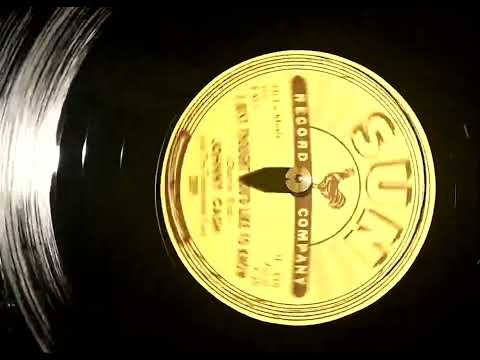


Keep digging