The 1960s File Feature
Daddy Sang Bass
"Daddy Sang Bass" — Johnny Cash and the Gospel of Family Harmony The Man in Black Finds a Different Kind of Power Late 1968 was an extraordinary moment for J…
01 The Story
"Daddy Sang Bass" — Johnny Cash and the Gospel of Family Harmony
The Man in Black Finds a Different Kind of Power
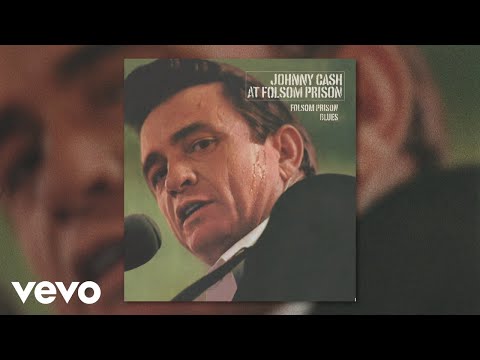
Late 1968 was an extraordinary moment for Johnny Cash. His comeback was well underway, anchored by the recording of the At Folsom Prison album earlier that year, which had reintroduced him to a broader audience as one of American music's most compelling live performers. The wild energy of that record had reminded the industry and the public alike what Cash was capable of when stripped of commercial pressure and placed in front of an audience that met him on equal terms. "Daddy Sang Bass" arrived in the immediate wake of that triumph, and it offered something quite different: warmth, family, and the simple beauty of voices singing together across generations.
"Daddy Sang Bass" was written by Carl Perkins, the rockabilly pioneer whose early Sun Records recordings had helped shape the sound of American music in the mid-1950s. That connection between Cash and Perkins was natural: they had been labelmates at Sun Records in the early days of their careers, part of the same creative environment that also produced Elvis Presley and Jerry Lee Lewis. Perkins writing a song that Cash would make famous carried a resonance of old friendships and shared history that gives the recording an additional layer of meaning.
A Song About Singing
What distinguished "Daddy Sang Bass" from much of Cash's catalog was its subject matter: not prison or hardship or the darkness of the human condition, but the simple, sustaining pleasure of family music-making. The song described a family gathered together in the act of singing gospel harmonies, each member taking a different part, the whole becoming something larger and more beautiful than any individual voice could produce alone. It was a vision of domestic and spiritual life that had deep roots in American religious and folk traditions.
The use of the familiar gospel phrase "will the circle be unbroken" connected the song explicitly to a much older tradition of American sacred music, invoking themes of family continuity, mortality, and reunion that had animated gospel singing for generations. By drawing on that tradition, the song situated itself within a lineage of American musical expression much older than rockabilly or country pop, giving it a gravitas that simpler commercial recordings could not achieve.
The Chart Journey Across the Year's Turn
The chart story of "Daddy Sang Bass" spans the turn from 1968 to 1969, adding a kind of symbolic resonance to its timeline. Debuting on the Billboard Hot 100 on December 28, 1968, at position 64, the record worked its way upward through the new year. The peak of number 42, reached on February 22, 1969, came after 10 weeks on the chart, a solid run that confirmed the song had genuine crossover appeal beyond the country market where it was performing even more strongly.
On the country chart, "Daddy Sang Bass" was one of Cash's biggest records of the period, demonstrating the kind of crossover between sacred and secular country audiences that only a few artists could reliably achieve. The Hot 100 showing reflected listeners outside the core country audience finding their way to a record that spoke to something broadly human rather than genre-specific.
Cash in His Commercial Renaissance
The late 1960s renaissance that Cash was experiencing encompassed more than just commercial success. He had become a genuine cultural figure, someone whose recordings and television presence (he would launch The Johnny Cash Show on ABC in 1969) connected with audiences across generational and demographic lines. "Daddy Sang Bass" contributed to that broad appeal by demonstrating a different dimension of his artistry: the capacity for warmth and communal joy, not just the brooding intensity that was his most famous register.
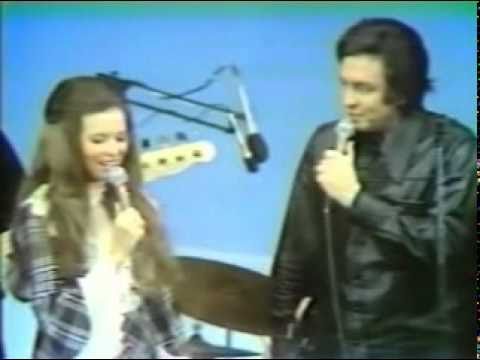
June Carter Cash's harmonies on the recording added both musical texture and biographical resonance. The Cash family singing together was not merely a narrative device in the lyric; it was a lived reality for the artists performing it, and that alignment of theme and reality gave the recording an emotional authenticity that listeners could sense even without knowing the details.
Echoing Through Decades
Few Johnny Cash recordings have remained as consistently beloved in informal contexts, at family gatherings, in church basements, around kitchen tables, as "Daddy Sang Bass." Its appeal lies in its simplicity and its depth simultaneously, the way it manages to say something genuinely profound about human connection through the most accessible possible musical vocabulary. For anyone encountering it fresh, the recording invites you into a sound and a sensibility that feels timeless. Press play and feel the circle gather.
"Daddy Sang Bass" — Johnny Cash's singular moment on the 1960s charts.
02 Song Meaning
"Daddy Sang Bass" — Family, Memory, and the Circle That Never Breaks
Music as Family Inheritance
The idea that musical ability passes through families like a genetic inheritance, handed down from parent to child through shared experience and imitation, sits at the heart of "Daddy Sang Bass." The song described not a performance or a recording session but an informal gathering of family members who sang together because singing together was simply what they did. That depiction of music as a natural family activity resonated deeply with listeners who had their own versions of that experience, their own memories of voices joined in a shared melody around a kitchen table or in a church pew.
The specificity of the vocal parts assigned within the family, each member taking a distinct harmonic role, reinforced the image of music as an organized family enterprise with its own traditions and structures. The assignment of bass to the father figure carried particular weight: bass voices anchor the harmony, provide the foundation that makes everything above it possible, and carry an authority that aligns naturally with paternal symbolism in the cultural context of the song's origins.
The Gospel Tradition as Emotional Bedrock
American gospel music has always drawn some of its power from the specific theology of reunion and continuity it expressed. The hope that death is not the final word, that family connections broken by mortality will eventually be restored, provided comfort that no secular emotional vocabulary could quite replicate. "Daddy Sang Bass" tapped into that tradition with full awareness of its implications, using the familiar gospel reference to an unbroken circle to frame a story about a specific family within the much larger story of human mortality and spiritual hope.
The emotional effect of that framing was significant. A song about family singing became, through the gospel reference, a song about what survives loss. The question implicit in the phrase "will the circle be unbroken" is whether death breaks the circle permanently or whether some form of reunion restores it, and the gospel tradition from which the phrase comes answered that question with confidence. Cash and Perkins imported that confidence into their song.
Simplicity as Artistic Choice
In the context of late 1960s popular music, which was becoming increasingly complex and experimental, "Daddy Sang Bass" was a conspicuously simple record. Its musical structure was straightforward, its lyrical narrative was clear and linear, and its emotional appeal was uncomplicated by irony or ambiguity. That simplicity was a deliberate and sophisticated artistic choice, not a failure of imagination. Carl Perkins and Johnny Cash both understood that some truths are best expressed plainly, and that reaching for complexity in the service of these particular themes would have undermined them.
The willingness to be simple at a moment when simplicity was unfashionable in rock and pop contexts required confidence. Cash's credibility as an artist was strong enough by 1968 that he could make a record this unpretentious without it reading as artistic failure, and the song's commercial and cultural success vindicated that confidence.
Why It Resonated Across Generations
The song's themes were not generationally or culturally specific. The experience of family music-making, of parents who sang and children who learned to sing in response, extended far beyond the Southern gospel context in which the song was most immediately rooted. Listeners who had never attended a country church or sung sacred harmonies in a family setting found something in the song that connected to their own experiences of music as a form of family intimacy.
The combination of specific detail and universal emotion is a hallmark of the best American folk and country songwriting, and "Daddy Sang Bass" exemplified that combination with unusual efficiency. The specificity of the bass/tenor/soprano parts, of the distinct family members each contributing their voice, gave the universal theme of family connection a texture and particularity that made it feel real rather than abstract.
A Record That Outlasted Its Chart Position
The 10-week Hot 100 run and peak at number 42 gave "Daddy Sang Bass" a modest commercial footprint compared to the largest hits of its era, but the song's actual cultural reach was far greater than any chart position can measure. It became a staple of informal singing traditions, a song people knew and returned to at moments of family gathering and remembrance, which is a form of cultural endurance that most chart hits never achieve. Johnny Cash made many records that moved more units; he made few that found as permanent a home in the emotional lives of ordinary people.
"Daddy Sang Bass" — Johnny Cash's singular moment on the 1960s charts.
→ More from Johnny Cash
View all Johnny Cash hits →

→ More from the 1960s File
View all 1960s hits →




Keep digging