The 1960s File Feature
Blistered/See Ruby Fall
Johnny Cash Rides High With Blistered/See Ruby Fall The close of 1969 found Johnny Cash at the absolute peak of his fame. The Man in Black had transcended co…
01 The Story
Johnny Cash Rides High With "Blistered/See Ruby Fall"
The close of 1969 found Johnny Cash at the absolute peak of his fame. The Man in Black had transcended country music to become a genuine cultural phenomenon, his raw authenticity and outlaw image resonating far beyond his genre. With a hit television show and a string of acclaimed prison albums behind him, Cash was one of the biggest stars in all of American entertainment. "Blistered/See Ruby Fall" arrived during that remarkable hot streak, a double-sided single from an artist who could seemingly do no wrong.
A Legend at His Commercial Peak
Cash came to this single riding an extraordinary wave of success. By 1969 he had become a national icon, fueled by his celebrated live prison recordings and a popular network television program that brought him to a vast mainstream audience. His deep, weathered voice and his image as a champion of the downtrodden made him beloved across the cultural spectrum. This was the height of his powers, a moment when nearly everything he released connected with both country and pop audiences. "Blistered/See Ruby Fall" was a product of that golden period.
The Sound of Cash in Full Stride
Musically the single offers two sides of the Cash sound. The arrangements carry the unmistakable drive and grit that defined his recordings, built around his commanding baritone and the steady, propulsive rhythm that was his trademark. There is an energy and confidence to the performances, the sound of an artist completely sure of his powers. Whether driving and uptempo or steeped in storytelling, the music bears the stamp of a master at the height of his craft, delivering exactly the kind of authentic, hard-edged country that made him a legend.
A Solid Run on the Hot 100
The chart performance reflected Cash's broad crossover appeal. "Blistered/See Ruby Fall" debuted on the Billboard Hot 100 dated November 22, 1969, at number 100. It jumped sharply the following week to 69, then climbed to 50, before peaking at number 50 on the chart dated December 6, 1969, where it held for a second week. The single spent six weeks on the Hot 100 in total. Cracking the top fifty on the all-genre chart was a strong showing for a country single, underscoring the remarkable mainstream reach Cash commanded during this peak period of his career.
A Snapshot of a Towering Legacy
Within Cash's monumental career, this single is one bright moment among many during an extraordinary stretch. He remains one of the most influential and beloved figures in American music, a towering presence whose impact transcended genre entirely. "Blistered/See Ruby Fall" captures him at his commercial zenith, a reminder of the period when he was among the most popular performers in the entire country. For fans of his vast catalog, it offers a taste of Cash riding high, an icon at the very summit of his fame.
The Television Years
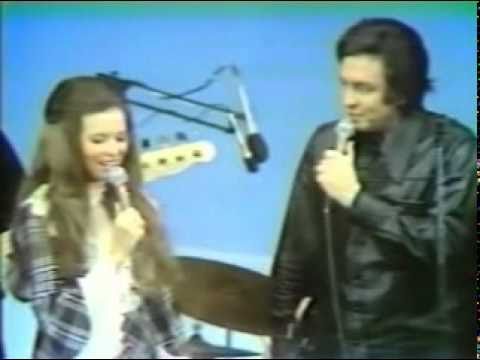
A crucial part of Cash's late-sixties dominance was his foray into network television. His variety program brought him into living rooms across America, introducing him to a vast audience that extended far beyond country music's traditional borders. The show became a cultural event, featuring an eclectic mix of guests and cementing Cash's image as a unifying figure who could bridge musical worlds. That mainstream visibility fueled the commercial success of his recordings during this period, helping singles like this one reach audiences that might never have sought out a country record. The television exposure was central to making him a genuine national institution.
The Power of His Persona
Beyond the music itself, Cash's enduring appeal rested on the strength of his persona. The image of the Man in Black, the rebel with a heart for the downtrodden, gave his work a moral weight and an authenticity that audiences found irresistible. He seemed to embody the struggles and dignity of ordinary people, a quality that made his music feel like more than entertainment. "Blistered/See Ruby Fall" arrived carried by that persona, the work of an artist whose very identity had become a kind of cultural touchstone. That image was inseparable from the music, amplifying the impact of everything he released during this remarkable peak.
Press play and feel that unmistakable drive; this is Johnny Cash at the towering peak of his powers.
"Blistered/See Ruby Fall" — Johnny Cash's singular moment on the 1960s charts.
02 Song Meaning
The Gritty Storytelling of "Blistered/See Ruby Fall"
As a double-sided single, "Blistered/See Ruby Fall" offers two distinct slices of Johnny Cash's storytelling, each rooted in the kind of vivid, character-driven narrative that defined his music. Cash was a master at painting pictures of ordinary people and their struggles, and this release showcases that gift across its two sides. The meaning lies in the rich human detail he brought to even his most uptempo material.
Vivid Human Portraits
The central theme across the single is character and situation. Cash's songs typically built around concrete people and predicaments, drawing the listener into vivid little dramas of love, hardship, or restlessness. Rather than abstract sentiment, his music dealt in specifics, the kind of grounded storytelling that made his characters feel real. The lyrics paraphrase the everyday struggles and emotions of working people, the subject matter that always sat at the heart of his appeal. He sang about life as it was actually lived.
Authenticity as the Message
Emotionally, the single trades in the raw authenticity that was Cash's signature. His weathered voice and unvarnished delivery lent his stories a sense of hard-won truth, the feeling that he had lived what he sang. There was nothing slick or artificial about his approach, only the honest grit that made audiences trust him. That authenticity was central to his enormous appeal, a quality that set him apart from more polished performers and made his storytelling land with real weight.
A Voice for the Common People
The cultural context explains much of Cash's resonance. He had built his image as a champion of the overlooked and the downtrodden, a voice for prisoners, workers, and ordinary strugglers. His songs reflected that solidarity, treating the lives of common people with dignity and seriousness. This single fit that ethos, offering character studies that honored the experiences of regular folks. That deep connection to his audience was the foundation of his legendary status.
Why It Resonated
The single connected because Cash's storytelling felt so genuine. Listeners responded to the vivid characters, the authentic delivery, and the sense that he understood real life. There is something compelling about a performer who sings about ordinary struggles with such conviction. By grounding his music in concrete human detail, Cash gave his audience stories they could see themselves in, which is exactly why his work endured.
A Lasting Authenticity
What endures is the honest humanity of Cash's storytelling. He did not dress up his characters or soften their hardships; he presented them with grit and dignity. The meaning lives in that commitment to authentic human portraits, a quality that defined his entire career. Carried by his unmistakable voice, the single remains a fine example of why Johnny Cash became, and remains, an enduring American icon.
→ More from Johnny Cash
View all Johnny Cash hits →

→ More from the 1960s File
View all 1960s hits →




Keep digging