The 1960s File Feature
Is It Really Over?
"Is It Really Over?" — Jim Reeves The Velvet Voice at the Height of His Powers The summer of 1965 carried a particular ache in country music circles, because…
01 The Story
"Is It Really Over?" — Jim Reeves
The Velvet Voice at the Height of His Powers
The summer of 1965 carried a particular ache in country music circles, because Jim Reeves had been gone for almost exactly a year. The plane crash that killed him on July 31, 1964, near Nashville had stunned the genre and left a devoted global audience — in Europe, in South Africa, in the American heartland — without the voice they had come to regard as irreplaceable. Into that grief stepped RCA Victor, working with recordings Reeves had made before his death, releasing tracks that kept his presence alive on the airwaves even as the world struggled to accept his absence.
"Is It Really Over?" arrived in that context, debuting on the Billboard Hot 100 on August 14, 1965, just after the first anniversary of his passing. The timing felt less like a marketing decision and more like an inevitability. His estate, his label, and his fans all understood that the material in the vaults still had life in it, and this particular track had the melodic weight and the emotional clarity that defined his best work.
The Man Behind the Microphone
James Travis Reeves had constructed one of the most distinctive identities in popular music over the preceding decade. Born in Galloway, Texas, in 1923, he had come up through country radio and the Louisiana Hayride circuit before landing a residency at the Grand Ole Opry. His early recordings leaned toward the harder country sound fashionable in the early 1950s, but by the late 1950s he had refined his approach into something that transcended genre boundaries.
The "Nashville Sound" of the late 1950s and early 1960s relied heavily on smooth orchestral arrangements and polished vocal delivery, and Reeves became one of its defining practitioners. Producer Chet Atkins and the creative team at RCA Nashville built recordings around his baritone that felt intimate at low volume, like a conversation rather than a performance. That quality translated spectacularly well to radio and to the jukeboxes of the period, and it helped Reeves build a following far beyond the American country audience.
A Voice That Could Cross Oceans
One of the more remarkable aspects of Jim Reeves's career was its international reach. By the early 1960s he was performing to enormous crowds in South Africa and Ireland, countries where country music had taken particularly firm root. His recordings sold on those markets with a consistency that many Nashville artists never managed. That transnational appeal meant that posthumous releases like "Is It Really Over?" found receptive audiences across multiple continents, not simply in the American Midwest and South where country music had its primary home.
The recording itself carried all the hallmarks of his mature style: the close-miked, intimate vocal placement that Atkins had pioneered with him, the orchestral cushion that softened any rough edges, and the unhurried pace that let each word register fully. Reeves's baritone had a natural warmth that made sorrowful material feel comforting rather than merely sad, which was part of why his music proved so durable in posthumous release.
The Chart Journey in Perspective
The song climbed steadily through the late summer weeks, reaching its peak position of number 79 on September 11, 1965, after spending five weeks on the Hot 100. That chart performance, while modest in absolute terms, carried additional significance given the circumstances. A track charting over a year after an artist's death spoke to the depth of the existing audience's loyalty and to the quality of the material itself.
RCA continued releasing Reeves recordings throughout the mid-1960s and into the 1970s, with multiple posthumous singles and albums charting successfully. His estate managed the catalog with considerable care, and the results demonstrated that his audience was not simply grieving, but genuinely engaging with the music. The country charts, which tracked a slightly different audience than the pop-oriented Hot 100, showed even stronger performances from many of these posthumous releases.
The Enduring Resonance
Country music in 1965 stood at a crossroads, with the Nashville Sound's polished elegance increasingly in tension with the rawer honesty of the emerging outlaw movement and the folk-inflected styles coming from younger artists. Reeves represented the smooth, metropolitan wing of the genre at its most refined, and his posthumous releases arrived as the argument about what country music should sound like was genuinely heating up.
His influence on subsequent artists who favored restraint and vocal intimacy over show-stopping histrionics proved lasting. The close-miked baritone approach he helped popularize shaped country vocal production for decades, with producers and singers returning repeatedly to those early 1960s Nashville recordings as touchstones for achieving emotional directness without melodrama. "Is It Really Over?" fits within that legacy as a song that asked its central question with a quiet dignity that needed no theatrical emphasis to land.
For anyone curious about the polished country sound of the early 1960s at its most characteristic, this recording offers a window into both an artist at the height of his powers and a moment when popular music was navigating the space between old formulas and new possibilities. Press play and let that baritone settle over you.
"Is It Really Over?" — Jim Reeves's singular moment on the 1960s charts.
02 Song Meaning
"Is It Really Over?" — Themes and Legacy
The Universal Geography of Lost Love
At its core, "Is It Really Over?" belongs to that wide territory of country songwriting concerned with the aftermath of romantic endings. The question embedded in the title is not rhetorical: it carries genuine uncertainty, the feeling of standing at the edge of a relationship's collapse and not yet being able to accept the verdict. This emotional register, suspended between denial and reckoning, was a staple of the Nashville Sound era and one that Jim Reeves navigated with particular skill. His delivery never pushed into desperation; instead, it inhabited a quieter register of dignified confusion that felt more honest than theatrical grief would have.
The theme of romantic disbelief resonated strongly with audiences in the mid-1960s because the era's popular culture was saturated with idealized images of lasting love. When relationships ended, the emotional vocabulary for processing that ending was still being constructed, and country music offered one of the few mainstream spaces where that confusion could be acknowledged without embarrassment.
Velvet Sorrow — The Nashville Sound Aesthetic
The production framing that surrounds the song's emotional content matters enormously in shaping how that content lands. The Nashville Sound aesthetic, pioneered largely by producer Chet Atkins and the creative community that grew up around RCA Studio B in Nashville, valued smoothness and intimacy above all. Where earlier country recordings had embraced fiddles and steel guitars in their rawer forms, the Nashville Sound wrapped sorrowful material in orchestral cushions that felt warm rather than cold.
This choice had a specific cultural logic. The Nashville Sound was partly designed to broaden country music's commercial appeal, to make it feel comfortable on pop radio stations and in living rooms that might not have considered themselves country audiences. The strategy worked, and Reeves was one of its primary beneficiaries. His recordings crossed over in ways that earlier country artists had rarely managed, and tracks like this one carried that crossover sensibility into the posthumous phase of his catalog.
Listening Through Loss — The Posthumous Dimension
One layer of the song's meaning that no songwriter could have engineered in advance is the additional resonance it acquired through circumstance. When "Is It Really Over?" charted in the summer of 1965, listeners knew they were hearing a dead man ask that question. The song's central uncertainty took on an added weight in that context. Fans who had followed Reeves through his career, who had attended his concerts in Ireland or South Africa or the American heartland, brought their own grief to the listening experience.
The posthumous release phenomenon was not new in 1965, but it remained relatively uncommon at that scale. Reeves's case was unusual because his estate and label managed to sustain genuine chart presence for years after his death, suggesting that the audience's connection to his music was deep enough to survive the loss of the performer himself. That durability said something important about the nature of his appeal: it lived in the recordings, not just in the spectacle of live performance.
Why It Still Speaks
Decades removed from its original context, the song's fundamental question retains its power because the emotional experience it describes is so common. Relationships end ambiguously all the time, with no clear declaration, no formal closing ceremony, just a slow cooling that leaves the parties uncertain whether they are finished or merely pausing. The song gives that uncertainty a shape and a sound.
The enduring catalog of Jim Reeves has found new audiences through streaming platforms, through film and television use of his recordings, and through the continuing loyalty of the country music communities in the United Kingdom, Ireland, and South Africa that took him to heart during his lifetime. Within that catalog, this track stands as a representative example of his later work: emotionally specific, vocally controlled, and built for the intimacy of the listening experience rather than the spectacle of performance.
→ More from Jim Reeves
View all Jim Reeves hits →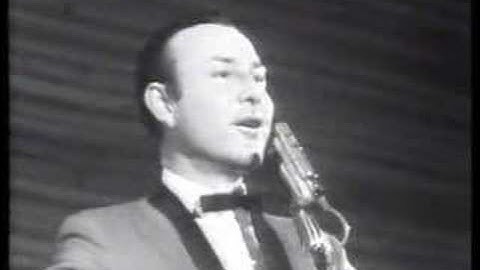

→ More from the 1960s File
View all 1960s hits →




Keep digging