The 1960s File Feature
Blue Side Of Lonesome
"Blue Side Of Lonesome" — Jim Reeves, Recorded Beyond the Grave The Voice That Would Not Be Silenced Some recording careers end at death. Others, if the cata…
01 The Story
"Blue Side Of Lonesome" — Jim Reeves, Recorded Beyond the Grave
The Voice That Would Not Be Silenced
Some recording careers end at death. Others, if the catalog is deep enough and the talent compelling enough, continue long after. Jim Reeves belonged to the second category, and his posthumous chart activity in the years following his death in a 1964 plane crash stands as one of the more remarkable phenomena in the history of country music. "Blue Side of Lonesome" arrived on the Billboard charts in August 1966, more than two years after Reeves died, and climbed to a position that testified to the continued appetite for new material from one of Nashville's most beloved voices.
Jim Reeves had been one of the defining figures of the "Nashville Sound" in the late 1950s and early 1960s, a production approach developed by Chet Atkins and others at RCA Victor that replaced the rough edges of traditional country with smoother, more orchestrated arrangements aimed at expanding country music's commercial reach. Reeves' velvet baritone was perfectly suited to this approach, and records like "He'll Have to Go" had made him one of the most popular country artists on both sides of the Atlantic.
RCA's Posthumous Release Strategy
Following Reeves' death in July 1964, RCA Victor held a catalog of unreleased recordings and continued to release them systematically over the following years. This was both a commercial decision and, in the context of the genuine grief his death had generated among fans, a kind of public service for those who wanted to hear more of his voice. The posthumous releases maintained a consistency of quality because Reeves had recorded prolifically and professionally, leaving behind material that could be finished and released to his exacting standards.
"Blue Side of Lonesome" was one of these posthumous releases, a recording that Reeves had completed before his death and that RCA shepherded through to commercial release. The production maintained the hallmarks of the Nashville Sound: gentle orchestration, polished studio craft, and an arrangement that placed Reeves' voice front and center without distraction. The track had the warmth and intimacy that characterized his best work, a quality that made his recordings feel personal in a way that more grandly arranged country productions often did not.
The Chart Run of Late 1966
"Blue Side of Lonesome" debuted on the Billboard Hot 100 on August 27, 1966, at position 88. It climbed steadily over the following weeks, passing through 67, 64 (where it remained for two consecutive weeks), before reaching its peak of number 59 on October 1, 1966. The single spent eight weeks on the Hot 100, a respectable run that reflected continued mainstream awareness of Reeves even two years after his passing.
The track performed considerably better on the country charts, where Reeves' name carried even more weight. The Hot 100 performance is meaningful nonetheless as an indicator that his music still found purchase in the broader pop consciousness at a time when country and pop were becoming increasingly distinct commercial territories.
Grief, Nostalgia, and the Buying Public
The commercial success of posthumous Jim Reeves releases in the mid-1960s raises interesting questions about the relationship between grief and consumer behavior. There is a pattern in popular music history where an artist's death, particularly a sudden and tragic one, generates an intensified commercial response to their catalog, as listeners who feel the loss channel that feeling into purchasing and listening. The sustained quality of the posthumous releases helped extend this period of elevated interest, providing genuine artistic satisfaction rather than capitalizing purely on morbid fascination.
By 1966, the intensity of initial grief had moderated, but the appetite for Reeves material remained active among his core audience. That sustained engagement reflected something beyond memorial impulse; it reflected genuine affection for an artist whose voice and sensibility had formed a significant part of their musical lives. Country radio continued to play his records not out of obligation but because listeners still requested them.
The Nashville Sound and Its Legacy
"Blue Side of Lonesome" is also a document of the Nashville Sound approach that Reeves had helped define. By 1966, that approach was already facing challenges from within country music, as artists and listeners pushed back against what some perceived as an excessive smoothing-out of country's rougher edges. Bob Dylan and the folk revival had re-energized interest in more rootsy, unpolished sounds, and country music was beginning to feel the pressure of that influence.
In this context, Reeves' posthumous releases occupied an interesting position: representatives of an approach that was already being contested, but executed with such craft and such unmistakable individual personality that they retained their appeal regardless of the shifting critical winds. Put it on and hear what Nashville's finest hour sounded like through one of its most distinctive voices.
"Blue Side Of Lonesome" — Jim Reeves' singular moment on the 1960s charts.
02 Song Meaning
"Blue Side Of Lonesome" — Isolation, Grief, and the Country Tradition of Pain
Lonesome as a Country Music Constant
Country music has always maintained a particular relationship with loneliness. Not the fashionable melancholy of pop music or the existential loneliness of certain rock traditions, but a very specific kind of lonesome feeling rooted in physical and emotional isolation, in the gap between where a person is and where they want to be, between who they are and who they feel they are supposed to be with. "Blue Side of Lonesome" inhabits this tradition with the directness that characterized Jim Reeves' best work.
The song's title does something interesting linguistically, adding a spatial dimension to an emotional state. Lonesome has a blue side, which implies it has other sides, a territory one can be positioned on rather than simply a condition one is in. This subtle spatial framing gives the feeling a quality of placeness, making the emotional content feel geographic as much as psychological, which is a very country approach to interior experience.
Reeves' Voice and the Intimacy of Loss
Part of what made Jim Reeves uniquely suited to material of this kind was the quality of his voice at the lower end of his register. His baritone had a warmth that communicated intimacy even on recordings designed for public broadcast, creating the impression that he was confiding rather than performing. For a song about the private experience of loneliness, this tonal quality was exactly right, giving the lyrical content a credibility that a more theatrical delivery would have undermined.
The Nashville Sound production that surrounded his voice on recordings of this period amplified rather than diluted this quality. The gentle orchestration framed the vocal without competing with it, creating a listening experience that felt personal even when heard on commercial radio. That balance was no accident; it reflected a production philosophy that understood how Reeves' voice communicated most effectively.
The Posthumous Dimension
Listening to "Blue Side of Lonesome" with the knowledge that Jim Reeves had died before its release adds a layer of meaning that cannot be entirely separated from the experience of the song itself. A recording about loneliness, released after the death of the performer who made it, heard by fans who were themselves experiencing a form of loss, carries an unavoidable resonance that goes beyond what the lyrical content alone could generate.
This posthumous dimension is not something imposed on the recording from outside; it is part of the context in which it was received and which shaped how it was heard by its original audience. The fans who bought this single in 1966 knew they were listening to a voice they would never hear new recordings from again, and that knowledge informed how they received the material.
Country Grief and Its Social Functions
Country music has historically served as a vehicle for processing emotions that other cultural spaces did not easily accommodate. For many listeners, particularly in the working-class communities where country music had its deepest roots, expressing grief, loneliness, and emotional pain required a socially legitimate context. Music provided that context. Songs about lonesome feelings gave listeners permission to feel those feelings, to recognize them as shared human experiences rather than personal failures or aberrations.
"Blue Side of Lonesome" performed this function for the audiences who heard it in 1966. Whether they were experiencing personal losses of their own or mourning Jim Reeves specifically, the song offered a space in which those feelings could be acknowledged and engaged with. That social function of music is not diminished by time; it is part of what makes recordings like this one worth returning to.
→ More from Jim Reeves
View all Jim Reeves hits →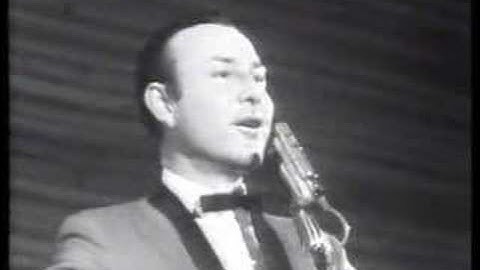




→ More from the 1960s File
View all 1960s hits →




Keep digging