The 1960s File Feature
Guilty
Jim Reeves and the Recording of "Guilty" Jim Reeves charted "Guilty" in 1963, adding another entry to a Hot 100 run that had already established him as one o…
01 The Story
Jim Reeves and the Recording of "Guilty"
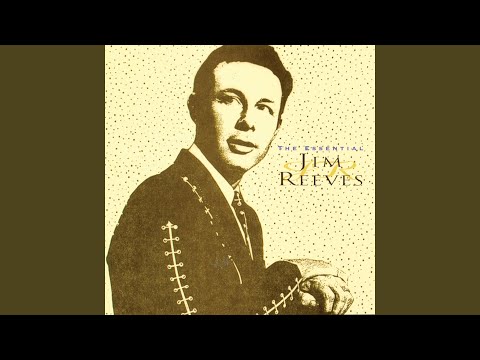
Jim Reeves charted "Guilty" in 1963, adding another entry to a Hot 100 run that had already established him as one of the most consistent country crossover artists of his generation. The single peaked at number 91 on the pop chart, a modest showing that nevertheless reflected the degree to which Reeves had built an audience extending well beyond the traditional country market. His velvet baritone voice and the smooth, intimate production style associated with his recordings had made him a figure of international reach, particularly in markets in Europe and South Africa that embraced his music with exceptional enthusiasm.
James Travis Reeves was born on August 20, 1923, in Galloway, Texas. His path to music was indirect; he initially pursued a career in professional baseball before an injury ended those prospects and redirected him toward broadcasting and eventually recording. His early work as a disc jockey at radio station KGRI in Henderson, Texas, gave him industry knowledge and connections that proved valuable when his recording career began to take shape in the early 1950s. His first significant chart entry, "Mexican Joe," reached number one on the country chart in 1953, establishing him at the label he would become most associated with: RCA Victortransformation of Reeves from honky-tonk country singer to polished pop-country crossover artist was gradual and deliberate. His work with producer Chet Atkins was central to this process. Atkins, who was himself a brilliant guitarist and a key architectural force in what became known as the Nashville Sound, understood that the production excess and steel guitar-heavy sound of traditional country was limiting the music's pop appeal, and he worked systematically to develop an alternative that maintained country's emotional directness while replacing its rougher sonic elements with orchestral sophistication, choral accompaniment, and a cleaner overall mix.aner overall mix.
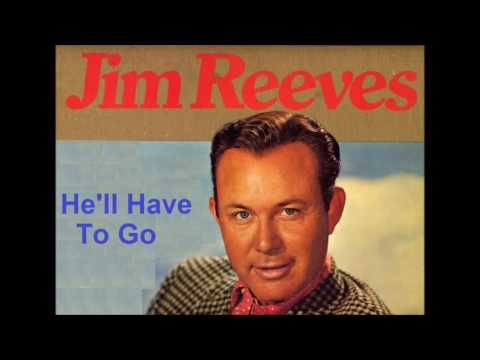
Reeves was one of the primary beneficiaries and practitioners of this approach. His voice suited the Nashville Sound perfectly: smooth, warm, and capable of extraordinary intimacy in close-microphone recording environments. He had a habit of singing directly into the microphone at close range, creating a sense of private communication with the listener that was highly effective in the home listening contexts that had become dominant by the late 1950s and early 1960s. His 1959 recording of "He'll Have to Go" reached number two on the pop chart and number one on the country chart, becoming his signature song and one of the best-selling singles of the period.
"Guilty," released in 1963, belongs to the sustained commercial period following that breakthrough. By then, Reeves had refined his approach to recorded performance to a remarkable degree. The production of his recordings in this period is notable for its quietude; there is no wasted energy, no unnecessary sonic element. The orchestral arrangements that accompanied his vocals were tasteful and supportive rather than dominant, allowing his voice to remain the central emotional presence in the mix. This aesthetic was a conscious choice that served both his artistic vision and his commercial positioning.
The song's content addressed themes of romantic guilt and responsibility that fit naturally within Reeves's interpretive range. He was particularly effective with songs that placed a narrator in a position of emotional complexity, neither wholly innocent nor wholly culpable, navigating the difficult terrain of relationships that have gone wrong through some combination of external circumstance and personal failing. RCA Victor's confidence in Reeves during this period was reflected in the consistent quality of his releases, even those that did not reach the top of the charts.
Tragically, Jim Reeves died on July 31, 1964, when the small plane he was piloting crashed near Nashville in bad weather. He was forty years old. His death cut short a career that showed no signs of diminishing and left a catalog of recordings that continued to be released and to chart posthumously for several years. The warmth and intimacy of his recorded performances gave his posthumous releases an uncanny quality; his voice remained a presence in listeners' lives even after he was gone, a situation that resonated particularly with international audiences who had formed deep attachments to his work.
The 1963 recording of "Guilty" thus stands as part of the final period of Reeves's active recording career, a time when his artistry was fully mature and his audience firmly established. The number 91 position on the Hot 100 reflects the pop market's limited engagement with the specific style rather than any deficiency in the recording itself. Within the country crossover context in which it was primarily marketed, the single performed as another competent entry in a catalog of consistent excellence, the work of a man who had made the business of emotional communication through recorded song into something approaching mastery.
02 Song Meaning
The Meaning of "Guilty" by Jim Reeves
"Guilty" by Jim Reeves engages with one of the most persistent themes in country and popular music: the acknowledgment of fault in a failed romantic relationship. The song, recorded in 1963 and reaching number 91 on the Billboard Hot 100, belongs to a tradition of confessional romantic songs in which the narrator accepts responsibility rather than deflecting blame, a stance that was relatively unusual in a pop landscape where song narrators more frequently cast themselves as wronged parties than as authors of their own romantic difficulties.
The emotional architecture of "Guilty" rests on the narrator's willingness to name themselves as the responsible party in whatever relational damage has occurred. This is a morally interesting position, because guilt in the context of romantic relationships can function in multiple ways simultaneously. It can be an act of genuine accountability, a sincere recognition that one's actions caused harm. It can also be a form of bid for reconnection, an implicit appeal to the other party's sympathy through self-accusation. Jim Reeves's interpretation does not attempt to resolve this ambiguity; the performance carries both possibilities, which is part of what gives it its emotional depth.
Reeves's particular vocal gifts made him an ideal interpreter of this kind of material. His baritone voice had a quality of intimate confession; he sounded, in his best recordings, like someone speaking directly into the listener's ear rather than performing for a generalized audience. This quality was not accidental. His technique of close microphone placement and his sensitivity to dynamics created a recording presence that felt private in a way that most voices on record did not. The Nashville Sound production that surrounded his vocal on "Guilty" reinforced this effect, creating a sonic environment of warmth and restraint that served the confessional content.
The concept of guilt in romantic contexts also connects to a broader set of values embedded in the country music tradition from which Reeves emerged. Country music had always been more willing than mainstream pop to engage with moral complexity in personal relationships, to acknowledge that ordinary people make mistakes and that those mistakes have consequences. "Guilty" fits within this tradition by treating the narrator's admission not as extraordinary but as simply honest, the natural acknowledgment of how things are.
There is also something worth noting about the song's historical position. Recorded in 1963, the year before Reeves's death, it belongs to the period of his greatest artistic maturity. By this point he had refined his understanding of how to inhabit a song so completely that the performance seemed less like interpretation than direct experience. "Guilty" benefited from this refinement; the narrator's admission of fault is conveyed with a completeness that suggests not performance but testimony. Whatever the private circumstances of its composition and recording, the song communicates as an entirely believable moment of honest self-reckoning, which remains its primary achievement as a piece of popular music.
→ More from Jim Reeves
View all Jim Reeves hits →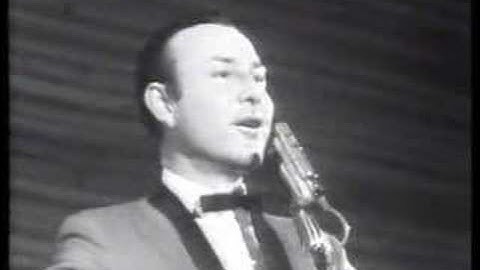

→ More from the 1960s File
View all 1960s hits →




Keep digging