The 1960s File Feature
Crying
Jay The Americans and Their Cover of "Crying" When Jay The Americans released their version of "Crying" in the spring of 1966, they were stepping into the lo…
01 The Story
Jay & The Americans and Their Cover of "Crying"
When Jay & The Americans released their version of "Crying" in the spring of 1966, they were stepping into the long shadow of one of the most celebrated recordings in American popular music. Roy Orbison had recorded the song in 1961, taking it to number 2 on the Billboard Hot 100 and cementing it as a landmark of his particular brand of emotionally grand, operatically inflected pop. For any group to attempt a cover was to invite comparison with a near-definitive performance. That Jay & The Americans managed to chart at all with their version, reaching number 25 during a six-week run that peaked on June 25, 1966, is a testament to both the song's fundamental strength and the group's genuine interpretive skill.
The group had been active since the early 1960s, building a catalog of melodramatic pop ballads and occasional uptempo numbers that positioned them squarely within the mainstream of mid-decade American pop. Jay Black, the group's lead vocalist after 1962, possessed one of the most powerful tenor voices in commercial pop of the period: a voice capable of enormous volume and emotional urgency, qualities that "Crying" demanded in full. His willingness to commit completely to the operatic register of the material, without irony or restraint, suited the song's requirements precisely.
Roy Orbison's original had been written by Orbison himself in collaboration with Joe Melson, and it represented a specific approach to songwriting: the construction of a miniature emotional drama with a clear narrative arc, told through a vocal performance of extreme technical and expressive range. The climactic high notes near the song's conclusion were among the most celebrated moments in early 1960s pop, and any cover version had to address them directly. Black's approach was not to imitate Orbison but to bring his own vocal persona to the same dramatic peaks, trusting his own instrument rather than mimicking his predecessor's.
The production of the Jay & The Americans version reflected the sonic conventions of mid-1960s pop rather than the spare, echoic Sun Records aesthetic that had characterized Orbison's original recordings. The arrangement was fuller, the sound more polished, the production choices oriented toward contemporary radio. This updating had both advantages and disadvantages: it made the record immediately competitive on the charts of 1966 while distancing it from the haunting quality that made Orbison's version so distinctive.
United Artists Records, the group's label, released the single in May 1966, and it debuted at number 66 on the Hot 100. The chart climb was rapid through the early weeks: number 50 the following week, then 38, then 28, reaching its peak of 25 by late June before beginning its descent. The six-week chart run was respectable without being exceptional, producing a moderate hit rather than a major crossover success.
By 1966, Jay & The Americans were navigating the increasingly complex landscape of mid-decade pop. The British Invasion had reshaped audience expectations and radio formats significantly, and the kind of big-voiced American pop balladry the group specialized in was facing increased competition from guitar-driven sounds. Their success with "Crying" demonstrated that there remained an audience for their approach, even as the dominant commercial currents moved in different directions.
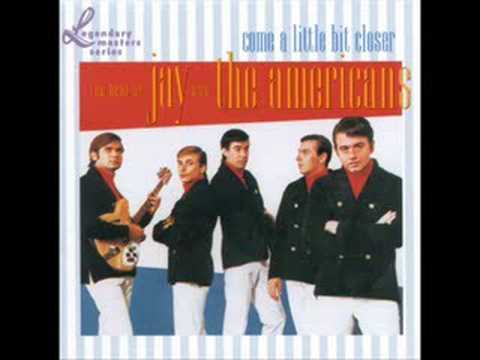
The group's history with cover versions was extensive. They had previously achieved success with their interpretations of other artists' material, most notably their version of "Come a Little Bit Closer" and their reading of "Let's Lock the Door." This willingness to find songs in the existing repertoire and make them their own, rather than relying exclusively on original compositions, reflected a pragmatic approach to commercial pop that was common in the period before the singer-songwriter movement established original composition as the primary measure of artistic seriousness.
Jay Black's vocal performance on the recording remains the element most frequently cited by those who assess the Jay & The Americans catalog. His command of the upper register, his ability to sustain long phrases without loss of tonal quality, and his instinct for emotional timing were assets that served him particularly well in dramatic ballad material. "Crying" gave him an opportunity to display all of these qualities within the framework of a song the listening audience already knew and had strong feelings about.
In retrospect, the 1966 cover occupies an interesting position in both the Jay & The Americans catalog and in the broader history of the song. It demonstrated that great songs can sustain multiple interpretations, each finding something genuine within the same framework of melody and lyric, and it added another chapter to the continuing story of a composition that would go on to attract many more interpreters in the decades that followed.
02 Song Meaning
The Meaning Behind "Crying" as Interpreted by Jay & The Americans
"Crying" is a song about the discovery that an emotion you believed you had successfully suppressed is still entirely alive. The protagonist encounters a former lover unexpectedly, having convinced himself that he has moved past the relationship, and finds in an instant that the work of recovery he thought he had accomplished was largely self-deception. Jay & The Americans' 1966 recording brings this emotional reckoning to life through Jay Black's vocal performance, which commits fully to the dramatic escalation the song requires without any protective irony.
The songwriting by Roy Orbison and Joe Melson is structured as a small narrative arc. The narrator begins with confidence: he has seen the person and managed the encounter without breaking down. But as the song progresses, the certainty dissolves. The performance collapses the distance between pretending to be fine and actually being fine, forcing the narrator, and through him the listener, to confront that these are not the same thing. This gap between performed and felt emotion is the song's central subject, and it gives the material a psychological complexity unusual in pop music of either the early 1960s or mid-decade period when Jay & The Americans recorded it.
The operatic quality of both the original and the cover versions is not incidental decoration but a deliberate emotional escalation device. Pop music conventions of the period generally favored contained emotional expression. "Crying" explicitly rejects those conventions, demanding that the vocalist perform grief at maximum emotional intensity, with sustained high notes that announce rather than conceal the depth of what is being felt. Jay Black's powerful tenor was well suited to this task, carrying the song's climactic passages with a commitment that matched the emotional stakes of the material.
The setting of the song in a chance encounter gives it dramatic immediacy. This is not a song about abstract longing in general but about a specific, located moment when the gap between self-presentation and inner experience becomes impossible to maintain. The sidewalk, the mutual recognition, the managed greeting: all of these implied narrative details give the emotional explosion that follows its force. Without the specificity of the situation, the breakdown would feel unmotivated. With it, the loss of composure becomes entirely understandable.
The song's longevity across multiple recordings and eras speaks to how precisely it captures an experience that resists aging. Encountering someone from a past relationship and discovering that your feelings are more intact than you believed is not a historically specific experience. It belongs to no particular decade, no particular cultural context. The Jay & The Americans version, recorded five years after Orbison's original and still finding an audience, confirmed that the song's emotional core was durable enough to survive translation across different voices and different production aesthetics. What the song knows about the persistence of grief is simply accurate, which is why each generation finds it fresh.
→ More from Jay & The Americans
View all Jay & The Americans hits →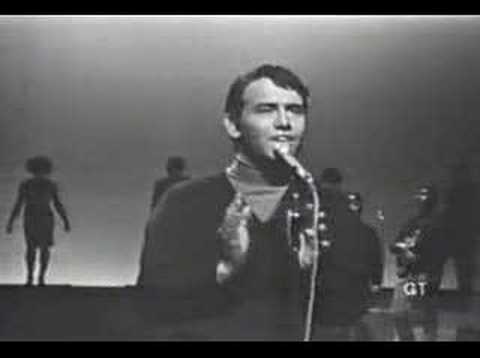

→ More from the 1960s File
View all 1960s hits →




Keep digging