The 1960s File Feature
Come A Little Bit Closer
Come a Little Bit Closer — Jay & The Americans' 1964 Top Three Hit New York Harmony on a Mexican Dance Floor There is something enduringly cinematic about "C…
01 The Story
Come a Little Bit Closer — Jay & The Americans' 1964 Top Three Hit
New York Harmony on a Mexican Dance Floor
There is something enduringly cinematic about "Come a Little Bit Closer." The song opens with a scene rather than a statement: a man alone at a bar in a Mexican town, watching a beautiful woman dance, summoning his nerve and crossing the floor. The situation is both specific and universal, the kind of social moment that has generated stories since the first dance hall opened its doors. When Jay & The Americans took that scene and set it to their particular brand of lush, dramatic pop, they created a record that felt like a short film condensed into three minutes.
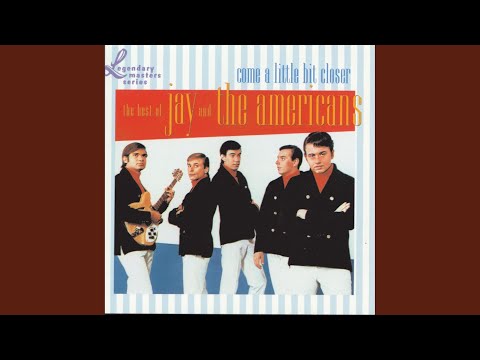
Jay & The Americans were a New York group who had carved out a distinctive sound in the early 1960s, blending the wall-of-sound production sensibilities of the era with a vocal style that owed as much to Broadway as to rock and roll. Jay Black, who had joined the group as lead vocalist in 1962, possessed a tenor voice with remarkable power and range, capable of building to theatrical climaxes that few pop singers of the period could match. The group had already scored with "She Cried" in 1962 and "Only in America" in 1963, establishing themselves as one of the stronger acts in the New York pop scene before "Come a Little Bit Closer" arrived to make the case more emphatically.
The Song's Origins and Construction
"Come a Little Bit Closer" was written by Tommy Boyce and Bobby Hart, the songwriting partnership that would later become closely associated with the Monkees. Boyce and Hart had a talent for constructing songs with strong narrative hooks and memorable melodic movements, and "Come a Little Bit Closer" demonstrated both qualities at once. The story of a romantic encounter interrupted by a dangerous man claiming the woman for his own gave the song a dramatic tension that most pop singles of the era avoided. The narrator flees at the end, leaving the woman and the romance behind, which gave the lyric an unusual edge of pragmatic self-preservation over romantic heroism.
The production placed Jay Black's vocal at the center of an arrangement that built in stages, the verses establishing the scene with relative restraint before the chorus opened up into something more expansive. The percussion and brass arrangement pushed the record toward a fuller, more cinematic sound that distinguished it from the simpler guitar-driven pop that dominated much of the Hot 100 in 1964. The approach suited the song's storytelling ambitions.
Scaling the Charts in Fall 1964
The chart trajectory of "Come a Little Bit Closer" is one of the more satisfying climbs of the 1964 fall season. The single debuted at number 86 on September 12, 1964, entering a landscape that was still reverberating with the aftershocks of the British Invasion. The Beatles and their contemporaries had transformed American pop radio in the spring and summer of that year, creating a competitive environment where domestic acts had to work harder to maintain chart visibility. Jay & The Americans managed that challenge with considerable success.
The record climbed steadily across fifteen weeks, building momentum through consistent radio airplay and strong sales. It reached its peak of number 3 on November 21, 1964, establishing itself as one of the major pop records of that autumn. Reaching the top three during the height of Beatlemania, with all that meant for the competitive pressure on American acts, represented a genuine commercial achievement for the group and its label, United Artists.
Jay Black and the Art of Pop Dramatics
The success of "Come a Little Bit Closer" was inseparable from Jay Black's performance. His vocal approach to the material brought a theatrical intensity that amplified the song's narrative content. Black could modulate between vulnerability and power in ways that gave dramatic arc to a three-minute story, a skill he had honed through years of live performance in the competitive New York club scene. His voice was big enough to carry an auditorium without amplification, which gave his studio recordings a presence that many of his contemporaries lacked.
The group around him provided capable harmonic support, and the production team understood how to frame his instrument to maximum effect. The combination of strong material, capable production, and a genuinely exceptional lead vocal produced one of the stronger pop records of its year.
Lasting Presence on Oldies Radio and Beyond
Jay & The Americans continued recording through the decade, achieving further chart success before eventually winding down their major commercial run in the early 1970s. "Come a Little Bit Closer" remained their signature recording, turning up in film soundtracks, television compilations, and oldies radio formats for decades. The song's 553,000 YouTube views reflect that sustained discovery, with new listeners encountering a record that demonstrates exactly what skilled narrative pop songwriting could achieve in the hands of the right vocalist. Press play and let that story unfold from the beginning.
"Come a Little Bit Closer" — Jay & The Americans' singular moment on the 1960s charts.
02 Song Meaning
The Meaning of "Come a Little Bit Closer" by Jay & The Americans
Desire, Danger, and the Smart Exit
Most pop songs about romantic attraction resolve toward connection; the chase ends in union, or at least in the sustained desire for it. "Come a Little Bit Closer" does something different. It sets up the romantic encounter with care, establishes the pull between the narrator and the woman he approaches, and then introduces a complication that no amount of desire can overcome: the appearance of a man who makes clear that the woman belongs to him, and who seems prepared to enforce that claim with violence. The narrator leaves. The song ends with discretion rather than conquest.
This narrative structure was unusual for mainstream pop in 1964, when the dominant romantic narratives tended toward optimistic pursuit. The willingness to tell a story about romantic retreat, about a situation where the right choice is to walk away, gave the song a realism that distinguished it from more idealized treatments of the same theme. The narrator is not diminished by his exit; he is simply sensible. The joke in the final moment is gentle but unmistakable.
The Mexican Setting as Romantic Fantasy
The decision to set the song in a Mexican dance hall was a deliberate choice to invoke a particular kind of romantic atmosphere. The Mexican setting in early 1960s American pop carried specific associations: warmth, danger, sensuality, otherness. The brass arrangements that characterized the production drew on Latin musical influences to reinforce that atmosphere. The sonic vocabulary of the song matched its geographic setting, creating an immersive effect that positioned the listener inside the scene rather than observing it from a distance.
This use of geographic fantasy was common in the pop of the era, with songs transporting listeners to beaches, dance halls, and foreign locales that served as vessels for romantic projection. "Come a Little Bit Closer" handled the convention skillfully, using the setting to generate a specific emotional mood without requiring the listener to have any direct experience of the place described.
Tommy Boyce and Bobby Hart's Storytelling Craft
The song demonstrates the specific gifts of its composers. Boyce and Hart were craftsmen of the short narrative pop form, writers who understood that a pop song needed to establish its world quickly, develop its situation with economy, and resolve with an emotional punch that landed within a three-minute frame. Their construction of "Come a Little Bit Closer" follows this blueprint precisely. Each verse advances the story, the danger escalates naturally, and the ending delivers its small dark comedy on schedule.
Their work demonstrated that pop songwriting could carry genuine narrative complexity without sacrificing accessibility or melodic appeal. The song worked as a radio record first, with a hook and a chorus that lodged in the memory immediately, while also functioning as a story with genuine dramatic construction beneath the surface.
Why Romantic Tension Sells Records
The emotional appeal of songs about interrupted romantic encounters operates on a specific psychological mechanism. Desire that remains unfulfilled is a more powerful emotional engine than desire that is satisfied. The narrator of "Come a Little Bit Closer" never gets the girl, and that incompletion is what gives the song its lasting resonance. Listeners project themselves into the scenario and feel both the appeal of the initial attraction and the comedy of the tactical retreat, a combination that is more emotionally complex than either pure romance or pure rejection would have been.
Jay Black's vocal delivery captured both dimensions of that emotional complexity, bringing genuine feeling to the attraction while allowing the song's dark humor to emerge naturally in the final verse. The record worked because it trusted its audience to appreciate the joke without spelling it out, a confidence in the listener that pop music sometimes forgot to exercise.
"Come a Little Bit Closer" — Jay & The Americans' singular moment on the 1960s charts.
→ More from Jay & The Americans
View all Jay & The Americans hits →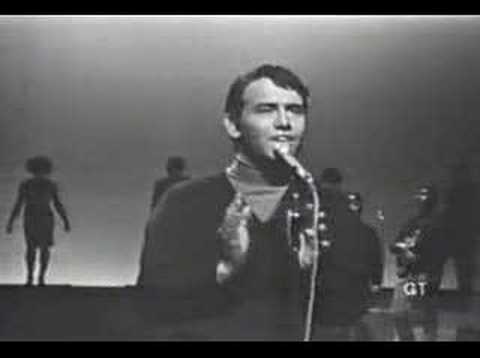



→ More from the 1960s File
View all 1960s hits →




Keep digging