The 1960s File Feature
This Magic Moment
This Magic Moment — Jay & The Americans A Song Already Beloved Before It Was Theirs The year is 1968, and popular music is fracturing in a dozen different di…
01 The Story
This Magic Moment — Jay & The Americans
A Song Already Beloved Before It Was Theirs
The year is 1968, and popular music is fracturing in a dozen different directions at once. Soul is ascending, psychedelia is peaking, and rock is getting louder and stranger by the month. Into this noise, Jay & The Americans chose to revive a piece of early rock and roll romance, a song that had already earned its place in the American songbook. The result was one of the decade's most affecting pop performances, a record that proved timeless material only grows more resonant with age.
"This Magic Moment" was originally recorded by The Drifters in 1960, written by Doc Pomus and Mort Shuman, two of the great songwriting architects of the Brill Building era. The Drifters' version, lush with strings and that unmistakable orchestral pop production of the period, reached number 16 on the Billboard Hot 100. It was a hit, admired and beloved, but the song contained something that outlasted any single recording.
Jay & The Americans Find Their Moment
By the late 1960s, Jay & The Americans had established themselves as a reliable presence on the pop charts, led by the powerful tenor of Jay Black, who had replaced original lead singer Jay Traynor earlier in the decade. The group had already scored significant hits, including "Cara Mia" in 1965 and "Some Enchanted Evening" in 1965, the latter of which demonstrated their particular gift for infusing theatrical, big-voice ballads with genuine pop accessibility.
Their approach to "This Magic Moment" leaned into exactly that sensibility. The arrangement wrapped Jay Black's voice in sweeping orchestration, giving the recording a cinematic scale that felt at home in the transition year between the optimism of early rock and roll and the harder, more complex sound coming in the 1970s. Producer Jerry Leiber and Mike Stoller had shaped the original Drifters sound, and the song carried that lineage with it into the new decade.
A Slow Climb Up the Hot 100
The single debuted on the Billboard Hot 100 on December 28, 1968, entering at number 90. What followed was a steady, patient climb that illustrated how a record with genuine emotional weight could build momentum through sheer word of mouth and radio persistence. Week by week it moved: 79, 65, 43, 37, and onward, gaining traction without any of the explosive opening-week energy that flash-in-the-pan singles often depended upon.
The track peaked at number 6 on March 8, 1969, after 14 weeks on the chart, an impressive run that placed it firmly among the most successful recordings in the group's career. Reaching the top ten on the Hot 100 in an era saturated with competing sounds was no small achievement. The chart performance confirmed what radio listeners had been responding to since the first week of play: the song simply worked.
Jay Black and the Art of the Belted Ballad
Much of the record's power resided in Jay Black's voice itself. He possessed a range and intensity that could fill concert halls without amplification, and he understood how to build a vocal performance the way a conductor shapes a symphony: softly at first, then with gathering force, until the emotional climax lands with full weight. The material from Pomus and Shuman gave him everything he needed: a lyric about the charged electricity of a first kiss, the sense that an ordinary moment has been transformed into something permanent and extraordinary.
The group's delivery added texture beyond the lead vocal. The harmonies that framed Black's performance gave the record warmth, the sense of shared feeling rather than solo grandstanding. Jay & The Americans understood ensemble singing as a craft, not merely a backing function, and it showed in the final product.
The Song's Place in Pop History
The success of their version ensured "This Magic Moment" would continue its journey through American culture. It appeared on film soundtracks in subsequent decades, each placement reintroducing the song to new generations. The persistence of the recording in popular memory says something important about what Jay & The Americans accomplished: they did not merely copy the Drifters but found something fresh in the material, something that could carry its emotional charge forward into a new era.
For a group whose commercial peak had largely come earlier in the decade, the 1969 chart success of "This Magic Moment" represented a genuine artistic and commercial renaissance. It arrived at exactly the right cultural moment, offering comfort and beauty to audiences navigating a turbulent social landscape, and it has never entirely lost that quality.
Put it on and you will understand immediately why the song has survived every shift in musical fashion since 1960.
"This Magic Moment" — Jay & The Americans' singular moment on the 1960s charts.
02 Song Meaning
This Magic Moment — Themes and Legacy
The Alchemy of the Perfect First Touch
At its heart, "This Magic Moment" is a song about a very specific kind of wonder: the instant a romantic encounter crosses from possibility into reality. The lyric, written by Doc Pomus and Mort Shuman, fixes its attention on a first kiss and treats it as a transformative event, something that changes the fabric of ordinary experience. The world before and the world after are different places. That premise sounds simple, even slight, but the song invests it with genuine emotional architecture.
The genius of the Pomus and Shuman lyric is its specificity within universality. The scenario they describe is intensely personal and yet completely familiar to any listener who has experienced that threshold moment of romantic life. Pop music lives or dies on that balance, and "This Magic Moment" gets it exactly right. Every listener hears their own story reflected back.
Romance as a Form of Transcendence
The song does not describe the full arc of a relationship. It freezes time at a single point, magnifying that moment until it feels enormous, cosmic even. There is something almost sacred in the lyrical treatment: the suggestion that human feeling can briefly transform the mundane into the miraculous. This was a common preoccupation of early rock and roll and pop songwriting, but Pomus and Shuman approached it with unusual sophistication.
Jay Black's vocal performance deepened this quality considerably. His voice carries a quality of genuine conviction, the sense that what he is singing about actually matters at a profound level. The combination of orchestral arrangement and Black's emotional delivery elevated the song beyond simple teenage romance into something that felt meaningful to adult listeners as well. The 1969 recording found an audience across age groups for precisely this reason.
A Song for Uncertain Times
When Jay & The Americans released their version in late 1968, American society was in a state of profound upheaval. Political assassinations, the escalating Vietnam War, civil rights struggles, and generational conflict had created an atmosphere of sustained anxiety. Into that context, a song celebrating the pure, uncomplicated joy of a romantic moment offered something genuinely valuable: a reminder that ordinary human tenderness persisted despite the chaos of public life.
Pop music has always served this function, and the song's chart success through early 1969 reflected real emotional need in the listening audience. Records that offer solace and beauty find an audience in troubled times, sometimes more readily than they do in comfortable ones. The steady rise of the single up the Hot 100 over 14 weeks suggests listeners kept returning to it, kept seeking what it offered.
A Legacy Built Across Decades
The song's endurance in American popular culture extends well beyond its original recording. Its appearance in films and television productions in subsequent decades reactivated its emotional power for new generations who had no direct connection to either the Drifters' original or Jay & The Americans' version. The song became a cultural shorthand for the experience it describes, a piece of music so closely associated with a particular emotional state that hearing even the opening bars can trigger the sensation.
This is the highest form of success a pop song can achieve: not merely commercial performance in the moment of release, but the absorption into collective memory that makes a piece of music feel like it has always existed. "This Magic Moment" earned that status through the quality of its writing and the accumulated weight of its many performances and placements. The Jay & The Americans version, with its peak of number 6 on the Billboard Hot 100, remains the most commercially successful recording of the song and the one most listeners encounter first.
→ More from Jay & The Americans
View all Jay & The Americans hits →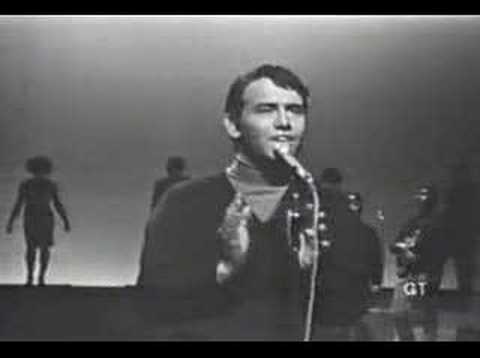


→ More from the 1960s File
View all 1960s hits →




Keep digging