The 1960s File Feature
What The World Needs Now Is Love
Jackie DeShannon and the Song That Became an Anthem In the spring of 1965, a twenty-three-year-old singer from Kentucky named Jackie DeShannon recorded a son…
01 The Story
Jackie DeShannon and the Song That Became an Anthem
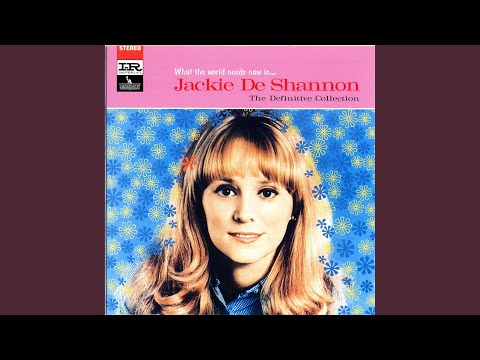
In the spring of 1965, a twenty-three-year-old singer from Kentucky named Jackie DeShannon recorded a song written by Burt Bacharach and Hal David that would become one of the most recognizable expressions of peace advocacy in American popular music history. "What The World Needs Now Is Love" entered the Billboard Hot 100 on May 22, 1965, debuting at number eighty-eight. Over thirteen weeks it climbed steadily, reaching its peak of number seven on July 24, 1965, and in doing so established itself as both a major commercial achievement and a cultural touchstone that would outlast its chart run by decades.
DeShannon had arrived at the recording with a career history already remarkable for its breadth. She had written songs recorded by Brenda Lee, had toured with the Beatles in 1964 as an opening act on their first American tour, and had co-written "Needles and Pins," which became a hit for the Searchers. She was as much a songwriter and industry insider as a performing artist, and she brought that background knowledge to her work with Bacharach and David: she understood how songs were built and what they required from a performer to achieve their full effect.
Burt Bacharach had been developing his partnership with lyricist Hal David through the early 1960s into something that would eventually constitute one of the most celebrated songwriting partnerships in popular music history. Their work together blended jazz-influenced harmonics, unconventional rhythmic structures, and David's emotionally direct but never simplistic lyrics into a sound that was simultaneously sophisticated and genuinely accessible. By 1965, their hit-making operation was at a creative peak: Dionne Warwick had been recording their songs since 1962 and had made them commercially dominant figures.
"What The World Needs Now Is Love" was considered for Dionne Warwick but was ultimately offered to DeShannon, a decision that shaped the song's entire reception history. Warwick's versions of Bacharach-David material tended toward a particular vocal elegance and emotional restraint. DeShannon brought something slightly different: a directness and warmth that suited the song's unabashedly earnest message without tipping into sentiment that would undermine its authority.
The production was entirely in Bacharach's hands, who recorded it with his characteristic attention to orchestral detail. The arrangement featured a bossa nova-influenced rhythm, understated but sophisticated, and Bacharach's signature harmonic moves that created a sense of yearning and resolution simultaneously. The song was not attempting to sound like the British Invasion records dominating the charts in 1965; it occupied a different register entirely, one that connected to the adult pop tradition without retreating from contemporary relevance.
The timing of the record's release placed it in the middle of one of the most turbulent periods of the 1960s. The civil rights movement had produced extraordinary events: the Selma-to-Montgomery marches had taken place in March 1965, the Voting Rights Act would be signed in August, and the United States was deepening its military involvement in Vietnam. A song arguing that what the world most needed was love rather than hatred was not merely a pop sentiment in this context; it was a substantive political position expressed in the most accessible form available.
DeShannon's recording became the definitive version of the song, the one against which all subsequent recordings would be measured. The song was covered by many artists over the subsequent decades, and it was used extensively in television, film, and advertising contexts that reintroduced it to successive generations. DeShannon's performance remained the standard for all of those reintroductions: when people remembered the song, they remembered her voice. This is the highest compliment available to a performer interpreting someone else's composition: to make it so completely their own that the song and the performance become inseparable in cultural memory.
The record also contributed significantly to DeShannon's profile as an artist of genuine substance rather than merely a commercial hitmaker. Her association with Bacharach and David placed her in distinguished company, and the song's enduring cultural presence kept her name alive in conversations about significant popular music of the 1960s long after the specific commercial moment had passed. For a performer who was in many ways ahead of her time, the sustained recognition that "What The World Needs Now Is Love" provided was a form of delayed justice.
02 Song Meaning
The Audacity of a Simple Plea: What "What The World Needs Now Is Love" Really Says
"What The World Needs Now Is Love" achieves something that is much harder than it appears: it makes a statement of profound moral simplicity sound earned rather than naive. Hal David's lyric is built on a premise that could easily collapse into platitude, the assertion that love is the thing the world most lacks, and yet the song has retained its capacity to move listeners for more than six decades. Understanding why requires attention to the specific craft decisions that prevent the sentiment from curdling into cliche.
David structures the lyric around abundance and scarcity in ways that are more precise than a casual listen reveals. The song does not argue that love is absent or impossible; it argues that there is not enough of it given the scale of human need. It then catalogs what the world already has in sufficient or excess quantities: mountains, hillsides, oceans, cornfields. These are not random images. They are images of natural abundance, of the physical world's generosity, contrasted with a specifically human failure to extend similar generosity toward one another. The song's complaint is against human nature, not against cosmic indifference.
This structural contrast between natural plenty and human scarcity is Bacharach's harmonic language made lyrical. His chord progressions characteristically move between yearning and resolution, creating a constant emotional tension in which satisfaction seems always close but never quite fully achieved. David's lyric mirrors this musical argument: the world has everything it needs except the one thing that only human beings can provide. The song therefore asks its listeners not to despair but to act, to supply the missing element that nature cannot provide on their behalf.
Jackie DeShannon's performance navigates the lyric's tone with considerable skill. A more emphatic or pleading delivery would have pushed the song toward sentimentality; a more detached approach would have drained it of its emotional authority. DeShannon finds a middle register: earnest but not desperate, direct but not simple, personal without claiming more than one voice can honestly claim. She sounds like someone who has arrived at this conclusion through experience rather than received wisdom, which makes the argument feel grounded rather than merely inherited.
The song's relationship to its historical moment is important to its meaning but does not exhaust it. In 1965, with the civil rights movement and Vietnam both defining the national conversation, a song asking for more love rather than more hatred was a political statement as much as a personal one. But the song was constructed with sufficient generality that it could survive the specific crisis that initially gave it urgency. Subsequent deployments in later crises, including the September 11 aftermath and numerous other national traumas, confirmed that the sentiment was not period-specific. This durability suggests that David and Bacharach had identified something genuinely structural about human social life rather than merely responding to a particular moment's pressures.
The song also contains a quiet acknowledgment that its own plea is insufficient. The repeated structure of the lyric, cycling back through the same argument without arriving at a resolution, mirrors the open-endedness of the moral problem it addresses. There is no climax in which love is declared achieved or the world declared saved. The song ends still asking, which is honest. Love as a solution is proposed sincerely but without false confidence that the proposal will be accepted. This honesty about its own limitations is, paradoxically, what gives the song its continuing authority.
→ More from Jackie DeShannon
View all Jackie DeShannon hits →

→ More from the 1960s File
View all 1960s hits →




Keep digging