The 1960s File Feature
Needles And Pins
Needles And Pins by Jackie DeShannon: The Original Take on a Future Classic Picture the American pop landscape of 1963, a year poised on the edge of enormous…
01 The Story
"Needles And Pins" by Jackie DeShannon: The Original Take on a Future Classic
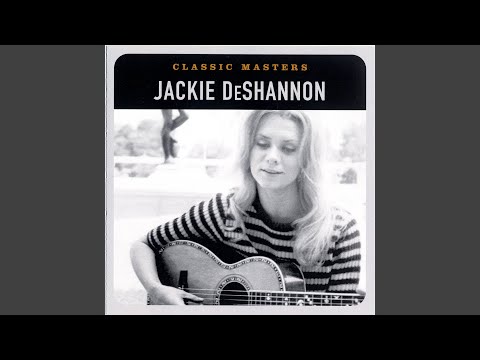
Picture the American pop landscape of 1963, a year poised on the edge of enormous change. Rock and roll's first wave had cooled, girl groups and teen idols filled the airwaves, and the British Invasion was still months from washing ashore. Into that brief, transitional window stepped Jackie DeShannon, one of the most talented and underappreciated figures of the era, with the first recorded version of a song that would soon become a worldwide standard. "Needles And Pins" in her hands is the original blueprint, the place where a future classic first took shape.
A Songwriter's Singer
Jackie DeShannon was a rarity in the early 1960s, a woman who both wrote and performed at a high level when the industry rarely allowed female artists that creative control. She would go on to co-write and record the enduring hit "Put a Little Love in Your Heart" and to pen songs for other major artists, establishing herself as a genuine craftsman behind the scenes as well as in front of the microphone. By 1963 she was already a respected presence in the Los Angeles music world, admired by peers for her writing gifts and her warm, expressive voice.
A Song With a Famous Pedigree
The song itself carries a remarkable backstory. "Needles And Pins" was written by Sonny Bono and Jack Nitzsche, two figures who would loom large over 1960s pop, Bono as half of Sonny and Cher and Nitzsche as a celebrated arranger and producer. DeShannon's recording was the first to bring their composition to the public. Her version has a jangling, melancholy charm, built around the song's instantly memorable central hook and a lyric about romantic vulnerability that countless listeners would come to know by heart in the years that followed.
A Modest American Chart Showing
For all its eventual fame, the original recording made only a small dent on the American charts. "Needles And Pins" debuted on the Billboard Hot 100 at number 97 on May 18, 1963, and climbed only a short distance from there. It reached its peak of number 84 on June 8, 1963, and stayed on the chart for just 4 weeks. It was a quiet showing for a song destined to become a giant. The wider world would not fully embrace the composition until other artists took it up, but DeShannon's recording remains the essential first chapter in its long history.
The First Word on an Enduring Standard
What gives this recording its lasting value is exactly its place at the very beginning. The British group The Searchers would soon take "Needles And Pins" into the upper reaches of the charts on both sides of the Atlantic, and the song would be covered many times over the decades. DeShannon's version is where it all started, the original interpretation against which all the others can be measured. For anyone curious about how a standard is born, her recording offers a fascinating glimpse of a great song in its earliest, purest form.
The Value of Being First
There is a particular fascination in hearing the very first version of a song that would later become enormous. DeShannon's recording lets you imagine the composition before the world had decided what it should sound like, before the famous jangling guitar treatment that later versions made iconic. Her interpretation has its own quiet identity, shaped by her sensibility as both a singer and a songwriter. Listening to it now feels a little like reading an early draft of a celebrated novel, full of the same essential beauty but rendered in a slightly different hand. It deepens one's appreciation of the song to know where it began. For students of pop history, that original recording is an invaluable document, a chance to trace a classic back to its very first breath and to recognize the contribution of an artist too often overlooked in the song's long story.
Press play and hear "Needles And Pins" the way it was first committed to tape, the original spark of a melody the whole world would eventually learn to love.
"Needles And Pins" — Jackie DeShannon's singular moment on the 1960s charts.
02 Song Meaning
The Meaning of "Needles And Pins": The Sharp Sting of Lingering Love
The image at the heart of this song is one of the most vivid in all of pop music. Needles and pins evoke a physical, prickling discomfort, and the lyric uses that sensation to capture the painful aftermath of a love that will not let go. Jackie DeShannon's original recording introduces a meditation on heartbreak that feels both delicate and quietly tormented.
The Central Theme of Painful Longing
At its core, the song describes the agony of still wanting someone who has caused you pain. The needles-and-pins sensation stands in for the sting of seeing a former love and feeling the old desire flood back. It is a song about the helplessness of the heart, the way feelings persist even when the mind knows better. There is no triumph here, only the raw acknowledgment that love can leave a person aching and exposed, vulnerable to the smallest reminder of what was lost.
Vulnerability as Strength
What makes the song so affecting is its emotional honesty. The lyric refuses to hide behind bravado, admitting openly to the weakness and yearning that heartbreak produces. DeShannon's warm, expressive delivery underlines that vulnerability, giving the words a tender ache. In an era when many pop songs kept their emotions tidy, this one dares to dwell in genuine discomfort, which is part of why the composition would resonate so deeply with later audiences.
A Universal Image of Heartache
The song's lasting power owes much to its central metaphor. The phrase captures a feeling everyone recognizes, the prickling unease of unresolved emotion. By translating an abstract heartache into a tangible physical sensation, the songwriters gave listeners a way to name something they had all felt. That clarity of image is one reason the song traveled so far, becoming a standard interpreted by many artists across the decades.
Why It Still Resonates
The song endures because the experience it describes is timeless. Almost everyone has felt the persistent pull of a love that should have faded but refused to. DeShannon's recording gives that universal ache a melody and a memorable image, allowing listeners to feel understood in their own private heartbreak. The genius of the song lies in how much emotional truth it packs into so few words, trusting a single vivid image to do the work of paragraphs. It is a small masterpiece of emotional economy, capturing in a few minutes the long, lingering sting of a love that simply will not release its hold, which is exactly why so many artists were drawn to record it over the years. The best songs about heartbreak do not explain the feeling so much as embody it, and this one does precisely that, letting a single sharp image stand in for an entire ocean of unresolved longing.
→ More from Jackie DeShannon
View all Jackie DeShannon hits →

→ More from the 1960s File
View all 1960s hits →




Keep digging