The 1960s File Feature
Zorba The Greek
"Zorba The Greek" — Herb Alpert The Tijuana Brass The Sound That Owned the Mid-1960s Picture the mid-1960s music landscape as a kind of carnival with many ri…
01 The Story
"Zorba The Greek" — Herb Alpert & The Tijuana Brass
The Sound That Owned the Mid-1960s
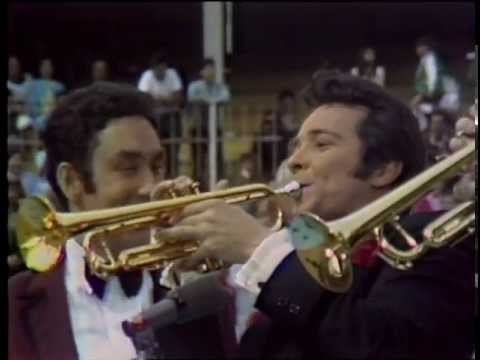
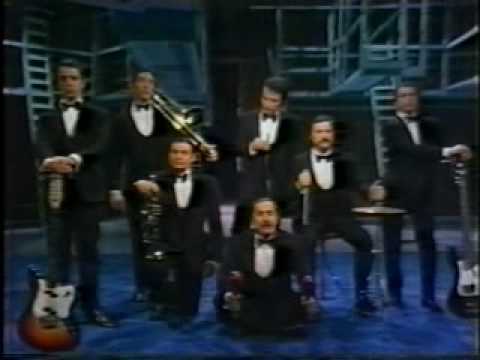
Picture the mid-1960s music landscape as a kind of carnival with many rings. In one, the British Invasion bands were rewriting rock and roll. In another, Motown was perfecting soul. And somewhere near the center of it all, wearing something considerably brighter than the competition, stood Herb Alpert and his Tijuana Brass, playing a music that defied every existing category and charmed millions of Americans in the process. Herb Alpert and The Tijuana Brass were, for a remarkable stretch in the mid-1960s, among the most commercially successful musical acts in the United States, competing directly with the Beatles for album sales and delivering a succession of singles that felt like organized joy distilled into vinyl.
By 1965, when "Zorba The Greek" appeared, the group had already established the essential elements of its sound: punchy brass arrangements, a slightly irreverent warmth, and Alpert's distinctive trumpet lead that managed to sound simultaneously professional and casually festive. The group recorded for A&M Records, the label Alpert had co-founded with Jerry Moss in 1962, which meant the creative decisions behind every release were made by people deeply invested in the music rather than by distant corporate executives. That independence showed in everything the group released.
Adapting a Cinematic Theme
"Zorba The Greek" was an adaptation of the theme from the 1964 film of the same name, directed by Michael Cacoyannis and starring Anthony Quinn. The original theme was composed by Mikis Theodorakis, the Greek composer whose music for the film became instantly recognizable and enormously popular worldwide. The theme's central musical motif, built on a sirtaki rhythm that Theodorakis developed specifically for the film, captured a particular spirit: exuberant, slightly frantic, building in intensity from a measured start to a near-frenzied conclusion.
Alpert and the Tijuana Brass brought their own sensibility to this material, filtering a Greek cinematic theme through the group's established sound and producing something that occupied an interesting middle space between the source material and their usual output. The brass-forward arrangement suited the theme's natural ebullience, while the group's slightly tongue-in-cheek approach gave the recording a lightness that prevented it from feeling like a mere exercise in film score adaptation. The result was a piece of music that stood on its own without requiring knowledge of the film to enjoy.
A Deliberate March up the Charts
The chart history of "Zorba The Greek" unfolded with the kind of patient momentum that characterized the best singles of the mid-1960s. The record debuted on the Billboard Hot 100 on December 25, 1965, entering at position 82, a modest starting point that gave no indication of what was to come. Over the following weeks it climbed steadily: through the 60s in early January, through the 50s and 40s as the new year settled in, and then through the 30s and 20s as winter deepened.
By the chart dated February 26, 1966, the single had reached number 11 on the Billboard Hot 100, its peak position. The climb had taken twelve weeks from debut to peak, a gradual accumulation of airplay and consumer interest that spoke to genuine, broad popularity rather than a single concentrated promotional push. Twelve weeks on the chart was a substantial run, and a peak inside the top 15 placed the record among the notable hits of its chart cycle.
Herb Alpert's Commercial Command
The success of "Zorba The Greek" fit within a period of almost unprecedented commercial dominance for Herb Alpert and the Tijuana Brass. The group occupied an unusual position in the marketplace: popular enough to compete with rock acts on the singles chart, while simultaneously generating album sales that rivaled anything the era produced. Their albums were fixtures on the Billboard albums chart throughout the mid-1960s, and they collected Grammy Awards with notable regularity. A&M Records, still a young independent label when the group was at its peak, grew substantially on the back of this commercial success.
The decision to record "Zorba The Greek" was characteristic of the group's approach during this period: finding material from unexpected sources, applying the Tijuana Brass sound, and trusting that the combination would find an audience. The film had been a critical and commercial success, and Theodorakis's theme was already widely known. Alpert's arrangement gave listeners a version they could enjoy in a domestic setting, divorced from the film's Greek setting and story but retaining all of its kinetic energy.
A Bridge Between Worlds
One of the most interesting things about Herb Alpert's catalog from this era is the way it served as a bridge between the sophisticated adult audience that had come of age with big band jazz and the younger listeners who were discovering pop music in the 1960s. "Zorba The Greek" was particularly effective in this bridging function, drawing on a classical musical source while packaging it in a contemporary, accessible format. The record demonstrated that the Top 40 audience was more musically adventurous than it was sometimes given credit for, willing to embrace an instrumental adaptation of a Greek film theme as enthusiastically as it embraced anything else on the chart.
Put the needle down and let Alpert's trumpet take you somewhere between Tijuana and the Aegean.
"Zorba The Greek" — Herb Alpert & The Tijuana Brass's singular moment on the 1960s charts.
02 Song Meaning
"Zorba The Greek" — Joy, Movement, and the Universal Language of Brass
Music as Pure Physical Experience
Some recordings make their case intellectually, asking the listener to follow an argument or sit with an idea. Others work through the body first, bypassing the analytical mind and arriving directly in the muscles. "Zorba The Greek" belonged emphatically to the second category. The sirtaki rhythm at the heart of the recording, derived from the traditional Greek musical forms that Mikis Theodorakis had adapted for the 1964 film, carried with it an almost physical insistence, a pulse that suggested movement, celebration, and a particular Mediterranean philosophy of living fully in the present moment.
Theodorakis's Vision, Alpert's Translation
The original composition by Mikis Theodorakis for the Michael Cacoyannis film was built on a sophisticated musical idea: a theme that began slowly and deliberately, then accelerated progressively, ending in something close to musical frenzy. This structural arc mirrored the emotional journey of Anthony Quinn's title character, a man who embraced life with an intensity that the film's more restrained protagonist could only observe with something between admiration and bewilderment. The music was, in a sense, an argument for a particular way of being in the world: fully present, physically alive, unafraid of looking foolish in the pursuit of joy.
Herb Alpert's version preserved the essential energy of this argument while translating it into the Tijuana Brass's established idiom. The result was a recording that carried the philosophical content of the original, however implicitly, while making it available to an audience that might never have encountered the film. Listeners who heard Alpert's version were receiving, whether they knew it or not, something of Theodorakis's vision: music as an invitation to move, to participate, to abandon self-consciousness.
The Appeal of the Instrumental
In a pop landscape saturated with lyrics, "Zorba The Greek" offered something different: music that communicated entirely through sound and rhythm, with no words to mediate the experience. Instrumental recordings occupied a particular cultural niche in the mid-1960s, appealing to listeners who wanted something they could play in the background of a dinner party or in the car without the demand of lyrical attention. But the best instrumentals, including this one, also rewarded active listening, revealing layers of musical craft that repaid close attention.
The Tijuana Brass's sound had always been characterized by a kind of sophisticated informality, professional musicianship delivered with an apparent ease that made complexity feel accessible. "Zorba The Greek" deployed these qualities effectively, presenting a theme with real musical complexity in a package that felt welcoming rather than intimidating.
Cross-Cultural Exchange in the Pop Marketplace
The success of "Zorba The Greek" on the American pop chart was a small but interesting example of cross-cultural exchange operating through commercial music. A Greek film theme, composed by a left-leaning Greek political artist (Theodorakis would later face persecution under the Greek military junta), reached American teenagers and adults through a California-based trumpet player working in a pseudo-Latin idiom. The specific political and cultural contexts collapsed in transit, leaving only the music and its emotional directness.
Lasting Resonance of the Theme
Theodorakis's theme for "Zorba" achieved a rare kind of cultural permanence, becoming one of the most widely recognized melodies of the twentieth century and synonymous, in the Western cultural imagination, with Greek identity and a certain kind of Mediterranean exuberance. Alpert's recording contributed to that permanence in the American context, introducing the melody to listeners who might not have seen the film and embedding it in the pop consciousness of the mid-1960s. The chart success of the single, reaching number 11 on the Hot 100 after twelve weeks of climbing, was a measure of how effectively the translation worked: listeners responded not just to novelty but to the genuine emotional force the original theme contained.
→ More from Herb Alpert & The Tijuana Brass
View all Herb Alpert & The Tijuana Brass hits →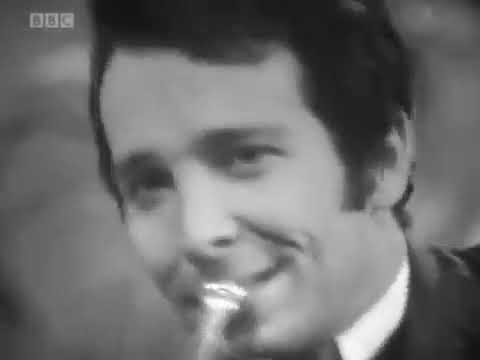

→ More from the 1960s File
View all 1960s hits →




Keep digging