The 1960s File Feature
Taste Of Honey
A Taste Of Honey — Herb Alpert M Records with Jerry Moss in 1962, operating out of Alpert's garage before the label grew into one of the most successful inde…
01 The Story
A Taste Of Honey — Herb Alpert & The Tijuana Brass
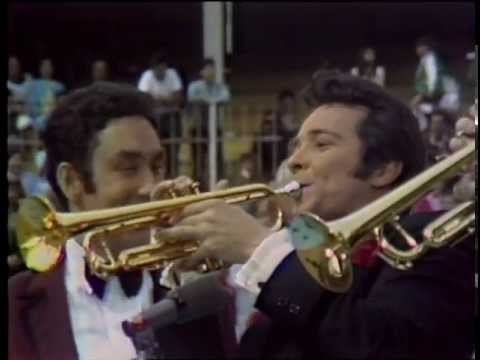
Herb Alpert's recording of "A Taste of Honey" with the Tijuana Brass in 1965 is among the most decorated instrumental performances in the history of American popular music. The song itself had a long pedigree before Alpert touched it: composed by Bobby Scott and Ric Marlow, it had been used as the theme for a 1960 Broadway production and had been recorded vocally by several artists, most notably Lenny Welch. But it was Alpert's brassy, warmly Latin-inflected instrumental version that transformed the song into a commercial and critical phenomenon, winning him some of the most prestigious awards the recording industry could offer.
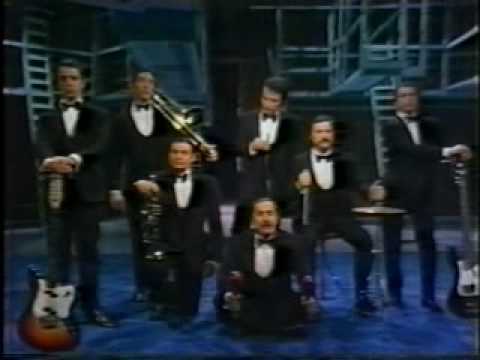
Alpert had founded A&M Records with Jerry Moss in 1962, operating out of Alpert's garage before the label grew into one of the most successful independent operations in American music history. The Tijuana Brass sound he developed was a deliberate hybrid, blending the energy of Mexican mariachi music with American jazz phrasing, pop sensibility, and a relaxed, almost conversational quality that distinguished the ensemble from the more formal brass ensembles of the previous decade. The formula proved commercially potent, and by the mid-1960s the Tijuana Brass was one of the most successful recording acts in the country, competing regularly with the Beatles for album sales and chart position.
"A Taste of Honey" appeared on the album of the same name, released on A&M in 1965. Alpert's trumpet work on the track is characteristically warm and unhurried, drawing out the melody's sweetness without overplaying or adding unnecessary ornamentation. The rhythm section provides a gentle forward motion while the rest of the brass ensemble fills the spaces around the melody with the easy confidence that was the Tijuana Brass's signature. The production, like most of Alpert's work from this period, was clean and immediate, designed for high-fidelity playback on the home stereo systems that were becoming increasingly common in American middle-class households.
The critical and commercial response to the recording was remarkable. At the Grammy Awards ceremony in 1966, "A Taste of Honey" won the Grammy for Record of the Year, one of the most prestigious prizes in the industry and one typically associated with vocal performances. An instrumental winning this award was unusual and reflected the genuine regard in which Alpert's performance was held by the Recording Academy's membership. The song also won the Grammy for Best Instrumental Arrangement and the Grammy for Best Instrumental Performance (Non-Jazz). Alpert additionally won Best Male Pop Vocal Performance that year for a different track, making him one of the rare artists to win multiple Grammy categories in a single evening across both instrumental and vocal work.
On the Billboard Hot 100, the Tijuana Brass maintained a commercial presence throughout the mid-1960s that was extraordinary for an instrumental act. Albums consistently outsold those of most vocal artists, and the group's appeal crossed demographic lines in ways that few pop acts managed. Older listeners who might have been skeptical of rock and roll embraced the Tijuana Brass's good-humored, melodically accessible approach, while younger audiences responded to the rhythmic vitality and the novelty of the ensemble's hybrid sound. Radio programmers valued the recordings because they provided a musical palate cleanser between more intense or controversial material.
The success of "A Taste of Honey" also had significant implications for A&M Records as a business. The label's ability to produce major commercially successful recordings gave it the financial stability and industry credibility to sign other artists whose work might not have had an obvious commercial profile. Over the following decade, A&M would sign acts ranging from Carpenters to Cat Stevens to the Police, building a roster that was remarkably diverse in genre and audience while maintaining consistent commercial success. The foundation for that institutional ambition was laid in large part by the early Tijuana Brass recordings.
The cultural footprint of "A Taste of Honey" extended into film and television, where the song's gentle instrumental quality made it useful as an underscore for scenes requiring a particular quality of warmth or nostalgia. Alpert's trumpet tone, immediately recognizable and associated in the public mind with relaxed sophistication, became a kind of sonic shorthand for a specific mid-1960s American mood, optimistic and prosperous and pleasantly untroubled by the decade's deepening conflicts. That the recording captured this mood in purely instrumental terms, without the mediation of words, made its emotional communication all the more direct and its datedness, when it came, all the more specific.
Herb Alpert continued recording and performing well into subsequent decades, and his trumpet work remained a consistent presence in American popular music. But the period from roughly 1965 through 1968 represented the peak of the Tijuana Brass's commercial dominance, and "A Taste of Honey" remains the recording that best exemplifies what the ensemble accomplished at its best: a synthesis of influences that felt genuinely new, delivered with technical assurance and genuine warmth, and rewarded by the kind of recognition that popular music rarely bestows on purely instrumental work.
02 Song Meaning
The Language of Brass: Meaning and Register in "A Taste Of Honey"
Note: The recording discussed here is the Herb Alpert and the Tijuana Brass instrumental version released on A&M Records in 1965, which won the Grammy for Record of the Year. It is distinct from various vocal versions of the same song by other artists.
"A Taste of Honey" presents an interpretive challenge that is characteristic of great instrumental recordings: without words, meaning must be inferred entirely from the quality of the performance, the choices made in arrangement and production, and the listener's own emotional response to the melodic material. What Herb Alpert chose to emphasize in his version was the song's quality of sweetness uncomplicated by anxiety, a reading that suited both his instrumental voice and the cultural moment in which the recording appeared.
The song's title is itself a metaphor of sensory pleasure, an experience of something desirable that is also, by implication, brief. The original theatrical and lyrical contexts from which the material was drawn carried more melancholy than Alpert's version suggests. His trumpet work transforms the melody into something more purely pleasurable, a sustained moment of warmth rather than a bittersweet reflection on transience. This interpretive choice was commercially astute but also artistically coherent: Alpert's entire aesthetic project with the Tijuana Brass was about creating a particular kind of ease and good humor in the listener, and "A Taste of Honey" fit that project perfectly.
The Grammy recognition the recording received, including the Record of the Year award, validated an implicit argument that instrumental music could communicate as fully and meaningfully as vocal music. This was not a novel argument in jazz circles, where the debate between instrumental and vocal primacy had been ongoing for decades, but in the context of the pop Grammy awards it was genuinely significant. The Recording Academy's membership voted to honor a performance in which no words were spoken, in which everything communicated was communicated through timbre, phrasing, rhythm, and melody alone.
What "A Taste of Honey" communicated in those non-verbal terms was a particular quality of mid-1960s American optimism. The recording sounds like a certain version of leisure, of living rooms with good hi-fi systems and Saturday afternoons without obligation. This is not a trivial achievement. Popular music that captures a specific social mood without condescending to it or caricaturing it has real documentary value, and Alpert's recording functions as an artifact of middle-class American cultural life in the mid-1960s that is more precise in some ways than more self-consciously ambitious work from the same period.
The accessibility of the Tijuana Brass sound was sometimes held against Alpert by critics who preferred more challenging instrumental music, but accessibility and meaning are not opposites. The reason "A Taste of Honey" reached the audiences it reached was that Alpert's trumpet voice communicated directly and warmly, without the mediation of irony or difficulty. For listeners who came to the record in 1965, it offered something genuine: a few minutes of uncomplicated pleasure delivered with real craft and real feeling. That it did so in an era of increasing cultural and political turbulence only amplified the appeal.
For Alpert's career, the recording established the terms on which he would be judged for the rest of his professional life. He was an artist who prioritized communication over complexity, warmth over challenge, craft over experimentation. These choices have been debated by critics for decades, but the Grammy for Record of the Year, awarded by an industry that included some of the most sophisticated musical minds in the country, suggests that the debate is not as settled as some detractors would have it. "A Taste of Honey" earned its recognition on the merits of what it actually accomplished, and what it accomplished was genuinely difficult to do.
→ More from Herb Alpert & The Tijuana Brass
View all Herb Alpert & The Tijuana Brass hits →


→ More from the 1960s File
View all 1960s hits →




Keep digging