The 1960s File Feature
Green Grass
"Green Grass" — Gary Lewis And The Playboys Sun-Drenched Pop in the Summer of 1966 Picture the American pop landscape in the spring of 1966: the Beatles had …
01 The Story
"Green Grass" — Gary Lewis And The Playboys
Sun-Drenched Pop in the Summer of 1966
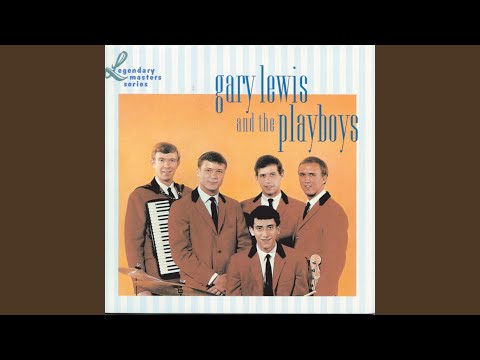
Picture the American pop landscape in the spring of 1966: the Beatles had just released Rubber Soul a few months prior, the Stones were pushing toward harder edges, and Motown was cranking out hits at a pace that seemed almost supernatural. Somewhere in that roiling, exciting marketplace, a group of young men from Los Angeles were carving out a distinctly sunlit corner with a string of bright, optimistic singles. Gary Lewis And The Playboys had already scored enormously with "This Diamond Ring" and a run of follow-up hits, and Green Grass arrived in May 1966 as another perfectly tuned entry in their catalog.
Gary Lewis, the son of comedian Jerry Lewis, had assembled the Playboys as a genuine working band rather than a manufactured vehicle. Their sound was crafted with care at Liberty Records, and the group had a knack for choosing material that felt both contemporary and deeply likable. Green Grass, written by Roger Cook and Roger Greenaway, gave the group a song steeped in pastoral warmth, a vision of domestic contentment set against an idealized rural backdrop. The choice of material was shrewd: mid-sixties America had an enormous appetite for precisely this kind of uncomplicated, melodically strong pop.
The Sound and the Session
The arrangement of Green Grass leaned into the warmth that defined Liberty Records productions of that era. A crisp, bouncing rhythm track underpinned Gary Lewis's clean, pleasant tenor, and the production layered in vocal harmonies that gave the track its radio-ready sheen. The songwriting team of Roger Cook and Roger Greenaway was one of the most reliable hit factories of the 1960s, responsible for dozens of chart successes across both the American and British markets. Their gift was an ability to write songs that sounded simple but contained genuine melodic craft, and Green Grass demonstrated that gift at a high level.
The song describes the quiet joy of a life lived close to the land, with images of countryside contentment and domestic happiness woven together in a way that felt both specific and universally appealing. In an era when much of pop was tilting toward psychedelia or social commentary, Green Grass stood almost deliberately apart, offering something gentler. That wasn't a weakness in 1966: it was a market position, and the Playboys occupied it with skill.
Racing Up the Billboard Hot 100
The single debuted on the Billboard Hot 100 on May 14, 1966, entering at number 49. The ascent was swift and consistent. Within a week it had climbed to number 25, then to 12, then hovered around 9 for several weeks before reaching its peak of number 8 on June 18, 1966. The track spent eight weeks on the chart in total, a solid run that reflected genuine radio penetration and strong listener demand rather than a brief novelty spike.
For Gary Lewis And The Playboys, a top-ten placing was almost standard operating procedure by mid-1966. The group had one of the more remarkable early-career hot streaks in 1960s pop, and Green Grass extended that streak in convincing fashion. Liberty Records had built a reliable promotional infrastructure around the group, and the record's climb reflected both the quality of the song and the machinery supporting it.
Gary Lewis in the Wider Picture
Gary Lewis occupied an interesting position in mid-sixties pop. His famous last name opened doors and attracted attention, but the group earned their place on radio through consistent, well-crafted releases. The Playboys were a real band capable of holding their own on stage, and Lewis himself had a vocal quality that suited the buoyant material they favored. By 1966, the group had accumulated multiple top-ten hits, a run that placed them comfortably among the more successful American pop acts of the period, competing for airtime not just with each other but with British Invasion groups who continued to flood the market.
The draft notice Lewis received in 1967 effectively interrupted the group's momentum at a critical moment, and the landscape they returned to was substantially different from the one they'd left. In that context, Green Grass acquires a certain poignance as one of the final entries in an unbroken run of commercial success before circumstances intervened. The song captures the group at or near the height of their powers, operating with the confidence of a unit that understood its audience and knew how to deliver what that audience wanted.
A Piece of 1966 That Still Holds Up
What makes Green Grass endure beyond its chart moment is the quality of the underlying songwriting and the sincerity of the performance. Roger Cook and Roger Greenaway wrote something with real melodic staying power, and Gary Lewis And The Playboys recorded it with the kind of direct, unpretentious commitment that separates records that last from records that merely chart. There is no irony in Green Grass, no hedging, no self-consciousness about being a pop record. It is exactly what it presents itself as, and that honesty is its most durable quality.
Listeners returning to the record today will find something that feels like a window into a particular summer, a season when pop could be pastoral and uncomplicated and still find millions of willing ears. Put it on and let 1966 come flooding back.
"Green Grass" — Gary Lewis And The Playboys' singular moment on the 1960s charts.
02 Song Meaning
"Green Grass" — Themes of Contentment and Pastoral Longing
The Appeal of the Simple Life
At its core, Green Grass is a song about the dream of uncomplicated happiness. The images the lyric conjures are deliberately pastoral: open countryside, clean air, a life lived at a pace that the crowded, competitive modern world makes difficult to access. Roger Cook and Roger Greenaway built the song around a kind of emotional simplicity that had enormous resonance in 1966, a moment when American culture was accelerating in ways that felt thrilling to some and disorienting to others. For listeners who found the pace of change unsettling, a song celebrating the green grass and the good life offered genuine comfort.
The domestic contentment at the heart of the lyric taps into a longing that runs very deep in popular music, the wish to find a place that feels safe and permanent, away from the noise. This was a theme that country music had owned for decades, and Green Grass brought a similar emotional sensibility into the pop mainstream without requiring listeners to self-identify with any particular regional or cultural tradition.
Innocence as an Artistic Choice
By 1966, pop music was beginning to fracture into something considerably more complex. Bob Dylan had gone electric and written Highway 61 Revisited. The Beatles were moving toward the experimental textures that would define Revolver. Against that backdrop, a song as straightforwardly optimistic as Green Grass represented a conscious artistic position, not naivety, but a defense of simplicity as a legitimate emotional register. Not every listener in 1966 wanted to be challenged or unsettled. Many of them wanted exactly what Gary Lewis And The Playboys were offering: a song that felt like a warm afternoon.
That choice resonated commercially, as the track's top-ten peak confirmed. The appetite for uncomplicated pop didn't disappear in 1966 just because the counterculture was gaining volume; it simply became less fashionable to acknowledge openly. The Playboys acknowledged it without apology.
Nostalgia and the Idealized Landscape
The green grass of the title functions as a symbol that listeners could fill with their own specific content. For some, it meant a literal rural landscape, a farm or a yard or a childhood home. For others, it carried a more abstract meaning, the sense of a life that feels earned and peaceful, where the ground is steady underfoot. This kind of open symbolism is one of the reasons broadly appealing songs find such large audiences. The lyric points toward an emotion rather than a specific circumstance, allowing every listener to locate themselves in it.
This technique was central to the Cook and Greenaway songwriting approach. Their lyrics tended to work through imagery rather than narrative, painting an emotional mood rather than telling a story with plot mechanics. Green Grass is less about specific events than about a feeling, and feelings translate more broadly than storylines.
Why It Still Resonates
The themes of Green Grass have not become less relevant with time. If anything, the pastoral longing the song articulates has intensified as urban density, digital saturation, and economic pressure have made the ideal of a quieter, greener life feel further out of reach for many people. Songs that speak to the desire for peace and rootedness find new audiences in each generation, even when the production style that carries them becomes dated. The melody is strong enough and the emotional core genuine enough that the record continues to find listeners who respond to what it offers.
There is also something worth noting about the performance itself as a carrier of meaning. Gary Lewis sings the song with an earnestness that doesn't tip into sentimentality, and that restraint matters. The record trusts the listener to feel what the song is describing without pushing or over-dramatizing. In a crowded and often overwrought pop landscape, that trust is its own form of sophistication.
"Green Grass" — Gary Lewis And The Playboys' singular moment on the 1960s charts.
→ More from Gary Lewis And The Playboys
View all Gary Lewis And The Playboys hits →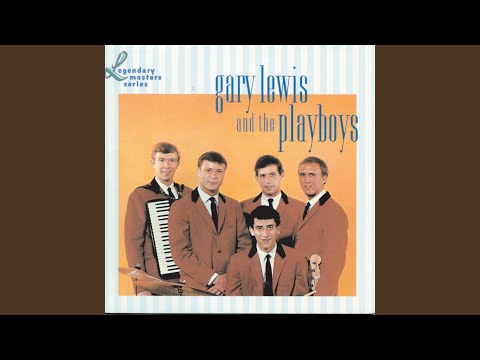
→ More from the 1960s File
View all 1960s hits →




Keep digging