The 1960s File Feature
Love Child
Love Child — Diana Ross The Supremes: History By the autumn of 1968, Diana Ross and The Supremes had spent the better part of four years as the undisputed ce…
01 The Story
Love Child — Diana Ross & The Supremes: History
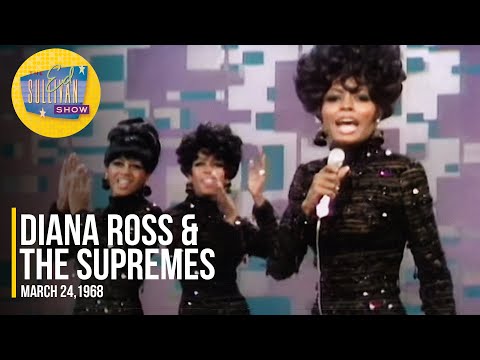
By the autumn of 1968, Diana Ross and The Supremes had spent the better part of four years as the undisputed centerpiece of Motown's commercial empire. They had scored an extraordinary run of number one singles, become the faces of the label's crossover ambition, and appeared on virtually every major American television variety program. Yet the pop landscape was shifting around them. The counterculture had grown louder, Sly Stone and James Brown were pushing rhythm and blues into rougher, more politically charged territory, and even middle-of-the-road listeners were beginning to expect some acknowledgment of the social turbulence playing out nightly on the evening news. It was into this charged atmosphere that "Love Child" arrived, and it arrived with a force that surprised even Motown's own internal skeptics.
The song was conceived and produced by a creative team operating under the informal collective name The Clan, which included producers Deke Richards, Pam Sawyer, Frank Wilson, and Henry Cosby, all working under Berry Gordy's Motown roof. Gordy himself was initially uncertain about the direction. The lyric addressed the experience of a child born outside of marriage, the shame attached to that status in mid-twentieth-century American society, the poverty and social stigma that followed such a child into adulthood, and the emotional cost of carrying that identity. It was frank in a way that most Supremes material had never attempted to be. Gordy's first instinct was caution, but the creative team pressed forward and the result proved him wrong in the most commercially spectacular fashion.
Released in October 1968 on the Motown label, "Love Child" entered the Billboard Hot 100 and moved quickly. By late November it had reached the summit. The single spent two weeks at number one on the Billboard Hot 100, a result that placed it among the most successful Supremes recordings in absolute chart terms and confirmed that the group's audience was prepared to follow them into more serious subject matter. The record also performed strongly on the rhythm and blues charts, demonstrating that its appeal was not purely a crossover phenomenon manufactured for white radio.
The production itself was notably different from the lush, string-cushioned sound the Supremes had become known for through their collaborations with Holland-Dozier-Holland. "Love Child" had a grittier, more insistent rhythmic drive. The arrangement leaned harder on percussion and brass, giving the track a harder-edged feel that suited its lyrical content. Diana Ross's vocal performance was restrained and deliberate, prioritizing emotional specificity over the kind of soaring delivery that had characterized earlier hits. The contrast was intentional and it read clearly to listeners.
The song arrived during a year of profound American social disruption. The assassinations of Martin Luther King Jr. and Robert F. Kennedy, the riots at the Democratic National Convention in Chicago, and the broader unraveling of the post-war liberal consensus all formed the backdrop against which "Love Child" played on the radio. Its subject matter, the stigma surrounding illegitimacy and poverty, connected to wider conversations about race, welfare, and the moral codes enforced most heavily on the poorest members of society. Motown's decision to engage that territory, even obliquely through a pop single, was culturally significant regardless of whether it was calculated or instinctive.
The record sold over a million copies, becoming a certified hit in the commercial sense that Gordy's organization measured success. It also reset expectations for what the Supremes could address in their recordings. A follow-up television special built around the song's themes was produced and broadcast, extending the record's cultural reach beyond radio play. The group appeared in unconventional settings for the special, deliberately stepping away from the glamour associated with their earlier television appearances.
Critically, the single helped sustain the Supremes' commercial relevance during a transitional period. Holland-Dozier-Holland had departed Motown in a contractual dispute, and the label needed to demonstrate that the group's hit-making capacity did not depend exclusively on that writing and production partnership. "Love Child" provided that proof emphatically. It also represented an important early example of Motown's willingness, however cautious, to engage the social consciousness movement that would increasingly shape Black popular music through the early 1970s.
The single has retained its cultural standing across the decades since its release. It is regularly cited in histories of Motown and of American popular music more broadly as a moment when the label's signature sound stretched to accommodate something more complicated than romantic longing. For Diana Ross specifically, it demonstrated a dramatic range that would serve her through the solo career that began the following year. The song endures as one of the defining recordings of its particular cultural moment.
02 Song Meaning
Love Child — Diana Ross & The Supremes: Meaning
"Love Child" occupies an unusual position in the Supremes' catalog precisely because it refuses the emotional safety of most of their earlier work. Where previous hits had navigated the terrain of romantic anticipation, heartbreak, and longing in ways that were emotionally engaging but socially neutral, this song planted itself firmly in the lives of people the mainstream pop audience rarely encountered as protagonists. The narrator is a person who was born outside of wedlock in conditions of poverty, and the song's central tension is the weight of that origin on the person's present choices and sense of self.
The lyrical subject matter, described in paraphrase rather than quotation, involves the narrator addressing a romantic partner and explaining that their intimacy cannot proceed to a certain point because of a specific fear. The narrator does not want to create another child who will carry the same stigma they have carried. The fear is not abstract but rooted in lived experience, in the shame of growing up labeled illegitimate, in the charity clothing and the difficult circumstances that attended a childhood defined by that label. The song asks its listener to sit with that calculus and to understand it as something more than personal reluctance.
Diana Ross's vocal delivery is central to the song's emotional power. She resists sentimentality and instead presents the narrator's position with a matter-of-fact clarity that makes the content land harder than any more melodramatic approach would allow. The restraint reads as dignity, and dignity in the face of stigma is precisely the emotional register the song is working in. It presents a person who is not defeated by their circumstances but who is shaped by them in ways that cannot simply be wished away.
The song's social dimension was legible to audiences in 1968 in ways that connected directly to live public debates. Welfare policy, the stigmatization of poor families, and the particular burdens placed on women outside traditional family structures were all contested political topics during this period. "Love Child" did not lecture about these issues but instead humanized them through a single narrator's experience. That approach proved far more effective as popular communication than any more didactic treatment would have been.
For the Supremes as a group, the song represented a meaningful expansion of their artistic identity. They had been symbols of aspiration and elegance, images of Black success in a white-dominated entertainment industry. "Love Child" complicated that image by introducing vulnerability and social precarity into their narrative. Rather than undermining their appeal, this complication deepened it and demonstrated that their audience was capable of receiving something more nuanced than their earlier hit formula suggested.
The song's Grammy nominations and its commercial success together confirmed that the mainstream American pop audience in 1968 was willing to engage material that acknowledged the rough textures of American social life, at least when that material was delivered through a compelling melody and a powerful vocal performance. "Love Child" helped open space in popular music for the more explicitly social recordings that would emerge across the following several years, from artists operating across soul, funk, and even mainstream pop.
Within Diana Ross's own artistic development, "Love Child" functions as an early signal of the complexity she would bring to her solo work. The ability to inhabit a character with a specific social history and to convey that character's interiority without melodrama is a skill she deployed on this recording with unusual confidence. The song remains one of the most emotionally precise recordings in the Supremes' catalog, and its meaning has not diminished with distance from 1968. If anything, the issues it raises about poverty, stigma, and reproductive anxiety have proven to be enduring rather than period-specific, which helps explain why the recording continues to resonate with listeners who encounter it long after its moment of original release.
→ More from Diana Ross & The Supremes
View all Diana Ross & The Supremes hits →


→ More from the 1960s File
View all 1960s hits →




Keep digging