The 1960s File Feature
Forever Came Today
Diana Ross and The Supremes: "Forever Came Today" and a Name in Transition When "Forever Came Today" was released in early 1968, it appeared under a billing …
01 The Story
Diana Ross and The Supremes: "Forever Came Today" and a Name in Transition
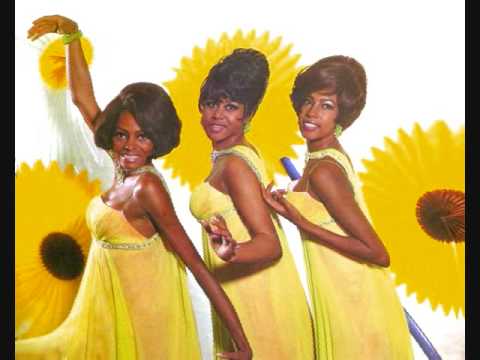
When "Forever Came Today" was released in early 1968, it appeared under a billing that carried its own historical significance: Diana Ross and The Supremes. Motown had made the strategic decision to foreground Diana Ross's name above the group's collective identity, a choice that signaled, to those paying attention, the eventual direction of the most successful act in the label's history. The record debuted on the Billboard Hot 100 on March 16, 1968, at position 70, and climbed steadily to its peak of number 28 on the chart week of April 27, 1968, spending nine weeks on the chart overall. The performance placed the record in the middle tier of the group's extensive hit catalog, neither their biggest success nor an afterthought, but a genuine charting single that extended their streak into the late 1960s.
The song was a product of Holland-Dozier-Holland, the songwriting and production triumvirate that had been responsible for the most significant entries in the Supremes' catalog throughout the mid-1960s. Brian Holland, Lamont Dozier, and Eddie Holland had constructed an extraordinary run of top-ten hits for the group beginning with "Where Did Our Love Go" in 1964 and continuing through a sequence that included "Baby Love," "Stop! In the Name of Love," "Back in My Arms Again," "I Hear a Symphony," "You Can't Hurry Love," "You Keep Me Hangin' On," and "Love Is Here and Now You're Gone." Their formula, if it could be called that, combined melodic immediacy with rhythmic propulsion and vocal production that showcased the group's strengths with clinical precision.
By early 1968, the Holland-Dozier-Holland partnership was in its final months with Motown. The team would depart the label later that year in a dispute over royalties and credit, a breakup that would have profound consequences for Motown's production capacity and that would eventually lead to the founding of their own Hot Wax and Invictus labels. "Forever Came Today" was among the last recordings the trio completed under their Motown arrangement, giving the record a retrospective significance as a late chapter in one of the most productive creative partnerships in the history of American popular music.
The Supremes at this moment in their history were operating in complex circumstances. The original lineup of Diana Ross, Mary Wilson, and Florence Ballard had been altered in mid-1967 when Ballard was replaced by Cindy Birdsong, a founding member of Patti LaBelle and the Bluebelles. Ballard's departure was the result of a combination of personal difficulties and label politics, and it marked the end of the group's classic configuration. Birdsong was an accomplished singer who integrated smoothly into the Supremes' sound, but the personnel change was a visible sign of the instability beneath the surface of what appeared from outside to be a smoothly operating operation.
The decision to rebrand as "Diana Ross and The Supremes" had occurred in late 1967, and "Forever Came Today" was among the first significant singles released under the new billing. The name change was controversial within the group, with Wilson in particular expressing reservations about a decision that subordinated the collective identity she had helped build. But Motown founder Berry Gordy was committed to the strategy, which he saw as the logical next step in Ross's trajectory toward a solo career that the label was already quietly preparing.
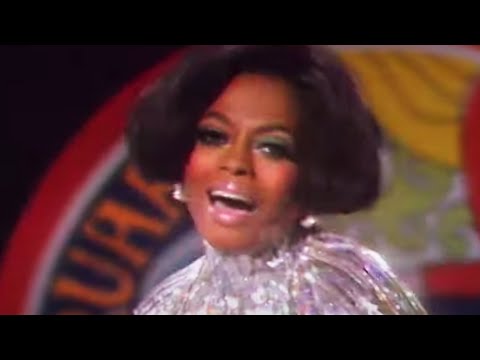
The song itself was a characteristic Holland-Dozier-Holland production, deploying the established Supremes formula with the confident precision of a team that knew exactly what it was doing. The rhythm section drove the track with the steady pulse that had characterized the team's best Motown work; the melodic structure moved through its verses and chorus with the inevitability that their best songs always achieved; and Diana Ross's lead vocal balanced emotional urgency with the controlled glamour that had become her commercial signature.
The nine-week chart run that brought "Forever Came Today" to its number-28 peak was a reasonable performance given the competitive environment of early 1968. The pop charts of that spring were populated by some of the most enduring records of the era, and a number-28 finish represented genuine commercial success rather than a disappointment. The R&B chart performance supplemented the pop showing, as it routinely did for Supremes releases, with an audience that had followed the group since their earliest Motown releases.
The record arrived at a transitional moment not just for the Supremes but for Motown as a whole. The label was beginning to diversify its roster and its sound, signing acts whose creative ambitions went beyond the single-focused Hitsville formula. Marvin Gaye and Stevie Wonder were moving toward greater artistic autonomy. The Detroit-based company was also expanding its physical presence toward Los Angeles. The Motown that had produced the classic Supremes run of 1964 to 1967 was evolving into something more complex, and "Forever Came Today" documents a specific moment in that evolution.
Holland-Dozier-Holland's departure from Motown later in 1968 meant that the production team's association with the Supremes, which had been among the most commercially fruitful relationships in popular music, ended with records like this one. The creative void their departure created would never be fully filled, and the Supremes' subsequent chart history, while still including hits, never replicated the sustained dominance of the mid-1960s peak. "Forever Came Today" thus stands as a late document of a creative partnership in its final productive phase.
02 Song Meaning
Love Fulfilled and Its Complications: The Meaning of "Forever Came Today"
"Forever Came Today," as performed by Diana Ross and The Supremes and written and produced by Holland-Dozier-Holland in 1968, explores the specific emotional experience of love that arrives after having been long anticipated or hoped for. The title compresses a paradox: "forever" is, by definition, something that has not yet arrived, a promised state rather than an experienced one. When forever "came today," something unexpected has happened: the absolute has manifested in the temporal, the permanent has entered the present tense.
This compression of longing and fulfillment into a single moment was characteristic of Holland-Dozier-Holland's lyrical approach at its most sophisticated. The team was skilled at identifying the specific emotional juncture where a romantic narrative shifted direction, and they built many of their most memorable songs around precisely those junctures: the moment of recognition, the moment of loss, the moment of reunion. "Forever Came Today" locates itself at the moment of fulfillment and asks what it feels like when something long desired finally occurs.
The complication the song introduces is that fulfillment is not simple. When the anticipated arrives, it brings with it an awareness of all the time that passed before it did, an awareness of previous disappointment or longing that does not disappear simply because the longing has been satisfied. Diana Ross's vocal performance carries both the joy of arrival and the shadow of what preceded it, a quality that distinguished her from less nuanced interpreters who might have played the song simply as celebration.
The Holland-Dozier-Holland production framing supports this dual quality. The arrangement is celebratory in its rhythmic energy and melodic brightness, but there are harmonic tensions woven into the fabric of the track that give the celebration a slightly complicated quality, as though the music itself is aware of what it cost to reach this moment. This kind of emotional layering within an apparently straightforward pop production was a signature of the team's best work, and it elevated "Forever Came Today" above the merely jubilant.
The broader Motown context of 1968 is relevant to the song's meaning. The Supremes had spent years as the most commercially successful group in popular music, a position achieved through discipline, craft, and a willingness to subordinate individual expression to collective presentation. The name change to "Diana Ross and The Supremes" had introduced a new dynamic into this collective, one that foregrounded individual identity within what had been a group project. The song about fulfilled love arriving after long anticipation arrived at a moment when the group's own internal arrangements were being renegotiated.
This contextual layer does not determine the song's meaning, but it enriches it for listeners aware of the biographical and institutional circumstances surrounding the recording. A song about finally receiving what one has long desired resonates differently when performed by a group in the midst of its own transformations, when the relationships that gave rise to the music are themselves in the process of being renegotiated.
The record's enduring quality lies in the universality of the emotional experience it describes. The sense that love, or happiness, or any deeply desired condition has at last arrived and that the arrival brings not simple relief but a complicated mixture of joy and reflection is an experience most listeners recognize from their own lives. Holland-Dozier-Holland and Diana Ross gave that experience a musical form that remained fresh and emotionally accurate long after the specific circumstances of its creation had receded into history.
→ More from Diana Ross & The Supremes
View all Diana Ross & The Supremes hits →


→ More from the 1960s File
View all 1960s hits →




Keep digging