The 1960s File Feature
All I Have To Offer You (Is Me)
All I Have To Offer You (Is Me): Charley Pride and the Country Crossover Frontier When Charley Pride released "All I Have To Offer You (Is Me)" in 1969, he w…
01 The Story
All I Have To Offer You (Is Me): Charley Pride and the Country Crossover Frontier
When Charley Pride released "All I Have To Offer You (Is Me)" in 1969, he was still in the early stages of one of the most historically significant careers in country music. Pride had come to Nashville from Mississippi by way of a baseball career that had taken him through the minor leagues without delivering the major league breakthrough he sought. Music was the alternative path, and country music was the genre that claimed him despite the considerable cultural barriers facing a Black artist in a genre almost entirely populated by white performers and marketed to predominantly white audiences.
Pride's recordings for RCA Victor, overseen by producer Jack D. Johnson and later Chet Atkins, occupied a mainstream Nashville Sound territory. The Nashville Sound of the 1960s was a deliberate commercial strategy developed by producers and label executives who wanted to make country music palatable to the broadest possible audience by minimizing the genre's rougher edges and adding string sections, smooth vocal backing, and sophisticated arrangements. For Pride, this approach was both commercially enabling and artistically coherent: his rich baritone voice was naturally suited to the lush production context, and the smoothed-out arrangements helped present his work to radio programmers who might otherwise have been reluctant to play a Black country artist.
"All I Have To Offer You (Is Me)" debuted on the Billboard Hot 100 on August 23, 1969, entering at number 99. Its chart climb was modest but consistent, reaching a peak of number 91 by September 20, 1969, over a five-week run. The pop chart showing was secondary to its performance on the country charts, where Pride was demonstrating considerably more commercial traction and building the kind of country audience loyalty that would make him one of the genre's dominant figures through the 1970s.
The cultural context surrounding Pride's rise was remarkable. He had begun recording for RCA in 1965, and his initial releases had been promoted without publicity photographs, allowing radio programmers and disc jockeys to hear his voice before they knew anything about his race. When his identity became known, the response from the country music establishment was mixed, but the audience response was ultimately the determining factor, and audiences responded to his voice and his material with genuine enthusiasm. Chet Atkins, one of Nashville's most powerful figures, championed Pride and provided crucial institutional support at a time when that support mattered enormously.
By 1969, Pride was no longer a novelty or an experiment; he was a proven commercial entity with a string of country hits and a touring profile that had demonstrated his appeal to live audiences across the South and beyond. "All I Have To Offer You (Is Me)" appeared during this period of consolidation, a song that fit comfortably within the emotional and musical register that Pride had established as his territory. The romantic declaration at the heart of the song, the offer of self as complete and sufficient gift, aligned perfectly with the persona of sincerity and directness that his voice and delivery projected.
The song's title itself was characteristic of the Nashville approach to romantic sentiment: direct, unadorned, and built around a speaker who asks to be judged on emotional terms alone rather than material wealth or social status. This kind of honest vulnerability had been central to country music since Hank Williams, and Pride's version of it carried additional resonance given the circumstances of his career. The man who had overcome extraordinary barriers to stand at a Nashville microphone truly did have himself as his primary offering, and audiences responded to that implicit truth.
As the decade turned, Pride's career moved into its most commercially dominant phase. The 1970s would see him rack up multiple number-one country hits, earn the Country Music Association's Entertainer of the Year award in 1971 and 1972, and cement his status as one of the genre's all-time greats. "All I Have To Offer You (Is Me)" was part of the building process, one of the recordings that demonstrated the depth and consistency of his appeal before the peak years arrived.
His significance to American music history extends beyond chart statistics. Pride's career demonstrated that country music's audience was capable of embracing talent across racial lines, and that demonstration had lasting implications for the genre's self-understanding and its relationship to the broader American cultural landscape. Each recording he made during this period, including this one, was part of that larger demonstration.
02 Song Meaning
The Meaning Behind "All I Have To Offer You (Is Me)" by Charley Pride
"All I Have To Offer You (Is Me)" stakes its emotional claim through a gesture of radical simplicity. The narrator does not offer wealth, security, or social standing. He offers himself, framed as both the whole of what he possesses and, implicitly, as something worth having. This structure, the humble declaration that simultaneously asserts worth, is one of country music's most enduring rhetorical moves, and Charley Pride inhabited it with particular authority given the circumstances of his career and his public persona.
The title's parenthetical construction is itself meaningful. The phrase "Is Me" added in parentheses functions as a clarification and an emphasis: the offer is not symbolic or abstract but specific and personal. This structural choice in the title foregrounds the honesty of the declaration, signaling to the listener before the song even begins that what follows will be direct and unadorned. In the context of late 1960s Nashville Sound productions, which often dressed their emotional content in lush orchestration, this directness cut through as a genuine statement of intent.
For Pride specifically, the song's meaning carried additional layers beyond its literal romantic content. By 1969 he had spent several years proving himself to an industry and an audience that had no established template for a Black country artist. The act of standing before an audience and offering himself, his voice, his talent, his humanity, was something Pride did with every public appearance and every recording. The romantic narrative of the song thus resonated against a larger biographical narrative of self-presentation and the assertion of worth against cultural resistance.
This is not to overburden a relatively modest love song with grand thematic weight. The song works first and most simply as a romantic declaration between two people, one of whom is asking to be accepted on personal rather than material grounds. But great popular songs often carry biographical resonances for their performers that neither diminish nor replace the literal meaning but add dimension to it. "All I Have To Offer You (Is Me)" is enriched by knowing who sang it and what that singer's presence in Nashville meant at the time.
The country music tradition of which this song is a part has always been particularly invested in the idea of authenticity over performance, of real feeling expressed plainly rather than constructed emotion packaged for effect. The Nashville Sound production style sometimes created tension with this tradition by adding sophistication that risked smoothing away the rough authenticity that distinguished country from pop. Pride's recordings navigated this tension skillfully. His voice was warm and full without being slick, and the sincerity he projected never felt manufactured.
The specific emotional situation the song describes, a narrator who acknowledges he cannot offer material advantages but can offer complete devotion, connects to a class-inflected tradition in country music of honoring working-class romantic values. The man who cannot promise wealth but can promise himself is a figure with deep roots in American folk and country tradition. Pride's baritone gave this figure particular dignity: the voice itself was so rich and assured that the "only myself" disclaimer felt not like a concession but like a boast.
In the longer view of Pride's career, the song's meaning is also tied to its moment. It appeared as he was building an audience that would sustain him through decades of success. The fans who responded to this recording were beginning a relationship with an artist that many would maintain for the rest of their lives. In that sense, the song's offer of self was accepted by an audience that returned his sincerity with loyalty, and that exchange became one of the more durable partnerships in country music history.
→ More from Charley Pride
View all Charley Pride hits →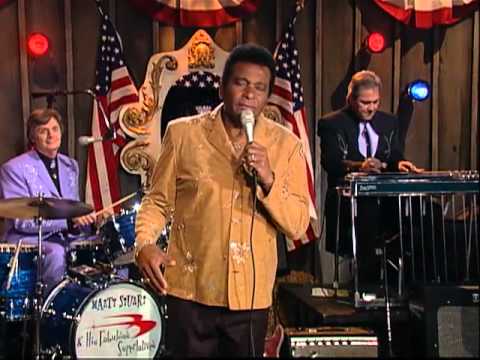
→ More from the 1960s File
View all 1960s hits →




Keep digging