The 1960s File Feature
Good Time Baby
Good Time Baby — Bobby Rydell and the Sound of Teen Pop in 1961 Bobby Rydell: Philadelphia's Teen Idol The early 1960s teen pop market had a particular fondn…
01 The Story
Good Time Baby — Bobby Rydell and the Sound of Teen Pop in 1961
Bobby Rydell: Philadelphia's Teen Idol
The early 1960s teen pop market had a particular fondness for young, photogenic singers from Philadelphia, and Bobby Rydell was among the most successful products of this alignment between city, industry, and audience appetite. His combination of genuine vocal talent and charismatic stage presence had been delivering hits since 1959, and by the time Good Time Baby arrived in early 1961, he was at the height of his commercial powers. The Philadelphia pop scene of this period, centered on Dick Clark's American Bandstand and its supporting infrastructure of local labels and promotion, had produced a remarkably consistent pipeline of teen pop material, and Rydell was its most reliably excellent output.
The Record's Energy and Its Appeal
Good Time Baby lives up to its title with the kind of uncomplicated musical energy that made early-1960s teen pop so durable with its target audience. The production has the bright, upbeat character that Rydell's best recordings consistently delivered: clean rhythm section, warm horns, and his voice front and center with the confidence of a young performer who knew his instrument and understood his audience. The song promised exactly what the title advertised: a good time, delivered with enthusiasm and professional ease. For the teenage listeners who made it a hit, it was precisely what a Saturday afternoon record was supposed to sound like.
A Top-Ten Performance: Winter and Spring 1961
Good Time Baby debuted on the Billboard Hot 100 on January 23, 1961, entering at a strong position 53. The climb over the following weeks was consistent: by February 20, the single had pushed to 14, and the ascent continued through early March. It peaked at number 11 during the week of March 6, 1961, spending a total of 11 weeks on the Hot 100. A top-fifteen peak and 11-week chart run represented solid commercial success: number 11 in the early months of 1961 meant the record was competing with some of the biggest acts in the pop business, and holding its own against them.
Teen Pop and the American Cultural Moment of 1961
Early 1961 was one of the last genuinely unchallenged seasons for the teen pop format that Rydell and his contemporaries represented. The British Invasion was still several years away; rock and roll's rougher edges had been smoothed into something that parents and radio programmers found comfortable; and the market for clean, melodically direct pop sung by young, attractive performers was enormous. Rydell occupied this market with authority, delivering material that met its specifications consistently and without apparent effort, even though the apparent effortlessness was itself a significant achievement requiring real musical skill and professional discipline.
A Specific Kind of Charm
Listening to Good Time Baby now, what is most striking is its lack of self-consciousness. The record is not trying to be anything other than what it is: an unpretentious piece of musical fun, well-made and warmly delivered, aimed directly at an audience that wanted exactly this. There is a kind of artistic integrity in that simplicity of purpose. Rydell brought genuine skill to material that some might dismiss as mere commercial product, and the result is a record that has weathered time with surprising grace. It does not claim to be more than it is, and what it is turns out to be quite enough. Press play and let it do its simple work.
The Teen Idol's Craft and Its Requirements
Being a successful teen idol in the early 1960s required more than photogenic looks and a pleasant voice. The performers who sustained careers in this format, as opposed to those who had brief commercial moments and then faded, were almost invariably genuinely talented musicians who could deliver consistent performances across an extensive catalog. Bobby Rydell was among the genuine talents: his voice had real warmth and range, his stage presence was natural rather than manufactured, and his musical instincts were good enough that even relatively generic material sounded like it was being delivered with genuine conviction. Good Time Baby demonstrates these qualities in a setting that asks a great deal of its performer precisely because its apparent simplicity leaves no room to hide. The performance succeeds because Rydell was genuinely capable of making simplicity sound like the only appropriate response to the material.
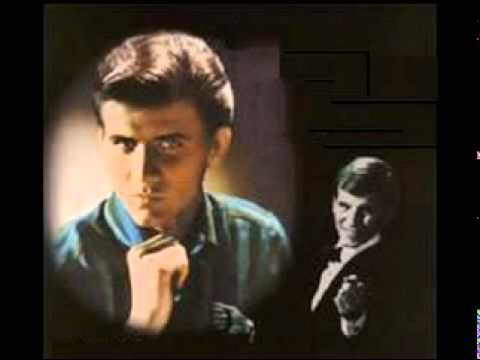
“Good Time Baby” — Bobby Rydell's singular moment on the 1960s charts.
02 Song Meaning
The Meaning Behind “Good Time Baby” by Bobby Rydell
Fun as a Legitimate Artistic Goal
Good Time Baby occupies a critical and somewhat underappreciated position in the aesthetic spectrum of popular music: it is a record whose primary and most important goal is fun. Not emotional depth, not social commentary, not artistic ambition beyond the immediate, but simple, direct, well-executed musical pleasure. This goal deserves to be taken seriously rather than dismissed as shallow, because achieving genuine musical fun is harder than it looks and more valuable than it is sometimes given credit for. The best good-time records require craft, energy, and an understanding of what the audience needs that is no less sophisticated than what more obviously ambitious records demand of their creators.
Youth, Energy, and the Summer of Early Pop
Bobby Rydell's recordings belong to a specific cultural moment in which youth and energy were themselves artistic values rather than mere marketing demographics. The teen pop of the early 1960s was not cynically targeting young consumers; it was reflecting a genuine cultural elevation of youthful energy, the sense that the postwar generation had a particular vitality and that popular music was its most natural expression. Good Time Baby captured this energy with the kind of honesty that comes from genuinely feeling something rather than performing it. The record's brightness and its forward momentum are not calculated effects but the natural products of an artist operating at the center of his cultural moment.
The Philadelphia Sound and Its Particular Character
The Philadelphia teen pop sound of the late 1950s and early 1960s had a distinctive character shaped by the specific intersection of talent, industry, and audience that the city offered. The influence of American Bandstand, recorded locally and broadcast nationally, created a particular feedback loop in which what played well in a Philadelphia studio audience tended to play well nationally. This feedback loop shaped the production aesthetics of the era, tending toward records that were visually as well as sonically appealing to young audiences, that communicated warmth and accessibility alongside musical competence. Good Time Baby was a product of this environment, wearing all its positive qualities visibly and confidently.
The Simplicity of Direct Enjoyment
One of the things that makes Good Time Baby interesting to think about is its relationship to the concept of pleasure in popular music. The song offers its audience direct, uncomplicated enjoyment: a melody that is easy to follow, a rhythm that asks to be moved to, a vocal performance that is warm and approachable. This directness requires defending against the reflexive dismissal that high culture sometimes applies to popular entertainment, the assumption that simplicity equals shallowness. The capacity to give genuine pleasure directly and without pretension is a real artistic achievement, and Good Time Baby demonstrates that capacity with confidence and ease.
A Document of Its Moment
Heard now, Good Time Baby is also a document of a very specific historical moment in American popular culture: the early 1960s, before the Beatles, before Vietnam, before the cultural upheavals that would soon change everything. In this record, those changes are entirely absent, and the world it describes, simple, optimistic, organized around the pleasures of being young and carefree, feels both distant and strangely appealing. The record's innocence is genuine rather than manufactured, which is part of what gives it its particular nostalgic charge. It sounds like a world that believed in good times, made by an artist who genuinely embodied that belief. That combination of authenticity and historical distance is its most enduring quality.
→ More from Bobby Rydell
View all Bobby Rydell hits →



→ More from the 1960s File
View all 1960s hits →




Keep digging