The 1960s File Feature
I Knew You When
"I Knew You When" — Billy Joe Royal's Nostalgic 1965 Breakthrough Georgia on the Rise The mid-1960s American South was producing pop singers with an effortle…
01 The Story
"I Knew You When" — Billy Joe Royal's Nostalgic 1965 Breakthrough
Georgia on the Rise
The mid-1960s American South was producing pop singers with an effortless, sun-drenched quality that cut right through the noise of the British Invasion. Billy Joe Royal was one of those voices. Born in Valdosta, Georgia, and raised in Marietta, he carried a warmth and sincerity that suited the pop-soul hybrid then taking shape on AM radio. By the time Columbia Records released I Knew You When in the autumn of 1965, Royal was a 21-year-old with genuine regional buzz but no national breakthrough to his name. That was about to change.
Royal had already spent years developing his craft in the Atlanta club circuit and had connected with producer Joe South, a fellow Georgian whose instinct for a hook was as sharp as anyone working outside Nashville or New York at the time. South would become one of the defining creative forces behind Royal's early career, and the two shared a sensibility for songs that felt like personal confessions rather than constructed pop product.
The Making of a Perfect Single
Joe South wrote "I Knew You When," and the song bears all his trademarks: a melody that curves naturally around the vocal, lyrics that balance specificity with universality, and an arrangement that stays out of its own way. The production is lean by mid-1960s standards, letting Royal's voice sit front and center over a rhythm track that borrows from soul without fully committing to it. There is something unmistakably Southern about the track's pacing, its refusal to rush, its confidence that the emotion in the performance will do the work.
Royal's voice on the recording has a quality that is simultaneously youthful and worn, which suited the material perfectly. The lyric deals with knowing someone before their world changed, before circumstances reshaped them, and Royal sells that sense of intimate prior knowledge without a trace of sentimentality. The restraint is what makes it land.
Climbing the Hot 100
The single entered the Billboard Hot 100 on September 18, 1965, debuting at number 92. What followed was a textbook slow-burn climb. Week by week it moved: 76, then 55, then 36, then 28. By November 6, 1965, "I Knew You When" had peaked at number 14 on the Hot 100, spending a total of 11 weeks on the chart. For a young artist from Georgia without a major label marketing machine behind him, that kind of sustained climb reflected genuine listener enthusiasm rather than promotional muscle.
The timing placed the single in direct competition with some of the decade's most celebrated recordings. The fall of 1965 saw the Beatles, the Rolling Stones, and a wave of domestic soul acts all vying for radio time. To break into the top 15 in that environment required something genuinely compelling, and Royal's record had it.
A Southern Voice in a Crowded Room
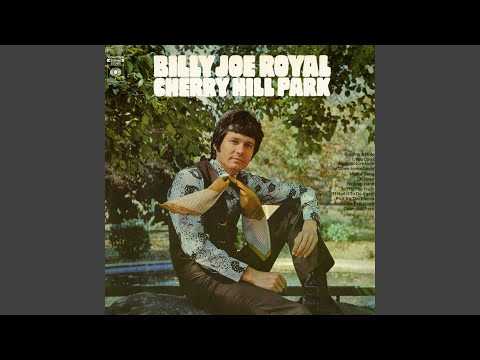
The success of I Knew You When positioned Billy Joe Royal as a distinctive presence in mid-1960s pop, a performer who could work the space between pop craftsmanship and Southern soul without sounding like a calculated hybrid. The follow-up singles, including Down in the Boondocks and Cherry Hill Park, confirmed that Royal had range and staying power. Joe South remained a central collaborator, and the Georgia connection between the two produced a run of records that sound entirely of their moment while remaining vivid decades later.
Royal's chart success in 1965 also helped establish Joe South as a songwriter of national consequence. South would go on to write for other major artists and record his own material, earning a reputation as one of the South's great musical talents. The foundation that I Knew You When helped lay for both men is easy to trace in retrospect.
Lasting Resonance
The song found a second life in country music years after its initial pop run, when other artists recorded their own versions and country radio discovered the material's underlying warmth. That durability speaks to the quality of South's writing: the song's emotional core is not locked to a specific era but grows more resonant as the distance between the narrator and the person he once knew becomes more familiar to listeners of all ages.
Royal continued performing and recording for decades, developing a devoted following particularly in the South. His voice aged gracefully, and live audiences responded to the genuine feeling he brought to the older material. The 1965 recordings remain the foundation, the moment when a young man from Georgia walked into a studio with a well-written song and found his way onto the national stage. Press play and hear what pop radio sounded like when it still had that kind of unhurried Southern grace.
"I Knew You When" — Billy Joe Royal's singular moment on the 1960s charts.
02 Song Meaning
The Emotional Weight of "I Knew You When" — Billy Joe Royal
Memory as the Central Theme
There is a particular ache that comes from knowing someone before life changed them, before success or circumstance or simple time reshaped who they were. I Knew You When plants itself in that emotional territory with precision. The song's narrator addresses someone from an earlier chapter of their shared history, and the tone sits somewhere between wistfulness and pride, never quite tipping into bitterness. Joe South understood that the most durable pop songs occupy emotional spaces that don't resolve cleanly, and this one refuses easy catharsis.
The lyric's power lies in what it implies rather than what it states. The narrator's knowledge of the other person is offered as a kind of credential, a claim to a version of them that the wider world doesn't have access to. It is an intimate form of ownership, tender but unmistakably possessive. Mid-1960s pop was full of songs about longing, but relatively few explored this specific register of remembered connection.
Southern Soul and Sincerity
The emotional landscape of the song is shaped partly by its sound. Royal's voice carries a warmth specific to Southern pop of the era, a quality that reads as unguarded and direct. Where some pop singers of the period performed emotion through stylistic flourish, Royal's approach is closer to simple declaration. He sounds like someone actually speaking to another person rather than projecting to an audience, and that intimacy reinforces the lyric's themes of personal history and private knowledge.
The mid-1960s were a complicated moment for American pop sincerity. The British Invasion had brought a certain cool distance to the charts, and the soul revolution coming out of Motown and Stax was investing pop music with a different kind of emotional intensity. Royal and South threaded a needle between these currents, producing something that felt personal without being confessional, emotionally present without being theatrical.
The Cultural Moment of 1965
Americans in 1965 were navigating a culture in rapid transformation. The Civil Rights Movement was reshaping the country's moral landscape, the war in Vietnam was becoming an unavoidable fact of daily life, and popular music was fragmenting into genres and subgenres with unusual speed. Against that backdrop, a song about the enduring value of knowing someone before the world got to them carried particular resonance. The idea that prior knowledge confers a special kind of understanding felt both personal and, in a broader sense, culturally relevant to a generation watching familiar certainties dissolve.
Legacy and Durability
The song's subsequent life in country music confirmed what its original pop success suggested: the emotional core is sturdy enough to survive translation across genres and decades. Country artists who later recorded the song found that its themes of memory and continuity fit naturally into that tradition's preoccupations with home, history, and the weight of the past. The material proved adaptable because it was genuinely well-crafted from the start, not because it was deliberately designed for multiple markets.
Joe South's songwriting gift, evident throughout this recording, was his ability to locate emotional truths in plain language without reducing them to sentiment. The song does not overexplain itself. It trusts the listener to fill in the details from their own experience, which is precisely what has kept it in circulation across more than half a century of changing musical tastes.
→ More from Billy Joe Royal
View all Billy Joe Royal hits →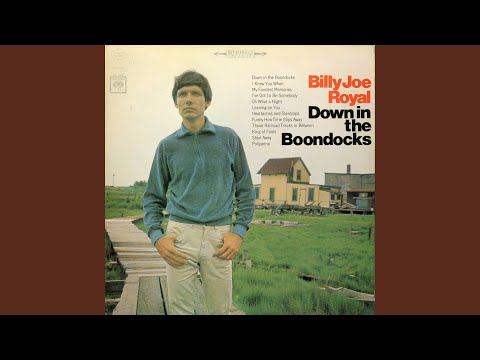

→ More from the 1960s File
View all 1960s hits →




Keep digging