The 1960s File Feature
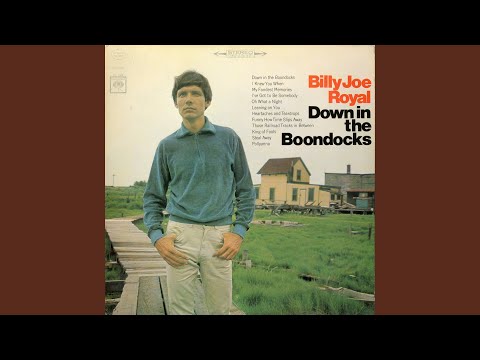
Down In The Boondocks
Down In The Boondocks: Billy Joe Royal's Breakout Moment on the 1965 Hot 100 In the summer of 1965, a young Georgia-born singer named Billy Joe Royal walked …
01 The Story
Down In The Boondocks: Billy Joe Royal's Breakout Moment on the 1965 Hot 100
In the summer of 1965, a young Georgia-born singer named Billy Joe Royal walked into a recording studio with a song written by his friend and fellow Southerner Joe South, and the result would define both men's careers. "Down In The Boondocks" was released on Columbia Records in June 1965 and rose to number nine on the Billboard Hot 100 by August of that year, giving Royal his first and most enduring national hit. The record captured a particular strain of Southern blue-collar romanticism at exactly the moment American pop was diversifying its regional palette, and its success placed Royal among a small group of artists bridging country feeling with mainstream pop accessibility.
Joe South, the song's composer, was already an accomplished session musician and songwriter operating out of Atlanta when he handed the track to Royal. South would go on to win the Grammy Award for Song of the Year in 1969 for "Games People Play," but in 1965 he was building a reputation as a craftsman whose ear for vernacular emotion set him apart from the Brill Building writers dominating New York pop. The song fitted Royal's warm baritone with precision, and Columbia's production team surrounded the vocal with a lush but uncluttered arrangement that gave the record commercial reach without stripping away its regional character.
The recording was made at a time when Columbia was navigating the British Invasion by leaning into American artists with distinctive regional identities. Billy Joe Royal, born in Valdosta, Georgia in 1942, had spent years performing around the Atlanta circuit before South connected him with the label. The pairing proved commercially astute. The single spent 13 weeks on the Hot 100, peaking at number nine and earning Royal a spot on national television programs and the teen magazine circuit that was essential to sustaining pop momentum in that era.
Radio play was the primary engine of the record's success. Top 40 AM radio in 1965 was at the height of its cultural influence, and programmers across the country added the single because it fit neatly into a format that rewarded melodic hooks and emotional clarity without demanding the raw edge of British rock or the political weight of the folk movement. Royal's delivery was controlled but not sterile, and the production's rhythm section gave disc jockeys a record that sounded polished and contemporary alongside the Beatles and the Rolling Stones without being easily confused with either.
The album of the same name followed the single's release on Columbia, collecting original material and covers, but it was the title track that sustained Royal's commercial profile. Columbia promoted the record heavily throughout the summer of 1965, booking Royal on American Bandstand and other television outlets that could convert chart momentum into broadened audience reach. The strategy worked well enough to establish him as a recognizable name, though he never quite achieved the sustained career trajectory that the debut single seemed to promise.
Joe South's compositional instincts on this song reflected his gift for embedding social observation in structures that felt emotionally direct rather than didactic. The narrator of the song is someone acutely aware of his place in an economic and social hierarchy, and South's lyric sketched that situation without melodrama. The production reinforced the tension through dynamics, letting the chorus open up while the verses maintained a more intimate, almost confessional register. For listeners in 1965, the record operated as both pop entertainment and something that acknowledged lived experience in a way that purely escapist music did not.
In subsequent decades, the record became a standard touchstone in discussions of mid-1960s Southern pop, often cited alongside contemporaries like Bobby Goldsboro and Ray Stevens as examples of Southern artists who found commercial footing in a market dominated by coastal production centers. Royal charted several more singles in the late 1960s, including "Cherry Hill Park" in 1969, which reached number fourteen on the Hot 100, but "Down In The Boondocks" remained his signature. Country radio later embraced Royal in the 1980s, where he found renewed chart success, but the 1965 Columbia single was always the record that opened the door.
The song has been covered by numerous artists over the years, a testament to the durability of South's composition and the clarity of the original arrangement. Its inclusion in retrospective compilations of 1960s pop consistently positions it as a minor classic of the era, a record that succeeded on its own terms without overstating its ambitions. For Billboard historians, the chart run in the late summer of 1965 represents a moment when the Hot 100's breadth was on full display, incorporating sounds from Georgia and the South alongside the British and California sounds that dominated the era's cultural conversation.
02 Song Meaning
Class, Longing, and Southern Pride: The Emotional Architecture of Down In The Boondocks
At its core, "Down In The Boondocks" is a song about economic aspiration and romantic longing filtered through a sharp awareness of social boundaries. The narrator is a working-class young man in love with a woman whose family occupies a higher rung on the social ladder, and Joe South's lyric maps the emotional terrain of that situation with unusual specificity for a mainstream pop single of 1965. Rather than reaching for abstraction, the song grounds its feeling in the physical reality of where people live and what those locations signal about status and belonging.
The word "boondocks" carries its own freight of meaning. Derived from a Tagalog term brought back by American soldiers after the Philippine-American War, it entered American slang as a way of describing remote, rural, or socially marginal places. In South's usage, it functions as both a literal setting and a social designation. The narrator does not simply live far from the woman he loves; he lives in a place that marks him as someone her family and community would consider beneath her. The tension between emotional certainty and social obstacle gives the song its dramatic engine, and Billy Joe Royal's vocal performance plays that tension with notable restraint, resisting the temptation to tip into self-pity.
What distinguishes the song from simpler romantic pop is its recognition that social class is real and consequential. The narrator does not pretend the barriers are imaginary or assert that love will simply overcome them. He acknowledges the hierarchy while asserting the validity of his own feeling and his own worth. This is a quietly radical position for a song aimed at a mass pop audience in 1965, a moment when youth culture was beginning to interrogate inherited social structures but had not yet developed the explicit political vocabulary that would emerge by the decade's end.
The emotional register of the song sits in a productive space between defiance and resignation. The narrator is not defeated, but he is also not naive. He understands the situation with clarity, and that clarity is itself a form of dignity. Billy Joe Royal's delivery reinforces this quality, projecting confidence in the emotional truth of the narrator's experience without overclaiming the outcome. The production's lush orchestration lifts the chorus into something that feels like genuine yearning rather than complaint, which is part of why the record connects across class lines with listeners who may not share the narrator's specific circumstances.
In the context of Southern American culture in 1965, the song also participates in a tradition of regional self-representation. The South was deeply contested territory in the mid-1960s, its cultural identity under pressure from the civil rights movement and from a national media that often reduced the region to its worst impulses. A song that asked listeners to see the South's working-class white residents as people with interior lives, romantic feeling, and a coherent sense of their own dignity was doing something more than pop entertainment, even if it operated within an entirely conventional pop framework.
For Billy Joe Royal's catalog, the song established a thematic signature that persisted across his subsequent work. He returned repeatedly to characters defined by where they came from and what that origin meant for their aspirations and self-understanding. The boondocks narrator became a kind of template for the working-class everyman Royal would inhabit most convincingly throughout his career, even as the production styles around him changed from mid-1960s pop orchestration to late-1960s rock arrangements to 1980s country production.
Decades after its initial chart run, the song retains its emotional accessibility because Joe South wrote from the inside of the experience rather than observing it from a distance. The specificity of the social situation, combined with the universality of the romantic feeling, gives the record a durability that more generically aspirational pop songs of the same era lack. It endures as a document of a particular American experience and as a well-made piece of popular music, two qualities that do not always coexist but that here reinforce each other to lasting effect.
→ More from Billy Joe Royal
View all Billy Joe Royal hits →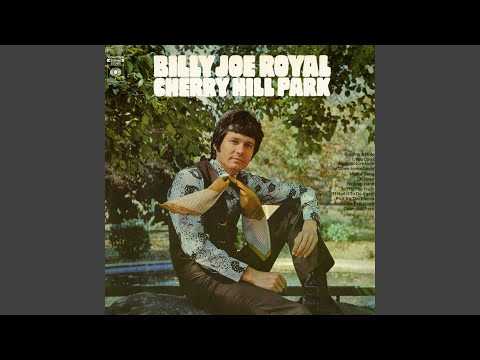

→ More from the 1960s File
View all 1960s hits →




Keep digging