The 1960s File Feature
Cherry Hill Park
"Cherry Hill Park" — Billy Joe Royal and the Sound of Southern Pop A Georgia Voice in a Changing Pop World Autumn 1969 felt like a turning point in popular m…
01 The Story
"Cherry Hill Park" — Billy Joe Royal and the Sound of Southern Pop
A Georgia Voice in a Changing Pop World
Autumn 1969 felt like a turning point in popular music. Woodstock had just happened, rock was fracturing into a dozen directions at once, and the clean, hook-driven pop that had ruled AM radio through the mid-decade was finding new ways to coexist with rawer sounds. Into this moment stepped Billy Joe Royal with "Cherry Hill Park", a track that combined a playful, slightly risque premise with the kind of smooth production that made it irresistible to radio programmers looking for something that sounded fresh without being difficult.
Royal had grown up in Valdosta, Georgia, and built his early reputation on the strength of "Down in the Boondocks," his 1965 breakthrough that reached number 9 on the Billboard Hot 100. That record, produced by Joe South, established him as a warm-voiced, commercially savvy pop-soul singer with a gift for narrative. The years between that hit and "Cherry Hill Park" had been productive but commercially uneven; he had charted occasionally without quite recapturing the momentum of his debut.
The Song and Its Production
Written by Walt Aldridge and Tommy Brasfield, "Cherry Hill Park" arrives with a bright, swinging arrangement that balances pop immediacy with hints of the soft rock sound that would characterize much of the early 1970s. The track has a buoyancy to it, a quality of cheerful mischief that comes through in the production choices as much as in Royal's vocal performance. Royal's voice carries the song with an easy confidence, the kind of delivery that makes a gently provocative lyric feel charming rather than leering.
The production suits the subject matter: a bright sonic landscape of horns, rhythm section, and carefully placed fills. The track was released on Columbia Records, and the label's infrastructure helped push it into radio rotation during the late summer and early autumn of 1969.
A Strong Chart Showing
The single debuted on the Billboard Hot 100 on October 4, 1969, entering at number 99. What followed was an impressively sustained climb. Week by week the track moved: 83, 63, 49, 38, and eventually upward toward its peak of number 15 on the chart dated November 29, 1969. The song spent 13 weeks in total on the Hot 100, a run that demonstrated genuine staying power on radio and confirmed that Royal still had the commercial instincts to land a significant hit.
Reaching number 15 put "Cherry Hill Park" among the better-performing songs of Royal's career, a genuine pop hit at a time when that designation was being actively contested by harder rock sounds. The fact that a sweetly melodic, narrative pop single could crack the top 20 in November 1969 said something about the breadth of American radio appetite even at a moment of cultural upheaval.
Royal's Career and the Record's Place in It
For Billy Joe Royal, "Cherry Hill Park" represented a significant commercial resurgence. It became his second-biggest pop hit, demonstrating that his voice and sensibility retained real appeal with radio audiences nearly half a decade after his debut breakthrough. Royal would continue recording through the 1970s before finding a second career in country music during the 1980s, where he would achieve chart success with a different audience that responded to the same warmth and accessibility his pop work had always projected.
The song belongs to a category of late-1960s pop that tends to get overlooked in histories that emphasize the era's more countercultural sounds. But commercially and sonically, tracks like "Cherry Hill Park" represented what millions of American listeners were actually putting on their turntables and hearing on AM radio. The pop mainstream was not Woodstock; it was warm, melodic, story-driven, and carefully crafted.
The Enduring Charm of the Record
Decades later, "Cherry Hill Park" holds up as a period piece with real personality. The production has a lightness that feels genuinely period-specific, rooted in a moment when pop production was still built around live musicians playing together in a room. Royal's vocal performance is note-perfect for the material: confident without being showy, warm without being saccharine. The track invites a revisit, a reminder that 1969 contained multitudes, and that the top 20 of the Hot 100 that November reflected an America still fundamentally in love with a good pop song.
Put it on and hear the sound of Southern pop at its most polished and persuasive, a Georgia voice navigating the charts with grace.
"Cherry Hill Park" — Billy Joe Royal's singular moment on the 1960s charts.
02 Song Meaning
"Cherry Hill Park" — Youth, Desire, and the Geography of Freedom
A Park as a State of Mind
"Cherry Hill Park" uses a specific, named location as a vessel for something universal: the combination of youthful desire, social freedom, and the particular electricity of shared outdoor space. The park in the song is a gathering place, a zone outside the supervision of adults and institutions where young people pursue their own pleasures on their own terms. The song transforms a local setting into a miniature utopia of adolescent life, a place defined by what happens there rather than what it looks like.
This use of place as metaphor was familiar territory in pop music by 1969. Beach Boys records had spent years making the California coast function as an entire philosophy of pleasure. But "Cherry Hill Park" locates that spirit in something more modest, a neighborhood park rather than a sun-drenched coastline, which gives it a specificity that listeners in any part of America could map onto their own geography.
Playful Provocation
The lyric carries a knowing wink about what "Cherry Hill Park" is actually a setting for. The song describes young people enjoying themselves with a warmth that shades into gentle innuendo, never explicit but never entirely innocent either. This tonal balance between wholesomeness and mild provocation was a well-established tradition in pop songwriting, a way of engaging with teenage experience honestly without triggering censorship or parental alarm.
Songwriters Walt Aldridge and Tommy Brasfield calibrated the lyric carefully. The song's good humor is never cruel or cynical; it celebrates the freedom of young people to claim space and time for themselves. That celebratory quality is central to the track's appeal.
Late 1960s Attitudes Toward Youth
Released in autumn 1969, the song appeared at a cultural moment when youth culture was simultaneously celebrated, feared, and commercialized by American society. Woodstock had just painted an enormous and complex picture of what young Americans collectively desired. "Cherry Hill Park" engages with none of that complexity; it operates at the level of individual pleasure rather than collective statement. Its charm lies precisely in this smaller scale, a focus on one park, one group of young people, one season of possibility.
The song did not try to speak for a generation. It told a story and let listeners recognize themselves in it, which turned out to be commercially very effective.
Why It Resonated
The track's success on the Billboard Hot 100, where it climbed to number 15 and spent 13 weeks charting, reflected genuine radio-listener identification. Billy Joe Royal's vocal delivery played a significant role in this. His warm, conversational tone made the song feel personal rather than performed, as though he were sharing an observation rather than selling a fantasy. That quality of apparent authenticity, of a singer who seems to mean what he's singing, is difficult to manufacture and extremely effective when it works.
The production reinforced the accessibility of the material, surrounding Royal's voice with an arrangement that felt bright and inviting rather than overwhelming. The result was a record that met listeners where they were, delivering uncomplicated pleasure with enough wit to stay interesting across repeated radio plays.
"Cherry Hill Park" — Billy Joe Royal's singular moment on the 1960s charts.
→ More from Billy Joe Royal
View all Billy Joe Royal hits →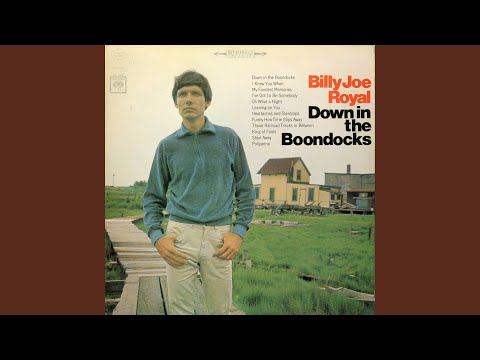

→ More from the 1960s File
View all 1960s hits →




Keep digging