The 1950s File Feature
I Got Stripes
I Got Stripes — Johnny Cash The Man in Black Before the Legend Solidified In the summer of 1959, Johnny Cash was still in the middle stretch of his first gre…
01 The Story
I Got Stripes — Johnny Cash
The Man in Black Before the Legend Solidified
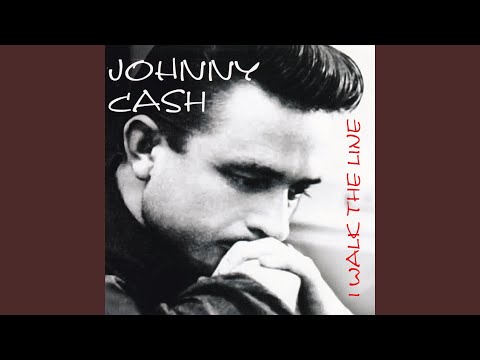
In the summer of 1959, Johnny Cash was still in the middle stretch of his first great commercial chapter, the years at Sun Records and then Columbia where he was building the catalog that would eventually define him. He had already released I Walk the Line in 1956 and Folsom Prison Blues had established his convict-sympathy persona, but the full weight of his legend was still accumulating. Cash at this moment was a touring workhorse, a country hitmaker who was also beginning to attract crossover pop audiences fascinated by his singular baritone and the sense of moral gravity he brought to everything he recorded.
I Got Stripes drew on a prison work song tradition that Cash had been circling since early in his career. The track was arranged and co-written by Cash with Charlie Williams, and it bore the marks of the folk-influenced approach to prison songs that Cash increasingly favored: a rhythmic simplicity that echoed the cadence of manual labor, lyrics delivered as narrative documentation rather than emotional confession, and a beat that felt physical rather than merely musical. The song's structure, built on a call-and-response pattern between the lead vocal and the ensemble, gave it a collective quality that reinforced its folk roots.
Columbia Records and the Crossover
By 1959 Cash had moved from Sun Records to Columbia, a major label with considerably more promotional resources and a broader distribution network. The Columbia years would see him reach an even wider audience, though the transition also brought some of the commercial pressures that would eventually contribute to his mid-career turbulence. I Got Stripes was released on Columbia Records and represented the label's willingness to let Cash pursue his interest in prison-themed material even as they sought pop crossover success.
The chart performance demonstrated that crossover potential in action. I Got Stripes debuted on the Billboard Hot 100 on August 3, 1959, entering at number 95. Over the following weeks it climbed steadily, reaching its peak of number 43 on September 21, 1959, and spending a total of 11 weeks on the chart. That run made it one of the more durable Hot 100 entries of Cash's early Columbia period, its steady climb reflecting genuine radio traction across country and pop formats simultaneously.
The Prison Song Tradition
Cash's relationship with prison themes was unusually complex for a mainstream commercial artist. He had not himself been incarcerated in the manner his music sometimes implied, but he had a genuine empathy for the incarcerated drawn from his religious convictions and his observations of the social margins. The prison song tradition he was drawing on in I Got Stripes reached back through American folk music to the work songs of the early twentieth century, collected by musicologists like John and Alan Lomax, who had documented the musical cultures of prison farms across the South.
Cash's genius was to translate that tradition into a commercial format without stripping its essential dignity. The songs he recorded about incarceration treated prisoners as human beings deserving of witness and empathy, and that moral seriousness resonated with audiences that cut across social and class lines. The lyric of I Got Stripes described the rhythms of prison existence with specificity and without sentimentality, letting the listener inhabit the experience rather than simply observe it from a comfortable distance.
An Essential Thread in the Cash Catalog
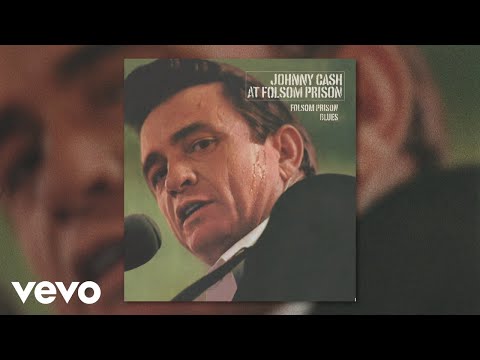
Looking at Cash's career from the vantage point of his later work, including the landmark live albums recorded at Folsom Prison in 1968 and San Quentin in 1969, I Got Stripes reads as part of a continuous thread rather than an isolated experiment. His return to the prison setting in those live recordings would become career-defining moments, but they grew from a sustained engagement with the subject that tracks like I Got Stripes helped establish. The record demonstrates how early and how consistently Cash had committed to this territory.
The track also showcases the rhythmic minimalism that gave Cash's music such physical immediacy. Tennessee Two's boom-chicka-boom backing pattern, built around Luther Perkins' guitar and Marshall Grant's bass, provided the locomotive pulse beneath all his early recordings. That simplicity was not a limitation; it was a deliberate aesthetic, and I Got Stripes shows how effectively it could serve material drawn from the labor-song tradition. Press play and let that rhythm do its work on you.
"I Got Stripes" — Johnny Cash's singular moment on the 1950s charts.
02 Song Meaning
I Got Stripes — Labor, Confinement, and the American Folk Tradition
The Work Song as Social Document
Long before Johnny Cash recorded it, the prison work song existed as one of the most honest forms of social documentation in American music. Sung by men performing forced labor under conditions of confinement and surveillance, these songs served multiple functions simultaneously: they coordinated physical effort, they built collective identity among the incarcerated, and they bore witness to an experience that mainstream culture preferred not to examine. Cash's engagement with this tradition was not scholarly or detached; it was moral, rooted in a conviction that these voices and these experiences deserved to be heard by the widest possible audience.
The lyric of I Got Stripes organizes itself around the rhythms of a prison week, moving through the days and the tasks they bring with a specificity that grounded the song in lived reality rather than romantic abstraction. This structural choice made the song a kind of calendar of confinement, each verse marking time in a way that mirrored the actual experience of counting days in an institution designed to deprive time of meaning.
Empathy Across the Divide
One of the most socially significant aspects of Cash's prison repertoire was his insistence on carrying it to mainstream pop audiences. Country music had its own tradition of outlaws and incarceration, but Cash brought these songs to the Hot 100, to television appearances, and eventually to the live recordings at actual prisons that would reach millions of listeners. The act of presenting prison experience to listeners who had never encountered it was itself a form of cultural argument: these people exist, their suffering is real, and their stories belong in the shared public conversation.
In 1959, when I Got Stripes was charting, the American prison system was an institution that most middle-class listeners preferred not to think about. Cash's insistence on making them think about it, through entertainment rather than sermon, was as effective a form of advocacy as any of the more explicitly political music that would emerge later in the decade.
The Rhythmic Architecture of Labor
The musical construction of the song reinforces its thematic content in ways that go beyond the literal. The insistent, repetitive rhythm that underpins I Got Stripes mirrors the cadence of physical labor performed under compulsion, the body doing what it must, the mind elsewhere. Luther Perkins' guitar work and the fundamental Tennessee Two sound provided a rhythmic framework that was itself a kind of embodiment, music that you feel in your body before you process it in your mind.
This physical quality was central to the work song tradition Cash was drawing on. Songs composed to accompany labor need a beat that the body can organize itself around, a pulse that makes the work feel less arbitrary. Cash understood that preserving this quality in his recording was essential to the song's integrity; stripping it for a more conventionally melodic pop arrangement would have evacuated the meaning along with the roughness.
A Song That Carries Its Weight
What makes I Got Stripes endure is precisely what made it unusual in 1959: it refuses sentimentality without resorting to sensationalism. The song describes prison without glamorizing it or making it a spectacle. The matter-of-fact delivery Cash brought to the lyric carried more moral weight than outrage would have, because understatement implies that the listener is capable of drawing their own conclusions from the facts presented. That trust in the audience, combined with the song's roots in genuine folk tradition, gave it a gravity that purely commercial material rarely achieves. It is a record that carries its weight honestly, and that is enough.
→ More from Johnny Cash
View all Johnny Cash hits →

→ More from the 1950s File
View all 1950s hits →

Keep digging