The 2020s File Feature
Moved To Miami
Moved To Miami — Roddy Ricch Featuring Lil Baby (2022) "Moved To Miami" arrived in 2022 as part of the extended run of collaborative output from two of hip-h…
01 The Story
Moved To Miami — Roddy Ricch Featuring Lil Baby (2022)
"Moved To Miami" arrived in 2022 as part of the extended run of collaborative output from two of hip-hop's dominant forces of the preceding half-decade, Roddy Ricch and Lil Baby. By the time the track appeared, both artists had accumulated extraordinary commercial and cultural credentials. Ricch had achieved a landmark with "The Box," which held the number one position on the Billboard Hot 100 for eleven consecutive weeks in early 2020, and Lil Baby had established himself as one of the most prolific and commercially consistent rappers in the country, with multiple platinum albums and a string of chart-dominating singles to his name.
The song's title references Miami, Florida, a city that had become increasingly significant in hip-hop geography during the late 2010s and early 2020s. Miami's emergence as a relocation destination for wealthy and successful rappers from other regions was a cultural phenomenon in its own right, reflecting the city's tax advantages, lifestyle associations, and its position as a symbol of arrival and financial success. The track positioned that geographic shift as evidence of upward mobility, making Miami itself a character in the narrative of come-up and achievement.
Musically, the production carries the melodic trap characteristics that defined the commercial center of hip-hop in the early 2020s: sliding bass lines, spare but punchy percussion, and a general sonic palette that emphasized spaciousness and luxury over aggression. The production approach suited both artists well, giving Ricch room for the melodic vocal inflections that had distinguished his style since his breakout years, and giving Lil Baby a clean instrumental canvas for the conversational flow that had become his trademark.
The track appeared on the Billboard Hot 100 upon release, benefiting from the streaming infrastructure that both artists had spent years building through consistent releases and feature appearances. By 2022, both Ricch and Lil Baby had mastered the mechanics of streaming dominance, building listener bases large enough that new material could enter the chart with significant velocity regardless of traditional radio promotion.
The collaboration between the two artists was not their first. Both had appeared on various tracks and compilations within the broader Atlanta-adjacent hip-hop ecosystem, and their working chemistry was well established. Lil Baby's steady, conversational delivery provided an effective counterpoint to Ricch's more melodically varied approach, creating the kind of stylistic contrast that makes collaborative singles more interesting than recordings where both artists operate in identical registers.
The song's release in 2022 came during a period of considerable activity for both artists. Roddy Ricch had released his second studio album "Live Life Fast" in late 2021, which debuted at number one on the Billboard 200, demonstrating that his commercial standing remained at the highest level despite the intense competition of the streaming era. Lil Baby had similarly released "My Turn" in 2020, an album that performed exceptionally well on the charts and reaffirmed his position at the center of contemporary rap.
As a single, "Moved To Miami" exemplified the formula that both artists had refined over multiple album cycles: aspirational content delivered over melodic production, with biographical details woven into the narrative to reinforce authenticity. The move to Miami, whether literal or metaphorical, served as a shorthand for everything the song's narrators had achieved, placing geography in the service of autobiography in a way that hip-hop had long employed to document real-life trajectories from poverty to prosperity.
The track added to a catalog of collaboration and solo output that, taken together, had made Roddy Ricch and Lil Baby two of the most commercially significant artists of their generation, consistently present on the charts and in the cultural conversation throughout a competitive and rapidly evolving era in hip-hop history. The mechanics of their shared commercial success drew on many of the same foundations: relentless streaming presence, loyal audiences cultivated through consistent output, and a genuine creative chemistry that made their collaborative appearances feel like meetings of equals rather than promotional exercises. "Moved To Miami" benefited from all of these factors, arriving with the full weight of both artists' established platforms behind it and performing accordingly on the charts and in the streaming tallies that increasingly defined commercial success in the early 2020s music industry.
02 Song Meaning
What "Moved To Miami" Means
"Moved To Miami" is a song about geographic displacement as proof of success. The central conceit is straightforward but resonant within hip-hop's long tradition of using place as autobiography: the narrator has relocated to Miami, and that relocation is presented as evidence of achievement, as though the city itself is a destination you earn rather than simply choose. Miami functions in the song's symbolic economy as a marker of arrival, a destination associated with wealth, warmth, and freedom from the material constraints of earlier life.
For Roddy Ricch, whose catalog is built substantially on documenting the journey from Compton, California, to mainstream hip-hop success, the Miami motif fits within a larger autobiographical project. His music has consistently treated geography as biography, using specific places to anchor abstract narratives of struggle and triumph. Moving to Miami is the logical conclusion of a narrative arc that begins in scarcity and ends in the kind of prosperity that allows you to choose where you live rather than simply accepting where circumstance has placed you.
The emotional register of the track is celebratory but grounded. Neither Ricch nor Lil Baby indulges in pure fantasy; the aspirational content is anchored by details that suggest lived experience rather than manufactured mythology. This grounding is central to both artists' appeal. Their credibility depends on the sense that the lifestyles they describe are real rather than performed, and "Moved To Miami" maintains that authenticity by treating the geographic move as an ordinary consequence of success rather than an exotic fantasy.
Lil Baby's contribution to the track carries its own thematic weight. His flow, consistently rooted in Atlanta and in the specific textures of his upbringing, brings a complementary perspective on what success looks like when it arrives. His presence in a song about moving to Miami adds a dimension of community to what might otherwise be a solitary narrative: two men from different Southern cities, both of whom have transcended the limitations of their origins, meeting in a shared space of achievement.
The broader cultural meaning of Miami as a hip-hop signifier in the early 2020s is worth noting. The city had become a genuine relocation hub for successful rappers from Atlanta, Los Angeles, and other major hip-hop centers, drawn by favorable tax structures and the lifestyle the city offered. "Moved To Miami" taps into that real-world phenomenon, giving the song a documentary dimension alongside its celebratory one. The song captures a specific moment in hip-hop geography, when Miami was transitioning from a backdrop in rap narratives to an actual home for many of the genre's biggest stars.
Thematically, the track also engages with the emotional complexity of success, specifically the combination of gratitude and restlessness that characterizes the post-come-up period. Having achieved what you set out to achieve, you do not simply stop; you move, you adapt, you find a new location from which to continue building. The Miami move is presented as a beginning as much as an achievement, a platform for the next phase of a life in constant forward motion. In this sense, "Moved To Miami" is less a victory lap than a dispatch from the road, filed from somewhere new and headed somewhere further still.
→ More from Roddy Ricch Featuring Lil Baby
View all Roddy Ricch Featuring Lil Baby hits →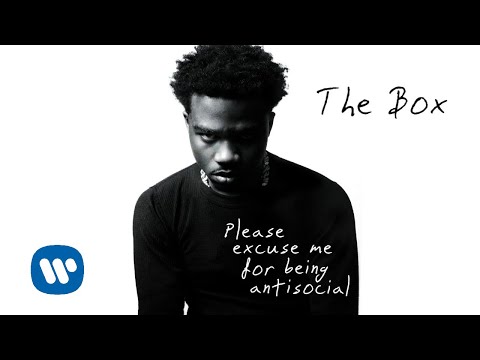


→ More from the 2020s File
View all 2020s hits →


Keep digging