The 2020s File Feature
Got It On Me
Got It On Me — Pop Smoke (2020) Pop Smoke's posthumous commercial trajectory is one of the most extraordinary stories in early 2020s popular music, and "Got …
01 The Story
Got It On Me — Pop Smoke (2020)
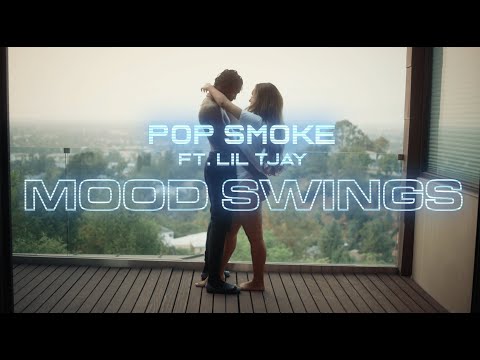
Pop Smoke's posthumous commercial trajectory is one of the most extraordinary stories in early 2020s popular music, and "Got It On Me" stands as one of the tracks that demonstrated both the breadth of his recorded output and the durability of the Brooklyn drill aesthetic he had done more than any other artist to introduce to mainstream American audiences. Released as part of the posthumous album Shoot for the Stars, Aim for the Moon, the track arrived during a period when the music industry and Pop Smoke's fanbase were still processing the shock of his death and the cultural significance of what he had built in an extraordinarily compressed period of active recording.
Pop Smoke, born Bashar Barakah Jackson, was fatally shot on February 19, 2020 in Los Angeles, at the age of 20. He had been active as a recording artist for less than two years at the time of his death, yet had managed to release two mixtapes, Meet the Woo and Meet the Woo 2, that had established him as one of the most exciting new voices in rap. His signature combination of a low, resonant vocal delivery with the aggressive, percussion-heavy Brooklyn drill production style, which had itself evolved from Chicago drill and UK drill influences, was immediately distinctive and widely imitated within months of his earliest releases.
Shoot for the Stars, Aim for the Moon was assembled by his label, Republic Records, in collaboration with his estate and producer 50 Cent, who served as executive producer. The album was released on July 3, 2020, and its commercial performance was staggering. It debuted at number one on the Billboard 200 with 251,000 equivalent album units in its first week, an exceptionally strong debut that reflected the combination of genuine fan grief, curiosity about his recorded legacy, and the accumulated attention that his posthumous streaming numbers had generated in the months after his death.
"Got It On Me" features an interpolation of 50 Cent's "Many Men (Wish Death)" from the 2003 album Get Rich or Die Tryin', a track with a specific biography: 50 Cent wrote it drawing on his own experience of surviving a shooting. The interpolation carries layered significance given Pop Smoke's death by gunfire, and that thematic resonance was not lost on listeners or critics who engaged closely with the album's material. The production, handled in the Brooklyn drill style that Pop Smoke had become associated with, combined the interpolated melodic element with the rolling, syncopated percussion patterns and ominous atmospheric production that characterized the genre.
The track's chart performance was driven by the massive streaming activity around the album. Pop Smoke's entire catalog experienced enormous streaming increases following his death, and those numbers were reflected in Hot 100 placements for multiple tracks from Shoot for the Stars, Aim for the Moon simultaneously, a chart saturation pattern that Billboard addressed through its rules limiting individual artists to a certain number of simultaneous Hot 100 entries.
The album was certified multi-platinum by the RIAA, and individual tracks from it, including "Got It On Me," accumulated certifications reflecting sustained listener engagement well beyond the initial release period. The album's success confirmed what the trajectory of Pop Smoke's short career had suggested: that the Brooklyn drill sound he had helped define had genuine mainstream commercial appeal extending far beyond the New York regional audience that first embraced it.
Critical responses to "Got It On Me" acknowledged the track's visceral power while also grappling with the complexities of posthumous album releases, particularly regarding questions about how much the final product reflected the artist's own intentions versus curatorial decisions made by the estate and executive producers. The interpolation of "Many Men" generated specific discussion about the meanings that accumulate around recorded music when the artist who made it is no longer living, and about how listener reception inevitably changes in that context.
Pop Smoke's influence on subsequent rap, visible in the wave of artists who adopted Brooklyn drill aesthetics and deep vocal deliveries in the years following his death, makes "Got It On Me" part of a catalog that functions as a foundational document for an entire subsequent stylistic movement. The track represents his sensibility at its most direct and uncompromising, and its placement in a posthumous album that reached tens of millions of listeners ensured that his artistic vision reached its widest audience after his death.
02 Song Meaning
Meaning and Themes: Got It On Me
"Got It On Me" operates in the thematic register that was central to Pop Smoke's artistic identity: a hardened, street-aware self-presentation that communicated both personal danger and personal power simultaneously. The song's lyrical world is one where the narrator possesses weapons, money, and a reputation for violence, and where these things are treated not as objects of celebration in any simple sense but as facts of existence in an environment where such possession determines survival and status. The tone is declarative and cool, conveying a matter-of-factness about circumstances that would carry enormous weight for listeners who recognized the specificity of the world being described.
The interpolation of 50 Cent's "Many Men (Wish Death)" is thematically loaded in ways that go beyond simple homage. "Many Men" is itself a song about surviving lethal violence, written from the perspective of someone who has been shot and whose relationship with mortality has been permanently altered by that experience. Pop Smoke's deployment of that melodic material, in a song about armed readiness and street awareness, creates a conversation between two artists who inhabited similar environments at different historical moments. That conversation acquired an additional and deeply sobering layer of meaning after Pop Smoke's death, transforming the interpolation from an intertextual gesture into something closer to prophecy or tragic irony.
Pop Smoke's vocal delivery on the track is characteristic of his signature approach: a low, resonant baritone that conveyed physical authority and emotional impassivity simultaneously. His voice functioned as an instrument of masculine assertion, carrying a weight and gravity that communicated seriousness without theatrics. This vocal identity was one of the most distinctive in 2019-2020 rap, immediately recognizable and widely influential on a subsequent generation of artists who adopted similar tonal approaches.
The Brooklyn drill production that frames the lyrical content carries its own thematic implications. The genre's sonic signature, heavy basslines, syncopated percussion patterns, and atmospheric minor-key melodies, creates a sensory environment of tension and intensity that reinforces the content of the verses without illustrating them literally. The music does not depict street life so much as it creates a sonic analogue of the psychological state the narrator inhabits: alert, coiled, and aware of potential threat from all directions.
The song's relationship to danger is neither glorifying nor moralizing, which is part of what made Pop Smoke's work feel authentic to his audience and unresolvable to his critics. He did not celebrate violence as desirable; he documented its presence as a condition of the world he moved through and recorded from. This documentary quality, the sense that the narrator is reporting rather than performing, was central to his appeal and to the specific kind of credibility his music carried.
Within the posthumous context of the album's release, "Got It On Me" resonates differently than it would have as part of a living artist's catalog. Every assertion about danger and survival arrives colored by the knowledge of what happened to Pop Smoke, and that coloring is unavoidable for a listener who knows the biographical facts. This is not something the recording intended and is not something that should be projected backward onto the artist's intentions, but it is a real dimension of how the song is experienced by most of its audience, and acknowledging that dimension is necessary for an honest account of the song's meaning in its cultural context.
For the broader Brooklyn drill movement, "Got It On Me" functions as a representative document of the genre's thematic and sonic vocabulary at its fullest development. The track demonstrates why the sound spread so rapidly and was so widely imitated: it communicated a specific emotional and social reality with directness, musical sophistication, and an uncompromising refusal to soften its edges for mainstream palatability, and yet it also proved to be commercially accessible enough to reach an audience of millions. That combination of uncompromising authenticity and crossover impact was Pop Smoke's particular achievement, and it is fully present in this track.
→ More from Pop Smoke
View all Pop Smoke hits →



→ More from the 2020s File
View all 2020s hits →


Keep digging