The 2020s File Feature
If You Want To
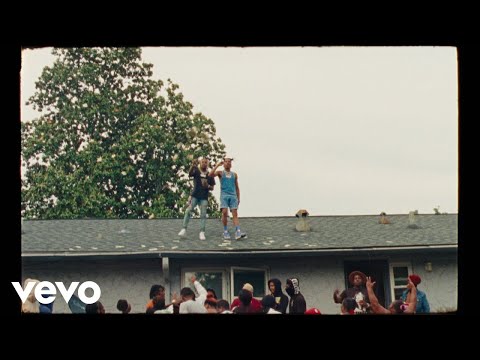
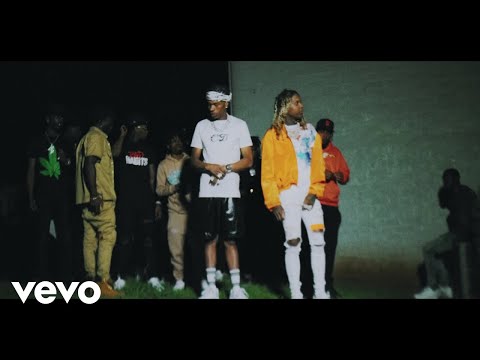
If You Want To: Lil Baby and Lil Durk Consolidate Their Partnership The collaboration between Lil Baby and Lil Durk had been building through a series of mut…
01 The Story
If You Want To: Lil Baby and Lil Durk Consolidate Their Partnership
The collaboration between Lil Baby and Lil Durk had been building through a series of mutual appearances and shared creative affinities before it found formal expression in "The Voice of the Heroes," the joint album they released in June 2021 through Quality Control Music, Wolfpack Global Music, Only the Family, and Motown/Capitol Music Group. Both artists had developed large and loyal streaming audiences through prolific output over the preceding several years, and the decision to formalize their partnership as a dedicated album project was understood by the industry as a commercial event of considerable magnitude.
The album debuted at number one on the Billboard 200 with first-week streams and sales that made it one of the largest openings of 2021. The project demonstrated that two established streaming-era stars could combine their fan bases in a way that created genuine multiplicative effect rather than merely additive audience overlap. Both Baby and Durk brought distinct but complementary styles to the collaboration: Baby's Atlanta melodic trap delivery and Durk's Chicago drill-influenced approach occupied adjacent but distinguishable sonic territories, creating within the album a productive tension between two aesthetics that shared emotional directness while differing in texture and regional inflection.
"If You Want To" was one of the tracks on the album that demonstrated the duo's ability to find common melodic and thematic ground. The production followed the template that had become standard for both artists' most commercially successful work: contemporary trap beats with atmospheric synthesizer layering, melodic vocal delivery that moved between speaking and singing, and a production sheen that reflected the resources available to artists at their level of commercial success. The song contributed to an album tracklist that was notable for its sonic cohesion despite the dual-artist format.
Lil Durk's trajectory to this point had been one of sustained development through adversity. His Chicago origins placed him within the drill scene that had produced Chief Keef and G Herbo, a tradition that emphasized unflinching documentation of street reality within musical frameworks that reflected the emotional weight of that material. By 2021, he had developed a more melodically sophisticated approach while maintaining the authenticity that his core audience demanded, and the collaboration with Lil Baby, whose comparable development arc had run along slightly different lines from Atlanta, made thematic and aesthetic sense.
The marketing surrounding "The Voice of the Heroes" was extensive, reflecting the commercial importance both Quality Control and Only the Family placed on the project. The album title itself was a joint claim of authority within their respective communities, asserting that both artists had earned the right to speak for the people who had watched their careers develop. The first-week streaming numbers were extraordinary, with the album generating hundreds of millions of streams across platforms within its opening period, a figure that reflected the combined power of two of hip-hop's most active streaming audiences.
For Lil Baby, who had already released the commercially massive "My Turn" album in 2020, the joint project represented a consolidation of his position as one of hip-hop's genuine A-list acts. "My Turn" had debuted at number one on the Billboard 200 and remained a streaming phenomenon throughout 2020, and the Lil Durk collaboration arriving the following year maintained the commercial momentum without requiring him to carry the full creative burden of a solo project. The arrangement suited both artists: Durk similarly benefited from the association with Baby's enormous streaming base, and the mutual reinforcement elevated both artists' commercial standing.
"If You Want To" within this context functioned as one of the album's more interpersonally oriented moments, a track that balanced the celebration of success with something more personal and emotionally specific. The song's placement within the album's sequencing gave it room to provide tonal variety within a tracklist that could easily have become monotonous if every track maintained the same intensity level. The Goo Goo Dolls and Only the Family imprint both benefited commercially from the album's extraordinary performance, which demonstrated that carefully coordinated joint projects between streaming-era artists remained a potent commercial format even in a landscape increasingly dominated by individual streaming metric optimization.
02 Song Meaning
What "If You Want To" Means: Conditional Commitment Between Two Survivors
"If You Want To" sits within the emotional space that both Lil Baby and Lil Durk had made central to their most resonant work: the complicated negotiation of intimacy and loyalty in the context of lives that have been shaped by precarity and loss. The conditional framing of the title is characteristic of both artists' approach to personal relationships in their music, suggesting availability and even desire for connection while simultaneously insisting that the terms of that connection be clearly understood by both parties. This is not romantic indifference but rather the emotional caution of people who have learned that vulnerability has costs.
The theme of conditionality runs through much of the material on "The Voice of the Heroes," reflecting both artists' tendency to frame personal relationships within frameworks of trust that have been built through shared experience of difficult circumstances. Lil Durk's Chicago context and Lil Baby's Atlanta context both involve, in their autobiographical material, accounts of environments where trust was not freely given and where the consequences of misplaced loyalty could be severe. The conditional "if you want to" formulation reflects that background without requiring it to be stated explicitly.
The emotional register of the song is warmer than the purely transactional or guarded posture that the conditional framing might suggest. Both artists, at the point of this album's creation, had achieved the kind of material security that allowed them to engage with personal relationships from a position of stability rather than desperation. The "if you want to" of the title is less a warning than an invitation, an offer made from strength rather than need, which gives it a different emotional texture than the same phrase would carry in a context of scarcity.
The collaboration between the two artists on this track, as on the album more broadly, creates an interesting dynamic of mutual witness. Each artist's verse is heard in the context of the other's, which means that the personal declarations each makes are immediately placed in dialogue with a perspective that is similar in its emotional honesty but distinct in its specific cultural reference points. This witnessing function is one of the things that made "The Voice of the Heroes" a more interesting artistic document than a simple commercial pairing would have produced.
The song also participates in the broader project of the album's title: the assertion of voice and authority by two artists who have earned their standing through sustained output and authentic engagement with the communities from which they came. An album titled "The Voice of the Heroes" makes a claim about the relationship between the artists and their audience, and individual tracks need to demonstrate that the claim is grounded. "If You Want To," with its personal emotional content and its lack of performative excess, is the kind of track that supports rather than undercuts that claim.
The production aesthetic that frames the song reflects 2021's most refined version of the melodic trap sound, polished enough to feel contemporary and expensive without losing the organic emotional quality that distinguishes the best work of both artists from purely commercial production. In the streaming era, where listeners encounter tracks both in isolation and as part of albums, the song's ability to work in both contexts reflects a compositional intelligence that goes beyond surface-level hit-making.
→ More from Lil Baby & Lil Durk
View all Lil Baby & Lil Durk hits →


→ More from the 2020s File
View all 2020s hits →


Keep digging