The 2020s File Feature
Keep My Spirit Alive
Keep My Spirit Alive: Kanye West, Donda, and the Art of the Gospel-Rap Collaboration Few albums in the history of mainstream hip-hop generated as sustained a…
01 The Story
Keep My Spirit Alive: Kanye West, Donda, and the Art of the Gospel-Rap Collaboration
Few albums in the history of mainstream hip-hop generated as sustained a period of anticipation, rumor, revision, and public spectacle as Kanye West's Donda. Named after his late mother, Donda West, who passed away in November 2007, the album was first announced years before its release, underwent multiple listening events in stadiums across the country, was delayed repeatedly, and ultimately arrived on August 29, 2021, via GOOD Music and Def Jam Recordings. By the time it was officially released, the album had become something more than a record; it was a cultural event in the truest sense, an ongoing public performance of grief, faith, artistic ambition, and interpersonal conflict. "Keep My Spirit Alive," one of the album's most striking collaborative moments, crystallized many of the themes Kanye had been pursuing across the project.
The track features the Clipse, the Virginia duo of Pusha T and No Malice (formerly No Malice, birth name Gene Thornton) who had been central figures in the cocaine-rap subgenre of the early 2000s and who Kanye had maintained a productive relationship with through his GOOD Music label imprint. Westside Gunn, the Buffalo, New York rapper and head of the Griselda Records collective, also appears on the track, bringing a style rooted in late-era Wu-Tang aesthetics and New York street rap vocabulary that provided a different textural dimension. The combination of the Clipse and Westside Gunn on a Kanye production was remarkable given that it brought together two related but distinct strains of street rap, with the connective tissue being a shared aesthetic reverence for sample-based production, luxury branding, and unapologetic lyrical bravado.
Kanye's production approach on Donda as a whole moved toward maximalism within the framework of his gospel-rap synthesis. Having spent the years since 2019's Jesus Is King developing a mode of rap music that incorporated choir arrangements, church organ sounds, and explicitly spiritual lyrical content, he arrived at Donda with a more complex and ambivalent version of that framework, one that allowed darker content, more worldly subject matter, and a wider range of collaborators to coexist within the spiritual frame rather than being excluded from it. "Keep My Spirit Alive" embodied this approach: the title invokes spiritual persistence, the survival of something essential beyond the body, which directly referenced the album's dedication to his mother's memory while also encompassing a broader meditation on what it means to endure.
The track's production featured Kanye's characteristically layered approach, with textures drawn from soul samples, percussion elements, and the kind of harmonic complexity that distinguished his work from more straightforward trap production. Donda was credited with multiple producers across its many tracks, reflecting both the album's long development period and Kanye's collaborative approach to building beats through sessions that incorporated numerous contributors. The sonic environment of "Keep My Spirit Alive" supported the contributions of three distinct rap voices without homogenizing them, allowing each performer to occupy identifiable space within the track.
Commercially, Donda debuted at number one on the Billboard 200 with enormous streaming numbers driven by years of accumulated anticipation and a fanbase that treated the album's release as a major cultural occasion. Individual tracks from the album charted on the Hot 100, with the project's commercial performance reflecting both genuine demand and the specific mechanics of how streaming-era album releases translate to chart positions. The album's many collaborations served a marketing function as well as a creative one, with each featured artist bringing their own fanbase into engagement with the project.
The Griselda connection that Westside Gunn represented was particularly significant in the context of Donda's reception. Griselda Records had spent the late 2010s building a devoted following for a style of rap that deliberately rejected mainstream production conventions in favor of murky, sample-heavy beats and dense, allusive lyricism, and Gunn's appearance on a Kanye West album represented a high-profile mainstreaming of the collective's profile. For listeners who had followed Griselda's ascent, hearing Gunn alongside the Clipse on a Kanye production was a confluence of influences that felt historically significant.
Critical reception of Donda was mixed in ways that reflected the album's genuine contradictions, its excessive length, its uneven pacing, its mixture of extraordinary moments with less successful ones. "Keep My Spirit Alive" was generally cited among the album's more successful sequences, a track where the collaborative ambition was matched by sonic execution. Its placement within the album's architecture, as one of many moments of spiritual declaration and artistic self-assertion, gave it a context that amplified its individual qualities.
02 Song Meaning
Keep My Spirit Alive: Grief, Faith, and Persistence in the Donda Framework
"Keep My Spirit Alive" sits at the intersection of several of the conceptual threads running through Donda as a complete work. The album's dedication to Kanye West's mother, Donda West, gave every track on the project a context of mourning and commemoration, but different songs engaged with that context in different ways. Some tracks were explicitly elegiac, others were more oblique, and "Keep My Spirit Alive" occupied a particular position as a declaration of continuity against loss, the idea that what is essential about a person or a spirit does not simply end with physical death.
The title itself is an address or a plea, directed either toward God, toward the listener, or toward some combination of both. This ambiguity is characteristic of the album's spiritual vocabulary, which drew from gospel tradition while refusing to be confined by it. Gospel music has always been music of persistence and hope in the face of suffering, and the invocation of spirit-keeping in the title places the track firmly within that tradition, even as the musical content around it includes the kind of hard-edged street-rap detail that gospel conventionally excludes.
The presence of the Clipse adds a specific layer of meaning to the track. Pusha T and No Malice have, in their individual careers, developed a complicated relationship with the spiritual dimensions of their street-rap subject matter. No Malice in particular underwent a public conversion experience that he documented in music and interviews, moving from the unapologetic drug-narrative content of early Clipse to an explicitly Christian perspective that involved genuine ambivalence about his earlier work. Their appearance on a track called "Keep My Spirit Alive" on an album dedicated to a deceased mother is weighted with these biographical resonances, making the spiritual content feel grounded in real biographical experience rather than generic.
Westside Gunn's contribution functions differently, drawing from a tradition in which artistic expression is itself the vehicle of survival, where making music of a particular quality and specificity constitutes a form of immortality through creation. The Griselda aesthetic, rooted as it is in the idea that certain underground traditions must be preserved and carried forward, aligns productively with a song about keeping spirit alive.
For Kanye West's own artistic identity, "Keep My Spirit Alive" represented a continuation of his effort to create a form of rap music that was simultaneously street-credible, spiritually ambitious, and emotionally honest about loss and grief. The gospel-rap synthesis he developed on Jesus Is King and expanded on Donda was not universally accepted by critics or audiences, with some finding the combination of sacred and profane elements awkward and others finding it exactly the kind of productive tension that popular music should create. "Keep My Spirit Alive" is one of the tracks where the synthesis feels most organic, because the subject of spiritual persistence is one where the sacred frame and the street-rap frame can be genuinely unified rather than merely juxtaposed.
The song's meaning is also inseparable from its moment of production. An album made in the years following a parent's death, released after a period of widely publicized personal struggles, mental health crises, and public controversies, carries a weight of biographical context that shapes how any individual track is received. "Keep My Spirit Alive" cannot be heard without that context, and the meaning of the track is partly constituted by the biography of the artist who made it, the real loss that the title's plea addresses, and the real effort to find in music a vehicle for processing grief that exceeded ordinary language.
→ More from Kanye West
View all Kanye West hits →
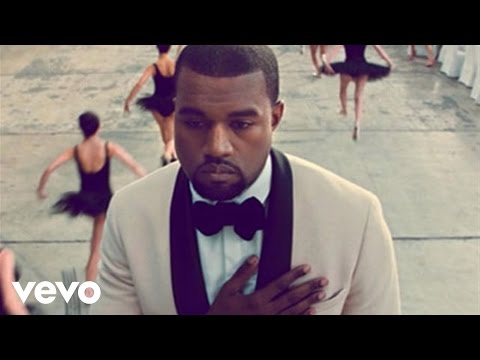
→ More from the 2020s File
View all 2020s hits →


Keep digging