The 2020s File Feature
Santa Claus Is Comin' To Town
"Santa Claus Is Comin' To Town" — Jackson 5 A Holiday Recording That Refused to Age There is something almost mythological about a Christmas record that outl…
01 The Story
"Santa Claus Is Comin' To Town" — Jackson 5
A Holiday Recording That Refused to Age
There is something almost mythological about a Christmas record that outlasts its original era not once but across five decades. The Jackson 5's recording of "Santa Claus Is Comin' To Town" was cut when the group was still in its earliest Motown phase, with a very young Michael Jackson delivering the lead vocal with that uncanny mixture of child's innocence and adult-level musical instinct that made the Jackson 5 so immediately irresistible. What no one could have predicted in the early 1970s was that this holiday track would still be entering the Billboard Hot 100 in the 2020s, finding new audiences through streaming platforms every holiday season.
The song itself has a long history before the Jackson 5 ever got near a microphone. Written by J. Fred Coots and Haven Gillespie, it was first performed by Eddie Cantor on radio in 1934 and had been recorded by dozens of artists in the decades that followed. The Jackson 5 version, recorded for their Motown holiday album, reimagined the standard with a buoyant funk-pop arrangement that was immediately identifiable as the work of the Motown production machine at its most polished, and Michael's vocal put a stamp of irresistible energy on what was already a beloved standard.
Motown and the Making of an Iconic Sound
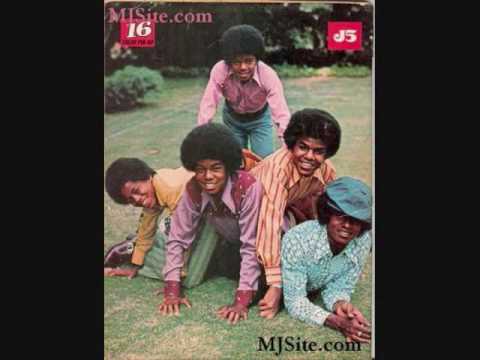
The Jackson 5 signed with Motown Records in 1969, and their label debut produced an extraordinary run of pop hits driven by young Michael Jackson's precocious talents. The Motown approach to holiday recordings was consistent with its approach to everything else: accessible, rhythmically alive, and arranged to appeal across demographic lines. The "Santa Claus Is Comin' To Town" recording sits squarely in that tradition, balancing the warmth of a classic Christmas song with the group's natural groove.
Michael Jackson's lead vocal is the defining element of the recording. He was around eleven or twelve years old when the track was recorded, and his ability to convey both genuine childhood excitement and sophisticated musical phrasing is something that analysts of his early work have returned to repeatedly over the years. The other Jackson brothers provide harmonies and energy that give the track its communal, joyful feel, but it is Michael's voice that carries the song from pleasant to memorable.
The Streaming Era Resurrection
The Billboard Hot 100 chart data tells a fascinating story about how music consumption has changed. The Jackson 5's "Santa Claus Is Comin' To Town" began appearing on the chart in the streaming era, debuting at position 46 in the chart dated January 2, 2021, then returning in subsequent holiday seasons. It reached its peak position of 30 during the week of January 6, 2024, accumulating 11 weeks on the chart across multiple holiday cycles. This kind of perennial charting would have been impossible under the old model of physical sales and radio airplay, which reset each year without accumulation.
The streaming model changed the economics of holiday music entirely. Because every play counts toward chart eligibility, beloved classic recordings compete alongside new releases during the holiday season, and those with the longest history of cultural affection can draw enormous streaming numbers from multiple generations simultaneously. The Jackson 5 recording benefits from nostalgia among listeners who grew up with it in the 1970s and 1980s, discovery by younger listeners encountering Michael Jackson's catalog for the first time, and the natural loop of holiday playlist culture.
The Jackson 5's Place in Pop History
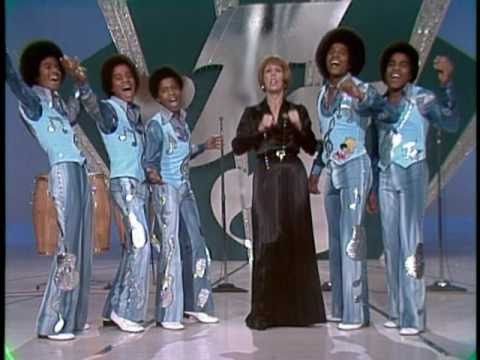
By any measure, the Jackson 5 belong among the foundational acts of American popular music. Their early Motown run produced classics that helped define the sound of pop at the turn of the 1970s, and Michael Jackson's subsequent solo career became one of the most extraordinary in the history of recorded music. The holiday recording lives within that larger legacy, a small but beloved piece of a catalog that spans generations and genres.
The song's repeated reappearance on the Hot 100 in the 2020s also reflects the durability of the holiday catalog more broadly. Christmas music occupies a unique cultural space in which emotional associations formed in childhood persist powerfully into adulthood, and the recordings that provide the soundtrack to those early memories acquire a kind of immunity to obsolescence. The Jackson 5 version of "Santa Claus Is Comin' To Town" has earned that status through sheer longevity and the undeniable charm of its lead performance.
A Recording for Every Generation
What makes the Jackson 5 recording particularly durable is its ability to function simultaneously as nostalgia and as a genuinely compelling piece of recorded music for first-time listeners. The arrangement has enough vintage character to evoke a specific era while remaining accessible to ears formed on contemporary pop. Michael Jackson's vocal is so expressive that it communicates directly regardless of when you first encounter it. Pull it up during the holiday season and the years seem to collapse a little, a child's voice carrying the warmth of every Christmas it has soundtracked across half a century.
"Santa Claus Is Comin' To Town" — Jackson 5's singular moment on the 2020s charts.
02 Song Meaning
"Santa Claus Is Comin' To Town" — Meaning, Themes, and Cultural Resonance
The Weight of a Warning in a Holiday Wrapper
Strip away the tinsel and the sleigh bells and "Santa Claus Is Comin' To Town" reveals itself as a song about surveillance, behavior, and the promise of reward contingent on conduct. Written in 1934 by J. Fred Coots and Haven Gillespie, the original lyric structure is built around a series of admonitions: a figure of immense authority is watching, cataloguing behavior, and will deliver consequence accordingly. In that sense it is an almost archetypal piece of childhood socialization, using the excitement of Christmas as a vehicle for transmitting messages about the value of good behavior.
The genius of the song is that it wraps this somewhat stern premise in pure celebration. The production of virtually every major recording, including the Jackson 5's Motown version, foregrounds the joy rather than the threat, so listeners receive the message as warmth rather than warning. Children have responded to it for generations not with anxiety about the watching eye but with delight at the coming arrival, which says something interesting about how musical arrangement and vocal performance can modulate the emotional register of a lyric.
Childhood Wonder as a Perpetual Theme
The Jackson 5 version adds a specific dimension by placing a child's voice at the center of the experience. Michael Jackson's lead vocal was recorded when he was approximately eleven or twelve years old, and his delivery of the material carries the genuine excitement of someone who is not performing nostalgia but inhabiting it. Adult renditions of childhood-oriented holiday songs are common, but a child singing about the approach of a magical figure creates a different kind of authenticity, an insider's account rather than an adult's reconstruction of childhood feeling.
This is one reason the recording has retained its appeal across decades. Listeners who first heard it as children themselves can hear that youthful energy as a mirror of their own past experience, while new young listeners encounter a voice that sounds like their own world.
Holiday Music and Cultural Memory
Christmas songs occupy a peculiar category in popular music because they accumulate meaning through repetition across years rather than through sustained chart presence in any single moment. Each holiday season re-activates the same set of recordings for millions of listeners, reinforcing associations formed in childhood and adding new layers of memory with each passing year. The Jackson 5 recording has been part of that seasonal cycle for fifty years, which means it carries an extraordinary density of individual associations for the audiences who have grown up hearing it.
The track's reappearance on the Hot 100 in the streaming era, peaking at number 30 in January 2024, is a measure of how deeply embedded it has become in the collective holiday soundtrack. Numbers like those are generated by an enormous range of listeners choosing to play the same recording across demographics and geographies, each bringing their own history to the experience.
Why the Jackson 5 Version Endures
Dozens of artists have recorded "Santa Claus Is Comin' To Town" over the nearly ninety years since its composition. The Jackson 5 version endures because it combines three elements that are difficult to achieve simultaneously: the production warmth of Motown at its peak, the communal energy of a group performance, and a lead vocal of genuinely extraordinary expressiveness from a singer whose voice carries something more than technical skill. Michael Jackson's phrasing on the track is technically precocious, bending notes and deploying rhythmic variations that most adult singers would not think to attempt on material this familiar.
Together these qualities produced a recording that does not simply play the song but inhabits it, finding inside a well-worn standard the same delight that has made it perennial since the 1930s. Holiday playlists cycle through many versions of many carols, but this one commands attention every time it comes around.
→ More from Jackson 5
View all Jackson 5 hits →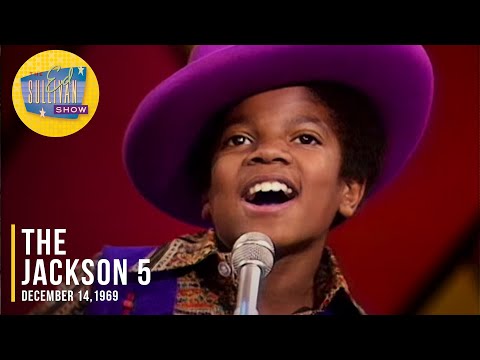


→ More from the 2020s File
View all 2020s hits →




Keep digging