The 2010s File Feature
She Came To Give It To You
She Came To Give It To You — Usher Featuring Nicki Minaj: Chart History and Reception "She Came To Give It To You" was released as a single by Usher featurin…
01 The Story
She Came To Give It To You — Usher Featuring Nicki Minaj: Chart History and Reception
"She Came To Give It To You" was released as a single by Usher featuring Nicki Minaj in July 2014, through RCA Records. The song arrived during a transitional period for Usher, whose commercial dominance of the early and mid-2000s had given way to a somewhat more competitive landscape in which the R&B market had diversified considerably. His previous blockbuster album, "Looking 4 Myself," had arrived in 2012 and included the number-one hit "Climax." By the time "She Came To Give It To You" appeared, Usher was building toward new material, and the single functioned as a standalone release designed to maintain his commercial presence in a rapidly evolving streaming environment.
The collaboration with Nicki Minaj was a natural commercial calculation. By 2014, Minaj was one of the most commercially powerful forces in pop and hip-hop, capable of elevating any single she appeared on to a wider audience. Her verse added an aggressive, playful dimension to a track that was already positioned as a dance-floor-oriented club anthem. The combination of Usher's smooth R&B credibility and Minaj's rap swagger had a track record in popular music, as similar pairings of male R&B vocalists and Minaj had produced strong commercial results throughout the early 2010s.
The song reached number ten on the Billboard Hot 100, giving Usher another top-ten hit and demonstrating that his commercial appeal remained strong even as his market position had evolved from the dominance of the "Confessions" era. The track also performed well on the Hot R&B/Hip-Hop Songs chart, where Usher had historically been one of the most consistent presences of his generation. For Nicki Minaj, the feature contribution reinforced her position as the most sought-after guest vocalist and rapper in mainstream pop during this period.
The production of "She Came To Give It To You" was tailored for the mid-2010s club market, incorporating electronic dance elements that had become increasingly central to mainstream R&B production following the crossover of EDM into the American pop mainstream around 2011 and 2012. The beat structure was designed for maximum dancefloor impact while retaining enough melodic material to appeal to radio formats beyond the dance-specific programming. This hybrid approach was typical of Usher's commercial instincts, which had always involved positioning himself at the intersection of what was stylistically current and what his core R&B audience expected.
The music video for the song was shot with a high-budget production aesthetic consistent with Usher's profile, featuring the elaborate visual presentation that his label's marketing infrastructure supported. The video received heavy rotation on music video platforms and social media, where it generated substantial views within the first weeks of its release. Visual content had become increasingly important to the commercial performance of singles by 2014, as YouTube and Vevo served as primary discovery platforms for mainstream pop music.
Radio promotion was extensive, with the single receiving airplay across Top 40, rhythmic, and urban contemporary formats. Usher's radio presence had been a cornerstone of his commercial strategy since "U Got It Bad" in 2001, and the infrastructure for delivering his singles to those formats remained robust. "She Came To Give It To You" moved quickly up multiple airplay charts in the weeks following its release, aided by the promotional machine that major label distribution made possible.
Critical reception was mixed but measured. Reviewers who covered mainstream pop and R&B generally acknowledged the song's effectiveness as a piece of commercial dance-pop, noting the production's energy and the chemistry between Usher and Minaj on the track. More demanding critics noted that the song did not represent the kind of artistic ambition that had defined Usher's most celebrated work, placing it in the category of efficient commercial product rather than meaningful artistic statement. This was not unusual territory for evaluating a summer dance-club single from an established artist.
The single preceded Usher's album "Hard II Love," which arrived in 2016. In this sense, "She Came To Give It To You" was part of the extended promotional cycle leading into his next album era, keeping his name visible on charts and radio while longer-term creative work continued. This strategy of maintaining chart presence between album releases had become standard practice for established artists navigating the new streaming economy.
In the context of Usher's long career, the song represents his ability to adapt to shifting commercial conditions while retaining the core qualities, smooth vocal delivery, danceable production, and a charismatic public persona, that had made him one of R&B's most durable commercial forces since the late 1990s. "She Came To Give It To You" may not be the track that defines his artistic legacy, but it documents his continued commercial vitality during a period of significant industry transition.
02 Song Meaning
She Came To Give It To You — Usher Featuring Nicki Minaj: Themes and Meaning
"She Came To Give It To You" operates in the mode of celebratory club-R&B that has been a persistent strand in Usher's catalog since his late-1990s emergence. The song describes a woman who arrives in a social space with a confident, purposeful sexual energy, presenting herself as the subject of desire without passivity or ambiguity. The lyrical framing positions this confidence as something to be celebrated, a display of agency that the song's narrator observes with admiration rather than objectifying in the more dismissive manner that characterized some dance-club R&B of earlier eras.
The dynamic between Usher's verses and Nicki Minaj's featured contribution is central to the song's meaning. Usher narrates from the position of the admiring observer, while Minaj speaks from the position of the woman being described, affirming and amplifying the confidence the song assigns her. This structural choice gives the track a quality of call-and-response that has deep roots in Black American musical tradition, here applied to a contemporary club context. The effect is a song that feels less like a purely male gaze exercise and more like a collaborative celebration of female confidence and self-possession.
Nicki Minaj's verse is constructed with the assertive, self-referential style that had made her the dominant female voice in mainstream rap by 2014. Her contribution to the song reframes the narrative so that the woman described is not simply an object of attention but an active agent choosing how she presents herself and to whom. This reframing was consistent with Minaj's broader public positioning, which insisted on female autonomy and agency even within the conventions of genre forms historically less attentive to those concerns.
The song belongs to a long tradition of dance-floor-oriented R&B in which the dancefloor functions as a social space for the expression and negotiation of desire, attraction, and identity. Usher had worked in this tradition throughout his career, from the early albums through the "Confessions" era, and "She Came To Give It To You" revisits it in the production language of the mid-2010s. The electronic elements in the production connect the song's themes to the contemporary club context in which such negotiation continues to happen, updating the tradition without abandoning its essential character.
The track also reflects the mid-2010s R&B preoccupation with confident, explicit expressions of sexuality that characterized the period's mainstream pop output more broadly. Artists like Beyonce, Rihanna, and the Weeknd were all exploring similar thematic territory during this period, pushing the genre toward a more direct engagement with desire as a subject rather than treating it through the metaphor and suggestion that characterized earlier R&B conventions. "She Came To Give It To You" participates in this broader shift, using the frank confidence of its subject to signal its place in a contemporary landscape where such directness had become commercially normalized.
Within Usher's catalog, the song represents a continuation of the dance-floor R&B mode rather than a departure or evolution. His most significant artistic growth had come through the emotionally vulnerable slow-burn material on albums like "Confessions," and "She Came To Give It To You" is not that kind of work. It is instead the professional execution of a well-understood genre exercise, demonstrating competence and commercial instinct rather than artistic risk. This distinction is not a criticism so much as a description of what the song was designed to accomplish and the context in which it succeeded.
For audiences in 2014, the song provided a reliable piece of summer dance-floor R&B from two artists whose combined commercial track record made it an immediate radio and streaming commodity. Its meaning was primarily experiential, the feeling of a well-produced, confidently performed club track, rather than interpretive, the invitation to reflect on deeper themes or biographical context. In its category, it delivered precisely what it promised, which is its own kind of success.
→ More from Usher Featuring Nicki Minaj
View all Usher Featuring Nicki Minaj hits →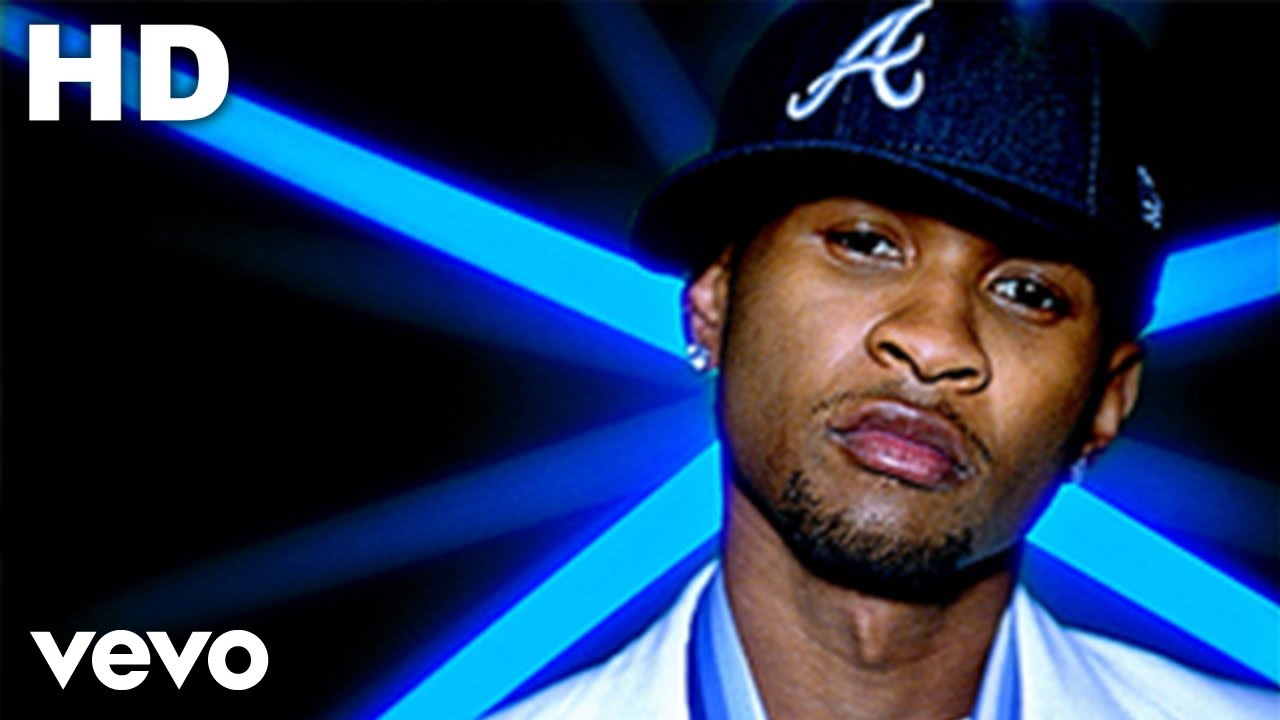




→ More from the 2010s File
View all 2010s hits →



Keep digging