The 2010s File Feature
Make It Nasty
"Make It Nasty" — Tyga's Early Hot 100 Entry in 2012 Compton's Young Contender The spring of 2012 felt like a pivotal moment for West Coast hip-hop, with You…
01 The Story
"Make It Nasty" — Tyga's Early Hot 100 Entry in 2012
Compton's Young Contender
The spring of 2012 felt like a pivotal moment for West Coast hip-hop, with Young Money's roster radiating influence across the genre and a younger generation of California rappers jostling for position on radio playlists and streaming feeds that were still finding their commercial footing. Tyga, born Micheal Ray Stevenson in Compton, was one of the more talked-about names in that constellation, an artist who had started releasing material in the mid-2000s and spent the intervening years building a following through mixtapes, label visibility, and his association with Lil Wayne's Young Money Empire.
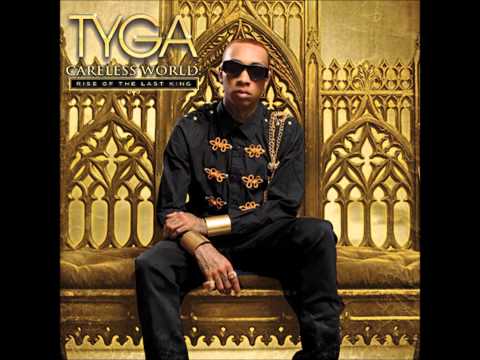
By the time "Make It Nasty" arrived in early 2012, Tyga had already released two studio albums, including "Careless World: Rise of the Last King" that same year. He was not a newcomer trying to make a first impression; he was an artist with an established lane working to consolidate his commercial position.
The Track and Its Sound
Released in 2012, "Make It Nasty" fit squarely into the club-rap tradition that was thriving in that era, a style built around pounding 808s, minimal melodic content, and lyrics optimized for high-volume playback in crowded spaces. The production aesthetic shared DNA with the harder-edged club tracks that were crossing between hip-hop and electronic dance music in those years, a period when the two genres were in constant creative conversation.
The track's stripped-down approach was part of its design. In a musical moment when producers like Lex Luger were making rhythmically punishing beats for rappers across the country, the sonic language of "Make It Nasty" was immediately legible to anyone who had been paying attention to hip-hop radio. The repetitive, hypnotic quality of the production was built to lock in on a loop and sustain a dance floor without demanding active attention from the listener.
Brief but Real Chart Presence
The song debuted on the Billboard Hot 100 on March 10, 2012, at position number 91, which marked its peak performance. The following week it slipped slightly to number 93 before exiting the chart after just two weeks. The brief run reflected a pattern common to club-oriented hip-hop singles of the period: intense but short-lived spikes of attention driven by strong initial download sales and streaming numbers, followed by rapid decline once the novelty wore off or the next big track arrived to compete for attention.
Two weeks on the Hot 100 was a modest showing by any measure, but it was a genuine commercial signal nonetheless. Breaking into the Hot 100 in 2012 required meaningful sales and streams, and even a brief appearance confirmed that the track had generated real numbers rather than just critical or subcultural buzz. The chart methodology at the time was increasingly incorporating streaming data, and tracks that moved quickly through digital platforms could land on the chart even if their radio presence was limited.
Tyga's Trajectory and the Young Money Years
The early 2010s were a formative and sometimes chaotic period for Tyga's career. His alignment with Young Money brought him significant visibility, but it also meant he was constantly being compared to labelmates Nicki Minaj and Drake, artists whose commercial dominance set a very high bar. "Make It Nasty" was one of several tracks from this era that demonstrated Tyga's ear for club-ready production even when the lyrical content was straightforward and the chart run was short.
He would go on to achieve considerably larger commercial success in later years, with tracks that benefited from the maturation of streaming platforms and his growing celebrity profile. But in 2012, "Make It Nasty" functioned as a snapshot of an artist in transition, capable of making music that landed on the country's most important pop chart even while his biggest commercial moments were still ahead of him.
The Club Single as Cultural Artifact
Looking at the club-rap singles that populated the lower reaches of the Hot 100 in 2012 reveals something interesting about that moment in popular music. The genre was producing a high volume of tracks designed for specific contextual use (nightclubs, parties, pregame gatherings) rather than for repeated individual listening, and the charts reflected that ecology. A song could generate genuine commercial heat without ever achieving the kind of radio ubiquity that earlier generations of hit singles required.
Tyga's "Make It Nasty" was a functional piece of music for its intended environment, and its brief chart presence confirmed that function had value in the marketplace. In an era before streaming algorithms fully dominated discovery, tracks that moved through club culture and social sharing could still find their way into the official accounting of the nation's popular music.
Turn it up and let the speakers do the work.
"Make It Nasty" — Tyga's singular moment on the 2010s charts.
02 Song Meaning
"Make It Nasty" — Club Culture and the Language of Release
Music for the Floor, Not the Headphones
There is a whole tradition of popular music that exists specifically for collective physical experience rather than solitary listening, songs designed to function in a crowd rather than in a pair of headphones. Tyga's "Make It Nasty" belongs to this category without apology, and understanding what it communicates means understanding the social role that club music plays in urban American culture, a role that has been present since at least the disco era and continues to evolve with each generation's technology and aesthetic preferences.
The track's thematic content is organized around invitation and confidence, a speaker who occupies the center of a social space and invites participation on his terms. This posturing is a well-established rhetorical mode in hip-hop, and it carries specific cultural weight in a genre where projection of confidence is itself a meaningful act, a performance of self that functions as both entertainment and social claim.
The West Coast Lens
Tyga's Compton upbringing inflected even his most club-oriented material with a specific regional sensibility. The West Coast hip-hop tradition has always carried its own internal codes, its own expectations about how a rapper should sound and what they should project, and even within the Young Money ecosystem Tyga maintained identifiable markers of that heritage. "Make It Nasty" drew from a broader club-rap playbook while Tyga's delivery located it geographically for listeners attuned to those signals.
In 2012, West Coast rap was in an interesting place culturally. The dominance of the early 2000s West Coast had given way to a more diffuse landscape where artists from Atlanta, Houston, New York, and the Midwest were all claiming significant radio territory. For a young Compton rapper, making music that could compete nationally on streaming platforms and in clubs across the country required a kind of stylistic flexibility that earlier generations hadn't needed to the same degree.
Brevity and Impact
The song's two-week Hot 100 run at its peak of number 91 might seem to indicate limited impact, but it is worth considering what that number actually represents. In the spring of 2012, the Hot 100 was aggregating data from digital downloads, physical sales, and airplay across thousands of radio stations and digital services. A track that generated enough numbers to appear on that chart, even briefly, had reached a meaningful portion of the American listening public.
Club tracks of this type also operated on their own temporal logic. Their value wasn't measured in weeks on a chart so much as in their density of use during peak moments: weekend nights, particular seasons, specific cultural contexts. A song might have a short chart life but a longer shelf life in playlists and DJ sets where its utility remained high long after the initial commercial moment had passed.
Resonance and the Party Tradition
The appeal of music organized around release and physical expression is not difficult to explain: people have always needed spaces and sounds that facilitate letting go, that give permission to set aside the weight of daily life and inhabit the body for a while. The club tradition in American popular music, running through soul and funk and disco and house and hip-hop, has always carried this therapeutic function, and even the most straightforwardly commercial entries in that tradition participate in something socially meaningful.
Tyga's "Make It Nasty" was a capable, efficient entry in that tradition. It understood its assignment and executed it without pretension, delivering the sonic experience its audience was looking for in a compact and effective package. In a genre that sometimes takes itself enormously seriously, there was a certain refreshing clarity to a track that knew exactly what it was trying to do and did it without unnecessary complication.
"Make It Nasty" — Tyga's singular moment on the 2010s charts.
→ More from Tyga
View all Tyga hits →


→ More from the 2010s File
View all 2010s hits →



Keep digging