The 2010s File Feature
Real Life
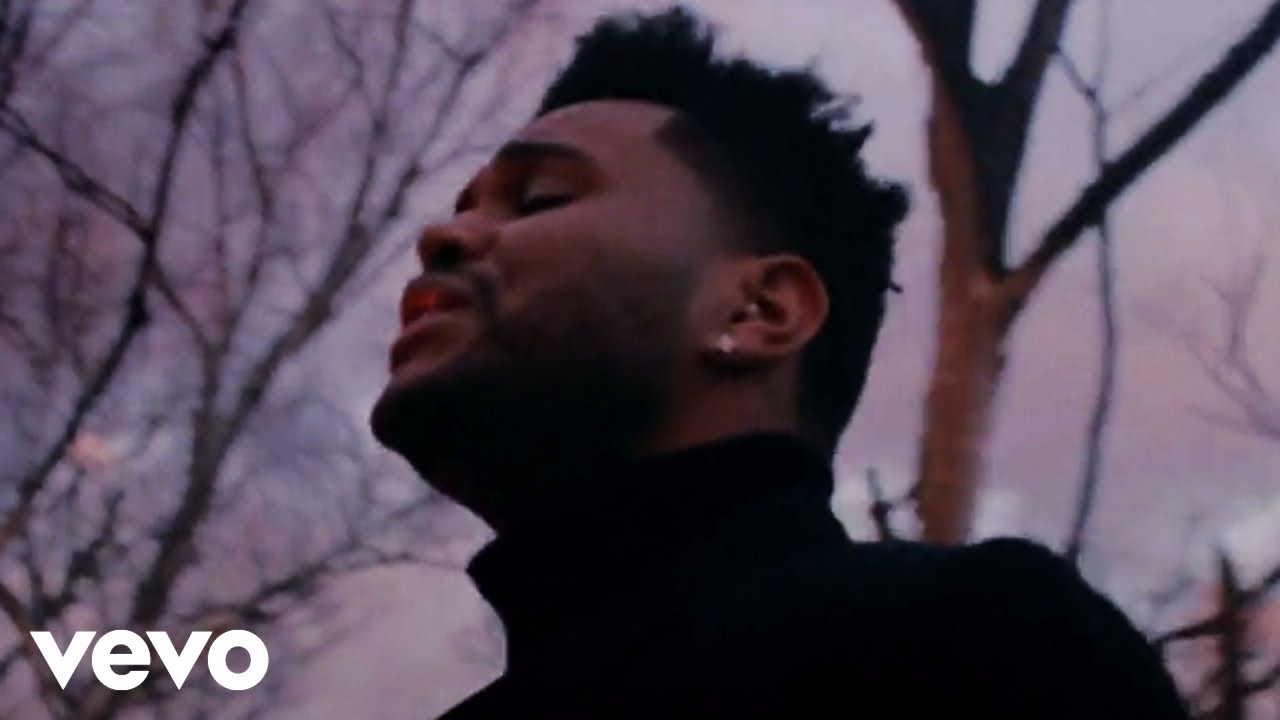
"Real Life" by The Weeknd The Opening Statement of an Era-Defining Album When Beauty Behind the Madness arrived in August 2015, it did so with the force of a…
01 The Story
"Real Life" by The Weeknd
The Opening Statement of an Era-Defining Album
When Beauty Behind the Madness arrived in August 2015, it did so with the force of a fully formed artistic statement from an artist the music industry had been watching obsessively for four years. The Weeknd had emerged in 2011 through a series of free mixtapes that rewrote what R&B could sound like in the post-digital age: bleaker, more nocturnal, more honestly explicit about the emotional costs of the lifestyle his lyrics described. By 2015, he had refined that voice into something commercially enormous while somehow retaining its essential darkness.
"Real Life" was the opening track of Beauty Behind the Madness, and its placement was not accidental. First tracks on albums make promises about what will follow, and "Real Life" promised something specific: this is music from inside a life that operates by different rules than the one most listeners know, and the document of that life will not flinch. The song immediately establishes the emotional register that the album would sustain across its full length.
Abel Tesfaye's Artistic Position in 2015
The transition The Weeknd made between his mixtape era and Beauty Behind the Madness is one of the more fascinating career arcs in contemporary music. The Trilogy, the 2012 compilation that formally introduced his mixtape material to a wider audience, had established him as a critical favorite with a cult following. Kiss Land in 2013 had been a more disorienting and less commercially successful step. But the collaborations he contributed to in 2014 and 2015, particularly his work on Beyonce's Mine and his feature on Ariana Grande's "Love Me Harder," had demonstrated his ability to operate at a mainstream level without diluting his artistic identity.
By the time "Real Life" opened Beauty Behind the Madness, the expectation was that something significant was about to happen. That expectation proved accurate: the album would produce multiple major hits and establish The Weeknd as one of the defining voices of mid-2010s popular music. "Real Life" sits at the beginning of that transformation, a door opening onto a very particular world.
The Sound of "Real Life" and Its Production
The production on "Real Life" establishes an atmosphere immediately: slow-burning, synthesizer-heavy, with a rhythmic patience that allows The Weeknd's falsetto to unfurl across considerable stretches of emotional territory. The track was produced by Illangelo, one of the producers who had been central to shaping The Weeknd's sound from the very beginning of his career, and the familiarity of that collaboration shows in how settled the sound is. There is nothing tentative about "Real Life"; it arrives fully formed.
The song's sonic architecture creates a sense of late-night inevitability. It does not build to conventional climaxes; instead it sustains a mood across its length, a quality more common in film scores than in pop music. This cinematic quality was something The Weeknd had been developing across his entire output, and "Real Life" represents a point where that ambition was fully realized.
The Billboard Hot 100 Run
"Real Life" debuted at number 62 on the Billboard Hot 100 on September 19, 2015, then fell to number 79 in its second week, spending two weeks on the chart in total. The brief chart run reflects the song's nature as an album opener rather than a radio-formatted single; it was not the track The Weeknd or his label were prioritizing for promotional push, given that Beauty Behind the Madness contained more immediately commercial material.
That the track charted at all speaks to the enormous listener interest in the album as a whole. During the first weeks of its release, fans were streaming every track, and a song as strong as "Real Life" naturally attracted significant plays even without traditional promotion. The album's debut at number one on the Billboard 200 provides the proper measure of The Weeknd's commercial standing at this moment; the individual track chart appearances were side effects of a larger wave.
The Track's Lasting Significance
In retrospect, "Real Life" functions as an entry point into one of the most carefully constructed albums of the decade. Listeners who have returned to Beauty Behind the Madness repeatedly know that the album rewards the kind of front-to-back listening that its sequential structure demands, and "Real Life" rewards in equal measure the patience to begin at the beginning. It is the version of The Weeknd before the enormity of what followed had fully arrived, a portrait of an artist on the precise edge of something extraordinary. Press play from here and hear where it goes.
"Real Life" — The Weeknd's singular moment on the 2010s charts.
02 Song Meaning
"Real Life" by The Weeknd — Hedonism, Dissociation, and the Cost of Excess
The Paradox in the Title
Naming a song "Real Life" is, in The Weeknd's artistic context, an act of layered irony. The life documented in his music has always existed at an extreme remove from the ordinary: nocturnal, chemically altered, emotionally detached, characterized by consumption in every possible sense. To call this "real life" is to make a claim about what authenticity actually means, to suggest that the sanitized version of experience that most people present is its own kind of fiction, and that the unmediated intensity his music describes is closer to actual truth.
This philosophical provocation is central to The Weeknd's entire artistic project, and "Real Life" places it at the very beginning of Beauty Behind the Madness, establishing it as the foundational premise of everything that follows. Before the listener has heard a single chorus, the title alone has posed the question: what constitutes reality, and who gets to define it?
The Emotional Landscape of Dissociation
The lyrical world of "Real Life" is one in which emotional numbness and sensory intensity coexist. The narrator exists simultaneously in a state of extreme stimulation and profound disconnection, a combination that The Weeknd had been documenting across his entire output with unusual honesty. The song does not celebrate this condition; it observes it, which is a key distinction. The Weeknd's genius in this period was his ability to document a lifestyle that many listeners found simultaneously aspirational and alarming without moralizing about either response.
The dissociation theme resonated with younger audiences in 2015 for reasons that had little to do with the specific excesses the lyrics described. The sense of moving through experience without fully feeling it, of watching one's own life from a slight distance, had become a widely recognized condition, amplified by social media's mediation of experience and the difficulty of sustaining genuine presence in a world of perpetual distraction.
Beauty and Madness as Inseparable Forces
The album title Beauty Behind the Madness provides the interpretive key for "Real Life" as an opening statement. The song establishes that the narrative will explore how beauty and destruction coexist within a single experience, how the same conditions that produce extraordinary sensation also produce damage and distance. This dialectic is older than rock and roll, but The Weeknd articulates it with a specificity that feels contemporary and personal rather than generic.
The production reinforces this reading through its atmosphere of nocturnal beauty. The music genuinely is beautiful, constructed with considerable aesthetic intelligence, which means the listener is implicated in the same appreciation that the song's narrator has for the circumstances of his life. To find "Real Life" gorgeous to listen to is to understand, at some level, the appeal that the madness holds.
Cultural Context and The Weeknd's Audience in 2015
Mid-2015 was a particular moment for R&B. The genre was undergoing a set of transformations that "Real Life" both reflects and helped to shape: an increasing willingness to explore dark emotional territory, a loosening of the formal constraints that had defined mainstream R&B in the 2000s, and an embrace of production aesthetics drawn from electronic and film music. The Weeknd was among the central figures driving these changes, and "Real Life" is an early document of where they were heading.
Listeners who found their way to the track in its first weeks of release were entering a sonic world that felt genuinely new, and the album it opened proved that feeling was warranted. "Real Life" endures as an introduction to one of the decade's most significant artistic statements, an invitation to follow an artist into territory that was not always comfortable but was always, in the deepest sense, real.
"Real Life" — The Weeknd's singular moment on the 2010s charts.
→ More from The Weeknd
View all The Weeknd hits →
→ More from the 2010s File
View all 2010s hits →


Keep digging