The 2010s File Feature
Prisoner
Prisoner: The Weeknd and Lana Del Rey's Dark Duet From Beauty Behind the Madness "Prisoner" emerged from one of the most commercially and critically signific…
01 The Story
Prisoner: The Weeknd and Lana Del Rey's Dark Duet From Beauty Behind the Madness
"Prisoner" emerged from one of the most commercially and critically significant albums in The Weeknd's catalog, Beauty Behind the Madness, which was released on August 28, 2015, through XO and Republic Records. The collaboration between The Weeknd and Lana Del Rey was one of the most anticipated pairings on a record full of high-profile features, bringing together two of the decade's most stylistically distinctive artists, both of whom had built their reputations on a particular brand of cinematic, morally ambiguous romanticism.
"Prisoner" was produced by DaHeala, who had been a key creative collaborator for The Weeknd throughout his mixtape era and into his major-label career. DaHeala's production on the track features slow, hypnotic instrumentation with a hazy, druggy texture that perfectly suited the themes both artists had made their signatures. The sonic palette, built around reverb-drenched synths and a deliberate, heavy tempo, places the track in the same nocturnal atmosphere as the rest of the album.
Beauty Behind the Madness was a commercial phenomenon. The album debuted at number one on the Billboard 200, moving approximately 412,000 album-equivalent units in its first week. It also produced two number-one Hot 100 singles, "Can't Feel My Face" and "The Hills," making The Weeknd one of the dominant commercial forces of 2015. "Prisoner" was not released as an official single in the traditional sense, but it circulated heavily among fans and critics as one of the album's most compelling pieces of collaborative work.
Lana Del Rey's participation on "Prisoner" made logical artistic sense. By 2015 she had established herself through Born to Die (2012) and Ultraviolence (2014) as an artist who specialized in dark, melancholic romanticism with cinematic production values. Her vocal tone, which carries an inherent sense of loss and dreamy detachment, complemented The Weeknd's R&B falsetto in a way that felt genuinely symbiotic rather than merely transactional. The two artists had long been cited alongside each other in critical discussions of what was sometimes called the "dark pop" or "alternative R&B" movements that had come to define forward-looking mainstream music in the early 2010s.
The album that contained "Prisoner" arrived during a pivotal year for The Weeknd commercially. He had spent 2012 through 2014 building a devoted audience through mixtapes and the album Kiss Land, but Beauty Behind the Madness was his true mainstream breakthrough, the record that transformed him from a critically beloved underground figure into a commercial superstar. The presence of collaborators like Lana Del Rey, Ed Sheeran, and Labrinth on the album signaled an outward ambition, a desire to reach broader audiences while maintaining the dark aesthetic that defined his appeal.
The album ultimately spent more than 100 weeks on the Billboard 200, a testament to its sustained commercial relevance well beyond its initial release window. "Prisoner" contributed to that longevity by giving the album a track that appealed strongly to fans of Lana Del Rey who might have been peripheral to The Weeknd's core audience, expanding the record's reach in a meaningful way.
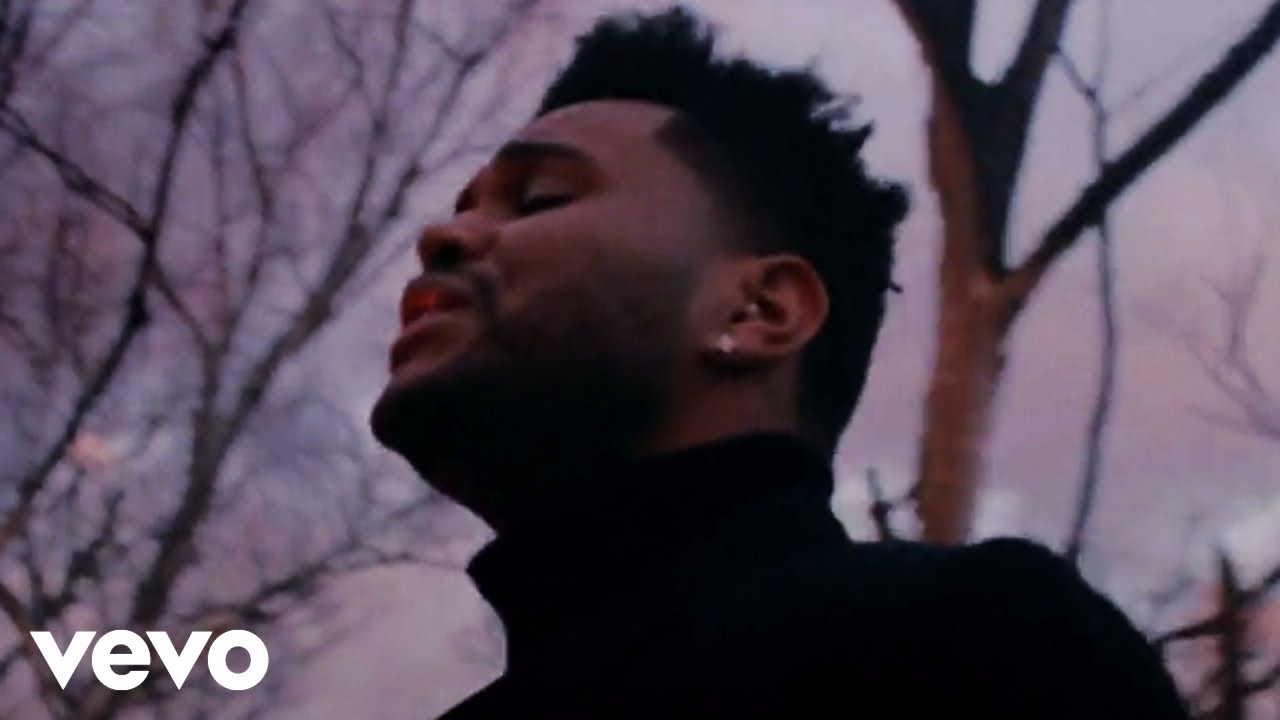
Critical response to "Prisoner" was warm, with reviewers consistently citing it as one of the album's highlights. The combination of the two vocalists' particular timbres and the song's late-night atmospheric production created something that felt genuinely cinematic, appropriate for two artists who were both deeply interested in the intersection of music and visual storytelling. The Weeknd's music videos and short films had always had a visual ambition, and "Prisoner" fit naturally into that world.
For Lana Del Rey, appearing on Beauty Behind the Madness came at a moment when she was between her own major releases, and the collaboration helped sustain her profile and reinforced her credibility as an artist whose aesthetic had influenced a generation of performers who were now at the commercial summit. The mutual artistic admiration between the two artists was evident in interviews they gave around the time of the album's release, with both speaking about the natural affinity between their creative worlds. "Prisoner" remains one of the most enduring documents of that affinity.
02 Song Meaning
The Meaning Behind "Prisoner": Addiction, Desire, and Complicit Captivity
"Prisoner" explores a relationship defined by mutual entrapment, a bond that both parties recognize as damaging but from which neither can or chooses to escape. This theme runs through much of both The Weeknd's and Lana Del Rey's catalogs, making the collaboration feel less like an artistic coincidence and more like an inevitable convergence. The song maps a dynamic in which romantic and chemical dependency become indistinguishable, where the person and the substance that person represents are both traps that the narrator does not seriously want to leave.
The Weeknd built his early career on exactly this territory, the intersection of hedonism and self-destruction presented with unflinching clarity. Songs across his mixtape trilogy examined pleasure and damage simultaneously, refusing the moral framework that would position the narrator as either purely a victim or purely an agent of his own suffering. "Prisoner" carries that refusal forward into a duet context, where Lana Del Rey's contribution adds a second perspective, a voice that is equally implicated, equally unwilling to leave, and equally clear-eyed about what that means.
The title itself is the interpretive key. Being a prisoner implies the absence of free choice, a condition that removes moral responsibility. Yet both artists deliver their vocals with a quality of resignation rather than protest, suggesting that the imprisonment described is one they entered voluntarily and maintain deliberately. The song thus occupies a philosophically interesting position, it describes captivity while undermining the excuse of captivity by making the captives' complicity legible. This is a considerably more honest emotional portrait than a song that simply celebrated desire or simply mourned its consequences.
Lana Del Rey's vocal contribution carries particular weight in terms of meaning. Her established persona is one of doomed romanticism, women who love too much and suffer knowingly for it. In "Prisoner" she occupies that role within a framework provided by The Weeknd, and the result is a dialogue between two archetypes of willing self-destruction rather than a simple love song. Her voice, which always seems to carry the weight of hindsight, gives the song's submission to destructive patterns a quality of mythic inevitability.
The sonic environment of the production reinforces the thematic content. The hazy, slow-moving instrumentation creates the auditory equivalent of a narcotic state, something pleasant and enveloping that slows perception and dissolves resistance. Listening to "Prisoner" feels like being in the condition it describes, not a coincidence but a deliberate production decision that makes the song's argument more convincing than any lyrical statement could on its own. The music is the drug that the words describe.
Within The Weeknd's catalog, "Prisoner" represents a moment when his themes of addiction and destructive romance were reaching their fullest and most sophisticated expression. The introspective honesty of his early mixtape work was being refined and expanded, and having Lana Del Rey as a creative partner elevated the conversation from monologue to dialogue. The song suggests that the patterns he had been describing from a single perspective in his earlier work were not unique to one narrator but were instead part of a shared human experience of desire and its costs.
For fans of both artists, "Prisoner" functions as a kind of mirror text, reflecting their respective bodies of work back at each other and finding the deep commonalities beneath their surface differences. One comes from the Canadian underground R&B world, the other from an American indie-pop tradition inflected by Hollywood mythology, but both had arrived at the same emotional terrain, beautiful surfaces concealing damage, desire as its own form of imprisonment. That convergence is what makes the song more than a celebrity duet and something closer to a genuine artistic statement about the nature of wanting what hurts you.
→ More from The Weeknd Featuring Lana Del Rey
View all The Weeknd Featuring Lana Del Rey hits →
→ More from the 2010s File
View all 2010s hits →



Keep digging