The 2010s File Feature
Losers
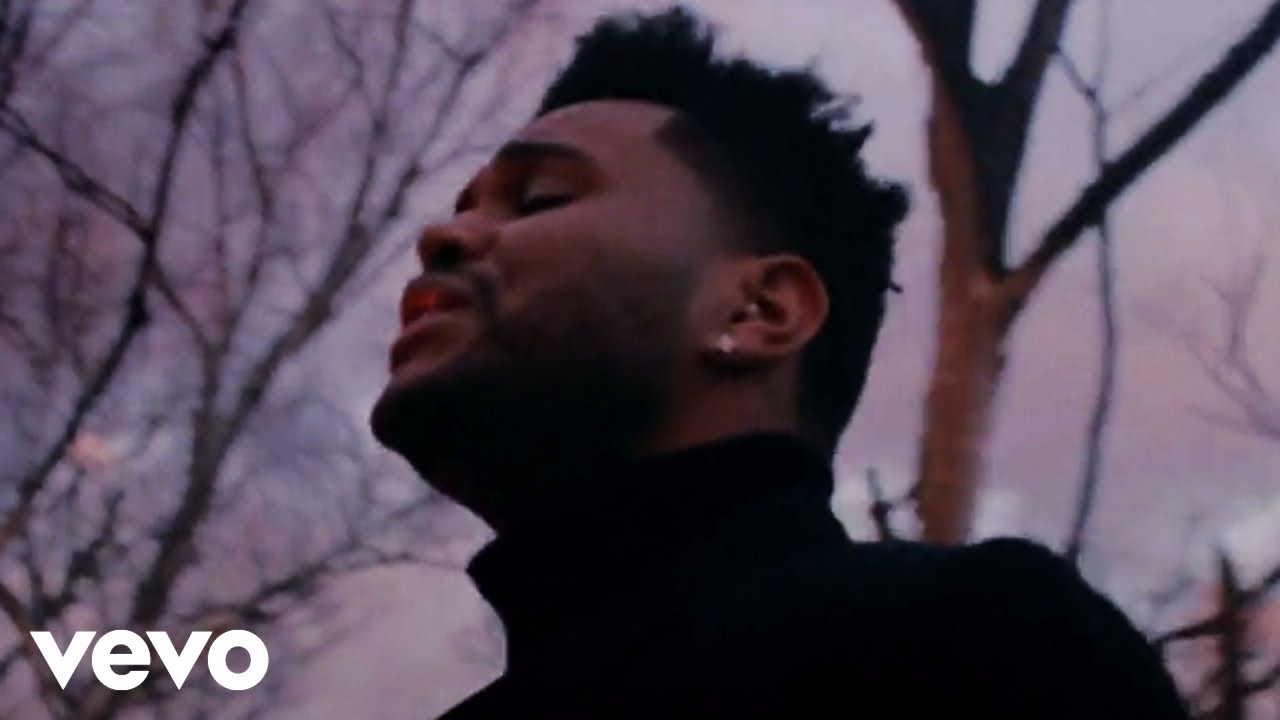
Losers — The Weeknd Featuring Labrinth's Moody 2015 Collaboration After the Trilogy, Into the Mainstream The Weeknd had spent the early part of the 2010s bui…
01 The Story
Losers — The Weeknd Featuring Labrinth's Moody 2015 Collaboration
After the Trilogy, Into the Mainstream
The Weeknd had spent the early part of the 2010s building a reputation as one of the most atmospheric and morally complex figures in contemporary R&B. His trilogy of mixtapes, released between 2011 and 2012, established a sound rooted in downtempo production, confessional darkness, and a vocal style that drew comparisons to Michael Jackson while refusing to replicate him. By 2015, Abel Tesfaye had made the transition to major-label stardom: his album Beauty Behind the Madness, released that August, contained the massive global hit "Can't Feel My Face" and announced him unambiguously as a mainstream pop force.
Yet even at this moment of peak commercial visibility, Tesfaye was engaged in side projects that maintained his more experimental edge. "Losers" emerged as part of Labyrinth, the debut album from the British musician and producer Labrinth, released in August 2015. The collaboration placed The Weeknd in a context quite different from his own chart-dominating output, allowing him to inhabit a darker, more contemplative sonic world built around Labrinth's eclectic production approach.
Labrinth and the British Electronic Scene
Timothy McKenzie, known professionally as Labrinth, had established himself as one of the UK's most versatile producers and performers. He had worked extensively with Simon Cowell's label infrastructure and with artists including Tinie Tempah, but Labyrinth was his most personal artistic statement, a project that pushed toward orchestral electronic music with a strong gospel undertow. Labrinth's production on "Losers" layers orchestral elements against a sparse, heavy low-end construction, creating the kind of emotional scale that tends to make tracks feel like events rather than singles.
The pairing with The Weeknd was logical in retrospect. Both artists were interested in the intersection of darkness and beauty, in music that admitted complicated emotional truths rather than reaching for easy uplift. Their working chemistry on "Losers" resulted in a track that felt like something neither could have made alone, a piece that carried Tesfaye's signature vocal vulnerability within a sonic landscape that Labrinth built entirely on his own terms.
A Brief Chart Appearance
In terms of chart performance, "Losers" made a single appearance on the Billboard Hot 100. The song debuted and peaked at number 85 on September 19, 2015, spending just one week on the chart. That result, modest by conventional measures, reflects the track's status as a guest feature on an album rather than a lead single designed for radio assault. In the context of 2015, when The Weeknd was simultaneously topping charts with his own material, the collaborative single operated at a different level of the commercial ecosystem.
The song's digital streaming performance and the prestige of both artists' names gave it more cultural weight than its peak position might suggest. The summer and fall of 2015 were remarkable months for The Weeknd commercially, and any track bearing his name attracted substantial listener attention. "Losers" benefited from that attention while remaining, at its core, a Labrinth project rather than a Weeknd single.
The Sound of 2015's Ambitious Fringe
What "Losers" represents in the broader 2015 musical landscape is interesting to consider. The mid-2010s mainstream pop ecosystem was dominated by clean-sounding, Max Martin-produced precision machinery, but running alongside it was a parallel current of artists who wanted emotional scale and sonic ambition. The Weeknd's own work sat at the intersection of these streams, combining chart-friendly songcraft with genuinely dark subject matter. His appearance on "Losers" represented the more purely ambitious side of his artistic identity, the part that preferred to burrow deep rather than reach for the radio hit.
Labrinth's profile in the United States was considerably smaller than in the UK, and the collaboration with The Weeknd was partly a strategic introduction to that market. The timing, coinciding with the global explosion of Beauty Behind the Madness, was as favorable as it could have been. If the single did not become a crossover moment for Labrinth in the United States, it at least placed him in front of audiences who were paying close attention to everything The Weeknd touched that year.
A Collaboration Worth Revisiting
Heard now, "Losers" serves as a reminder of the range that The Weeknd demonstrated even at the height of his pop commercial peak. The track finds him in full cinematic mode, his voice working against Labrinth's orchestral electronic canvas with a control and expressiveness that his more straightforwardly pop output sometimes obscures. For listeners who came to The Weeknd through "Can't Feel My Face" or "Starboy," the song opens a door toward a different, more atmospheric dimension of the same artist. Put it on in a dark room and let the layers settle around you.
"Losers" — The Weeknd Featuring Labrinth's singular moment on the 2010s charts.
02 Song Meaning
Losers — Self-Destruction, Identity, and the Ambivalence of Success
The Loser as Protagonist
In the commercial pop landscape of 2015, very few chart-adjacent tracks chose to locate their narrator in the position of the loser. Success, aspiration, and the aesthetics of winning dominated the mainstream. What makes "Losers" notable as a piece of songwriting is precisely its willingness to inhabit that other position, to take the experience of failure and self-sabotage seriously rather than treating it as a temporary state on the way to triumph. The song frames losing not as a temporary setback but as a condition, a way of being in the world that has its own internal logic and even its own dark glamour.
This framing connects to a longer tradition in R&B and soul of songs that refuse easy consolation. The blues has always been interested in the experience of coming up short, and The Weeknd's work had consistently engaged with the aesthetic of beautiful damage. "Losers" places that aesthetic within Labrinth's orchestral framework, which gives the theme an almost cinematic grandeur.
Complicity and Self-Awareness
One of the more interesting aspects of the song's lyrical approach is its combination of self-awareness and helplessness. The narrator understands, at some level, the patterns that lead to loss and disappointment; understanding them does not enable him to break free. This tension between insight and compulsion is one of The Weeknd's recurring thematic preoccupations, running through his mixtape trilogy and much of his studio album work. "Losers" distills that tension to a relatively compact form, making it more accessible than some of his longer, more immersive explorations of the same territory.
Labrinth's production reinforces this thematic content through its emotional scale. The orchestral arrangement does not sentimentalize the narrator's situation; it amplifies its weight. There is a difference between a song that makes failure feel cozy and tragic and a song that makes failure feel enormous and real. "Losers" attempts the latter, and the combination of Labrinth's arrangement and The Weeknd's vocal delivery largely achieves it.
The British-American Creative Dialogue
The collaboration itself carries thematic resonance. Labrinth comes from a British tradition of electronic music that has always been willing to engage with emotional darkness through orchestral means; think of the broader arc from trip-hop through the theatrical R&B of artists like FKA twigs. The Weeknd comes from a Canadian tradition shaped by American R&B but slightly outside its gravitational center. Their meeting point on "Losers" produces something that does not comfortably belong to any single national pop tradition, which suits the song's subject: people who do not fit comfortably into any single narrative of success or progress.
This cultural in-betweenness was particularly apt for 2015, when streaming was beginning to dissolve national boundaries in music consumption. A track this atmospheric and this indifferent to format conventions was able to find an audience specifically because the old gatekeeping structures were loosening. Radio might not have known what to do with "Losers," but listeners navigating streaming services could find it on their own terms.
Why the Song Resonates
The appeal of "Losers" for its audience lies partly in the relief of recognition. Pop music offers an enormous quantity of anthems about winning, rising, persisting, overcoming. The audience for such songs is real and large. But there is also an audience, perhaps larger than the mainstream acknowledges, for music that validates the experience of not winning, of feeling perpetually off-balance or out of step. The Weeknd and Labrinth made a track that serves that audience without condescension, without suggesting that the feeling is temporary or that resolution is around the corner. The song ends where it begins, in the same emotional territory, and that circularity is a feature rather than a flaw.
→ More from The Weeknd Featuring Labrinth
View all The Weeknd Featuring Labrinth hits →
→ More from the 2010s File
View all 2010s hits →



Keep digging