The 2010s File Feature
Rap Song
Rap Song — T-Pain Featuring Rick Ross By 2010, T-Pain had spent several years as one of the most commercially dominant and critically polarizing figures in h…
01 The Story
Rap Song — T-Pain Featuring Rick Ross
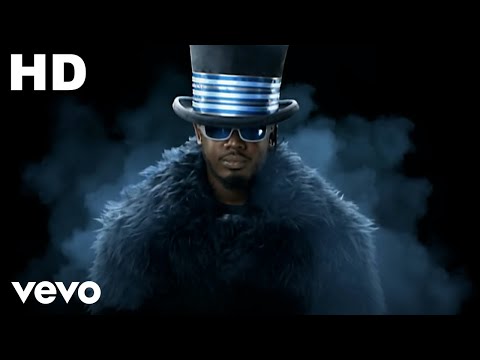
By 2010, T-Pain had spent several years as one of the most commercially dominant and critically polarizing figures in hip-hop and R&B. His popularization of Auto-Tune as an expressive tool had transformed the sonic texture of American popular music, inspiring both widespread adoption and heated debates about authenticity in vocal performance. "Rap Song," released in 2010 as part of T-Pain's fourth studio album Revolver on Konvict Music, Nappy Boy Entertainment, and Jive Records, arrived at a complicated moment in his career, when some of the shine from his commercial peak had begun to dim even as his influence on the industry remained undeniable.
Revolver was conceived as a more aggressive, hip-hop-focused project, a deliberate pivot from the smoother R&B-pop of his earlier work. The album featured collaborations with numerous prominent rappers, and the Rick Ross pairing on "Rap Song" was among the project's most commercially promising moments. Ross had by 2010 established himself as one of the most imposing figures in Southern hip-hop, having released Deeper Than Rap in 2009 to strong reviews and solid sales. His booming delivery and boss-figure persona made him a natural complement to T-Pain's more melodic and self-deprecating approach.
The production on "Rap Song" leaned into the harder sounds that T-Pain's team believed would reconnect him with hip-hop credibility. The track featured 808 bass elements, trap-adjacent percussion, and the kind of muscular arrangement that had become the dominant sound in Southern hip-hop at the turn of the decade. T-Pain's characteristic processed vocal delivery sat somewhat differently within this harder sonic context than it had on the more party-oriented tracks that made his name, and that tonal shift was partly intentional, a signal that the artist was expanding his creative range.
Rick Ross's contribution brought his signature style, a persona rooted in luxurious excess, drug-trade mythology, and an almost cinematic approach to self-presentation. Ross had developed his artistic identity under Def Jam before establishing his Maybach Music Group imprint, and by 2010 he was at a peak of creative output that would extend through several strong projects in the early part of the decade. His verse on "Rap Song" demonstrated his ability to dominate any track he entered while still serving the collaborative context rather than overwhelming it.
The commercial performance of "Rap Song" reflected the mixed fortunes of Revolver overall. The album had been delayed multiple times before its eventual release, and those delays affected the promotional momentum behind individual singles. T-Pain's commercial standing in 2010 was genuinely uncertain. The Auto-Tune backlash had reached a critical mass, with prominent figures in hip-hop publicly dismissing the technique that had made him famous, and some radio programmers were slower to embrace his new material than they had been during his commercial peak between 2005 and 2008.
Despite those headwinds, "Rap Song" found an audience among T-Pain loyalists and Rick Ross fans, and it received promotional support including music video production and radio servicing. Jive Records deployed its promotional infrastructure behind the album and its singles, though the label itself was entering a period of consolidation within the Sony Music Entertainment system that would eventually see it folded into another imprint. That corporate context added additional uncertainty to the promotional environment surrounding Revolver's release.
The Revolver album itself represented T-Pain's attempt to reinvent himself at a moment when the sound he had pioneered was being appropriated by artists across the genre spectrum, from Kanye West's occasional pitch-shifted vocals to the increasingly widespread use of melodic Auto-Tune in hip-hop that would eventually crystallize into the emo-rap aesthetic of the mid-2010s. T-Pain was in the strange position of being an innovator whose innovation had been so thoroughly absorbed that his own continued work in the style risked appearing derivative of his imitators.
"Rap Song" was among the more straightforward hip-hop tracks on Revolver, and its directness was both a strength and a limitation. It did not showcase the melodic inventiveness that had made T-Pain's best work distinctive, but it demonstrated that he could hold his own in a harder sonic environment alongside one of hip-hop's most formidable presences. Reviews of the track were mixed, with some critics appreciating the energy of the collaboration and others finding it a somewhat generic exercise in Southern rap conventions.
In the longer narrative of T-Pain's career, the Revolver era represents a transitional moment, a period in which he was actively searching for a creative path that would sustain his commercial relevance in a landscape he had helped transform. The rehabilitation of his reputation that would come in later years, partly through his appearance on The Masked Singer and the renewed critical appreciation of his vocal talent, was still years away when "Rap Song" was released into a market that was not yet ready to see him clearly.
02 Song Meaning
What "Rap Song" Reveals About T-Pain's Artistic Identity
"Rap Song" is a track that announces its own ambitions in its title. There is something simultaneously self-aware and earnest about an artist known primarily for melodic, vocoder-assisted R&B-pop declaring that he is making a rap song, as though to establish new rules of engagement with his audience. The self-referential quality was not accidental: T-Pain had spent years being discussed primarily in terms of his technique rather than his content, and the title itself was a bid to shift the conversation toward his relationship with hip-hop as a genre.
The track positions T-Pain not as an outsider borrowing hip-hop conventions but as someone who understood the form's demands and could navigate them credibly. His decision to feature Rick Ross was part of that argument: by placing himself in the same sonic space as one of hip-hop's most respected heavyweights, T-Pain was asserting membership in a club that had sometimes treated his melodic approach as a kind of violation of the genre's values.
Rick Ross's participation adds thematic depth to the collaboration. Ross's persona at the time was built around the mythology of success achieved through extraordinary means, a narrative that sat interestingly alongside T-Pain's own story of creative innovation rewarded by commercial success. Both artists were, in different ways, constructing versions of themselves that were larger than life, and "Rap Song" gave them a shared space to exercise that constructive imagination.
The track also speaks to a particular anxiety that runs through T-Pain's work in the Revolver era, namely the question of whether the techniques that had made him successful were genuinely his or had become the common property of everyone who followed him. The self-awareness embedded in "Rap Song" suggests an artist processing the strange experience of watching his own innovations become industry standard practice, his signature absorbed so thoroughly that the signature itself had become invisible. That experience is a specific kind of success that can also feel like a form of erasure.
In broader cultural terms, the song's aggressive, hip-hop-forward positioning reflected T-Pain's understanding that his audience was being fractured by the genre's evolution. The listeners who had made his early singles hits were now consuming music across an increasingly fragmented landscape, and "Rap Song" was one attempt to identify where his voice was most needed and most authentic. The answer the track proposes is that he belonged in hip-hop as much as in R&B, that the melodic and rhythmic aspects of his artistry were not in tension but were complementary dimensions of a coherent creative identity. That argument, while not universally accepted by listeners or critics at the time, anticipated the eventual critical rehabilitation that would recognize T-Pain as a genuinely innovative artist who had been unfairly reduced to a caricature of a technique he had pioneered. "Rap Song" was an early document in that ongoing argument about what T-Pain's work actually meant and what his place in the genre's history deserved to be.
→ More from T-Pain Featuring Rick Ross
View all T-Pain Featuring Rick Ross hits →



→ More from the 2010s File
View all 2010s hits →



Keep digging