The 2010s File Feature
Love Don't Run
Love Don't Run — Steve Holy's Country Declaration Country Radio and the Art of Persistence Flip through the country radio dial in the fall of 2011 and you wo…
01 The Story
Love Don't Run — Steve Holy's Country Declaration
Country Radio and the Art of Persistence
Flip through the country radio dial in the fall of 2011 and you would find a genre in confident, commercial stride. Artists from a dozen different corners of the country sound were staking out territory on the charts, and mid-tempo ballads about love and loyalty were as reliable as ever. Into that landscape came Steve Holy, a singer from Fort Worth, Texas, who had built a patient, workmanlike career over more than a decade of recording. Love Don't Run was Holy's bid to remind listeners what he did best: deliver a classic-sounding country vocal on a song built for longevity rather than novelty.
Holy had first reached the mainstream in 2001 with the number-one country hit Good Morning Beautiful, a song that became a fixture at weddings and on country compilation albums throughout the decade. That success gave him a devoted audience, even if subsequent records never quite replicated the commercial height. By 2011, he was releasing music with the confidence of someone who had learned not to chase trends, who understood that his listeners would find him if the song was good enough.
The Sound and Its Country Roots
Love Don't Run sits comfortably within the mainstream Nashville production style of its era: clean acoustics, crisp percussion, and a production that keeps Holy's voice clearly centered in the mix. The song does not attempt to be adventurous in its arrangement. Its ambition is directness, emotional clarity, and a chorus that settles into memory without effort. In 2011, when pop-country crossovers were generating most of the genre's highest sales numbers, Holy's approach was almost deliberately unfussy, a reminder that the core country audience still responded to straightforward craft.
The song's lyrical premise is the kind of fundamental human scenario that country music has always handled well: the attempt to hold onto something, or someone, that keeps slipping away. The narrator is not passive; the whole song is an act of pursuit, of insisting that love requires effort and that giving up is not the appropriate response to difficulty. Holy's delivery is warm rather than desperate, which keeps the emotional stakes from tipping into melodrama.
Seven Weeks on the Hot 100
The chart history of Love Don't Run tells the story of a song that found its audience gradually rather than all at once. The track debuted on the Billboard Hot 100 at number 90 on September 10, 2011, dipped briefly to 98 the following week, then climbed steadily upward as country radio play accumulated. It reached its peak position of number 78 on October 1, 2011, and remained on the chart for seven weeks in total. That kind of slow-build trajectory reflects airplay-driven success, the patient accumulation of spins in country markets rather than a viral moment or streaming spike.
Seven weeks on the national Hot 100 for a mid-career country artist without the machinery of a major-label push behind him represents a genuine achievement. The Hot 100 at any point in 2011 was crowded with artists possessing far larger promotional budgets, and Love Don't Run made its presence felt through the simple mechanism of listeners requesting it and stations playing it because it fit the format well.
Holy's Decade-Long Second Act
What makes Steve Holy's career arc interesting is its refusal of the standard narrative arc. He did not have a meteoric rise followed by an equally swift decline. Instead, he built steadily, found his moment with Good Morning Beautiful, and then continued recording with genuine artistic consistency even as his chart profile became more modest. By 2011, Holy represented something the country format increasingly needed: a reliable, quality artist who understood the audience without pandering to it.
The context of the early 2010s country market matters here. The genre was in a period of significant commercial expansion, driven in part by artists who blended country aesthetics with mainstream pop production. Holy did not fit that template, which meant he was never going to compete for the same chart real estate. His audience came to him for a different reason, for the sense that what they were hearing was genuine rather than calculated.
A Song That Wears Its Intentions Honestly
Love Don't Run does not aspire to reinvent anything. Its contribution is to do a familiar thing very well, which is a legitimate artistic achievement and the kind the country format has honored for generations. Steve Holy's voice carries conviction, the sense that the words he is singing matter to him beyond their commercial function. That quality is audible, and it is what keeps a song alive after the radio cycle ends.
With approximately 1.7 million YouTube views accumulated over the years since its release, the song has found a second life as a streaming listen rather than a chart phenomenon, which suits it well. It is exactly the kind of track that appears in playlists compiled for long drives and quiet evenings, music that earns its keep through sustained emotional availability rather than headline moments.
If you have only ever known Steve Holy from his 2001 peak, Love Don't Run is worth your time as evidence of what a decade of continued craft produces.
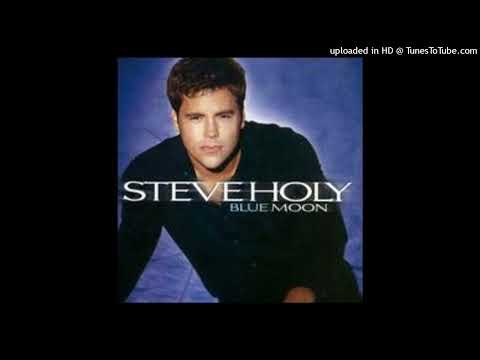
"Love Don't Run" — Steve Holy's singular moment on the 2010s charts.
02 Song Meaning
Love Don't Run — Meaning and Themes in Steve Holy's Country Ballad
The Pursuit That Defines the Song
At its center, Love Don't Run is a song about the refusal to accept abandonment as inevitable. The narrator's position is active rather than resigned: love requires commitment, effort, and a willingness to chase what is worth keeping. This is one of country music's oldest and most durable premises, and Steve Holy delivers it without irony or complication. The song trusts the premise enough to state it simply, which is a form of artistic confidence in itself.
The emotional argument of the track is that love is a practice, not a condition. It does not simply exist; it has to be pursued and maintained. When the song's narrator insists that love does not run, the implication is that people run from love, that fear and distance are human responses that love itself does not endorse. The narrator sets himself against that tendency and commits to staying.
Country Music's Covenant with Longing
The country genre has built much of its emotional vocabulary around the experience of loss and the desire to prevent it. Songs about holding on, about refusing to let go, about love worth fighting for run through decades of the format's history from classic-era Nashville through the modern mainstream. Love Don't Run draws on that tradition without quoting it directly. Holy's delivery situates the song firmly within a recognizable emotional geography that country listeners understand and actively seek out.
In 2011, country radio was increasingly occupied by songs that leaned toward party anthems and summer celebration tracks. The presence of a straightforward romantic ballad like this one served a real function for listeners who wanted that particular emotional register. The song's peak at number 78 on the Hot 100 reflects that audience finding exactly what it was looking for.
Loyalty as a Central Value
Threaded through the song is a strong sense of loyalty as the defining quality of genuine love. The narrator is not just declaring affection; he is declaring commitment to the difficult work of remaining present when presence is hard. That framing gives the song a moral dimension beyond simple romance. It positions loyalty as a virtue, something chosen and repeated rather than automatically conferred.
This resonates particularly strongly within the country music audience's value framework, where loyalty to family, place, and relationship is treated as foundational rather than optional. Holy is not singing to an audience that needs to be convinced these values matter; he is singing to an audience that is grateful to hear them affirmed.
Emotional Authenticity in a Crowded Market
Part of what distinguishes Love Don't Run in its commercial context is the sense that Holy is not performing emotion but expressing it. The production is polished but not overproduced; there is room for the voice to breathe and for the words to register at their natural pace. This kind of restraint is rarer than it sounds in a commercial format where over-emoting and melodramatic production choices can crowd out genuine feeling.
Listeners who responded to this song in 2011 were responding to something they recognized as honest, a quality that sustains tracks through years of streaming listens long after the radio moment has passed. The song's roughly 1.7 million YouTube views suggest exactly that kind of durational relevance.
What the Song Offers Today
Returning to Love Don't Run years after its release, the song continues to do what it always did. It occupies a specific emotional need with unpretentious craft. Country music at its best has always known how to speak to the experience of trying, of choosing engagement over withdrawal, of finding dignity in commitment. Steve Holy understood that tradition and honored it here. The song is not complicated because the feeling it describes does not require complication. Wanting love to stay is one of the most straightforwardly human experiences imaginable, and the best songs on that subject tend to say so plainly.
→ More from Steve Holy
View all Steve Holy hits →
→ More from the 2010s File
View all 2010s hits →



Keep digging