The 2010s File Feature
9 Piece
The Story Behind 9 Piece by Rick Ross Picture the late winter of 2011, when rap radio was thick with bombast and the Maybach Music Group banner felt like a k…
01 The Story
The Story Behind "9 Piece" by Rick Ross
Picture the late winter of 2011, when rap radio was thick with bombast and the Maybach Music Group banner felt like a kingdom under construction. Rick Ross had spent years building a persona of luxury and menace, and he was riding one of the strongest creative streaks of his career. Into that moment dropped "9 Piece," a slab of widescreen Miami trap built to soundtrack a victory lap. It is dense, cinematic and unapologetically opulent, exactly the kind of record Ross had trained his audience to expect.
Ross at the Peak of His Powers
By 2011 Rick Ross had survived the controversies that once threatened to derail him and emerged as one of rap's most reliable hitmakers. His Maybach Music empire was expanding, and he was preparing the album God Forgives, I Don't while keeping the streets fed with hard-hitting singles. "9 Piece" arrived as part of that build-up, a track designed to assert dominance rather than chase pop crossover. It captured an artist who had figured out exactly what his lane was and how to fill it.
The Sound and the Guest Stars
The production is heavy and luxurious, all booming low end and ominous atmosphere, the sonic equivalent of a tinted-window convoy. Ross delivers his verses with the unhurried authority that became his trademark, painting pictures of wealth and street economics. The single appeared in versions featuring different guests, with both Lil Wayne and T.I. attached to the record at various points, reflecting the high-wattage company Ross kept. The result is a posse-cut energy even when the focus stays squarely on the boss.
A Quick Trip Through the Hot 100
For all its swagger, the single's stay on the pop chart was fleeting. "9 Piece" debuted on the Billboard Hot 100 at number 61 on May 28, 2011, which doubled as its peak. The following week it fell to number 86 before exiting the survey. The song spent only two weeks on the Hot 100, a reminder that hardcore rap singles often burned bright on mixtape culture and urban radio while making a brief mainstream appearance. The numbers say little about how much the record meant to Ross's core audience. Hardcore rap of this era often lived a parallel life outside the pop chart, thriving on mixtapes, in clubs and on urban radio while only glancing across the mainstream survey. For listeners tuned to that world, the single was a moment, regardless of where it landed on the Hot 100. The chart and the culture were measuring two different things, and the culture cared more.
Its Place in the Maybach Era
The track belongs to a particular chapter of Ross's run, when he was stacking street anthems and consolidating his brand. It reinforced the Maybach Music aesthetic of expensive, weighty rap built for systems and statements. While it never became a defining radio smash, it served its purpose as a flex and a mood-setter, the sort of song that deepened an album's atmosphere and a persona's mythology. Ross was in the business of world-building, and every track like this one added another brick to the empire he was constructing. The single fit the architecture perfectly, a confident statement from a man certain of his throne.
Why It Still Hits
Returning to it now, the appeal is in the sheer confidence of the delivery and the richness of the soundscape. There is no apology in the record, only pure presence. The production rewards a good sound system, its low end designed to be felt as much as heard. For anyone tracing the arc of 2010s luxury rap, this is a useful data point and a satisfying listen. It captures a specific flavor of swagger that defined the era's mainstream hip-hop. Press play and let the convoy roll past.
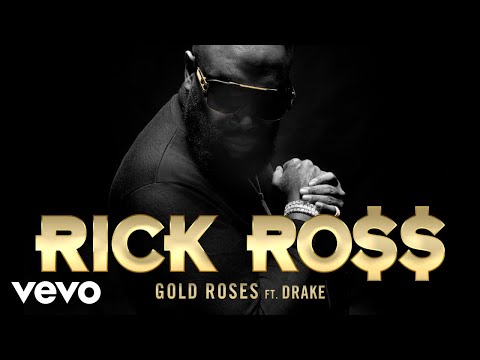
"9 Piece" — Rick Ross Featuring Lil Wayne Or T.I.'s singular moment on the 2010s charts.
02 Song Meaning
The Meaning Behind "9 Piece" by Rick Ross
Rick Ross built a career on a particular fantasy of abundance, and "9 Piece" is one of its purest expressions. The song operates as a portrait of street ambition transmuted into luxury, less a narrative than a mood board of power, money and survival. Its meaning is rooted in the tension between where the music says it comes from and where it claims to have arrived.
Wealth as Triumph
At its core the track celebrates accumulation as proof of having won. The lyrics trade in imagery of cash, cars and status, framing material success as the ultimate vindication. For Ross, this was never empty boasting; it was the language of a self-made narrative, where opulence stands in for everything the streets supposedly denied.
The Persona of the Boss
Ross has always rapped as a kingpin figure, and here that character is fully formed. The song projects unshakable authority, casting the narrator as a man who commands respect by sheer presence. That persona is the emotional engine of the track, an aspirational mask that listeners could borrow for the length of a song.
The Cultural Backdrop
In the early 2010s, rap's mainstream was deep in an era of luxury and excess, and Ross was among its loudest voices. The record reflects a moment when ambition and brand-building defined hip-hop success. It speaks to a culture that prized hustle and visibility, where flaunting the spoils was part of the art form's storytelling.
Why It Connected
For its audience, the appeal lay in the vicarious thrill and the booming sound that demanded volume. The fantasy of effortless dominance offered escape and aspiration in equal measure. Fans of Maybach Music heard a worldview they recognized and enjoyed inhabiting, even briefly. The fantasy worked precisely because Ross sold it without irony, inviting listeners to borrow his confidence for the length of a track.
Survival Beneath the Surface
For all the talk of luxury, there is a survival narrative underneath. The wealth in the song stands for everything overcome, the distance traveled from struggle to abundance. That subtext gives the boasting its emotional weight, framing material success as hard-won rather than handed over. The flex is also a victory lap.
The Lasting Impression
What endures is the sense of total commitment to a persona. The song does not waver or wink; it believes its own myth completely. That conviction is what keeps it resonant for listeners who admire Ross's particular brand of larger-than-life rap. In an art form built on self-presentation, his unwavering certainty remains a model. The song stands as a compact demonstration of how to inhabit a character fully and make an audience believe.
→ More from Rick Ross Featuring Lil Wayne Or T.I.
View all Rick Ross Featuring Lil Wayne Or T.I. hits →
→ More from the 2010s File
View all 2010s hits →



Keep digging