The 2010s File Feature
Lose It
Lose It — Quavo Featuring Lil Baby (2018) "Lose It" arrived in October 2018 as part of Quavo's debut solo studio album, Quavo Huncho , released through Quali…
01 The Story
Lose It — Quavo Featuring Lil Baby (2018)
"Lose It" arrived in October 2018 as part of Quavo's debut solo studio album, Quavo Huncho, released through Quality Control Music and Motown Records. The album marked a significant moment in the trajectory of the Atlanta trap scene, arriving at a period when the individual members of Migos were beginning to explore what their solo careers might look like outside the group's collective identity. Quavo Quavious Keyate Marshall had spent the previous several years as arguably the most recognizable voice in trap music, his melodic ad-libs and distinctive flow having permeated mainstream hip-hop so thoroughly that his influence could be heard in artists across multiple generations. "Lose It" paired him with Lil Baby, another Atlanta rapper who was, by the autumn of 2018, in the midst of a remarkable ascent from street-level mixtape artist to mainstream chart force.
The production on "Lose It" came from the collaborative environment that Quality Control had cultivated, emphasizing hard-hitting 808 bass patterns, sparse hi-hat arrangements, and a melodic synth layer that gave the track a cinematic quality without sacrificing the rhythmic aggression central to the trap aesthetic. The beat provided both artists with space to demonstrate contrasting styles: Quavo's smoothly melodic phrasing against Lil Baby's more staccato, rhythmically dense delivery. That contrast was itself a product of deliberate creative architecture. The Atlanta scene had by this point developed a sophisticated understanding of how contrasting vocal textures could carry a track, and the pairing of these two artists exploited exactly that dynamic.
Lil Baby, whose real name is Dominique Armani Jones, had released his debut mixtape Perfect Timing in April 2017, and by the time "Lose It" was recorded he had already demonstrated an ability to anchor both solo projects and collaborative tracks. His verse on "Lose It" was representative of the rapid stylistic evolution he was undergoing during this period, shifting from raw street narratives toward a more melodically inflected approach that would become one of his defining characteristics. The appearance on a high-profile Quavo project amplified his visibility significantly at a crucial point in his early career.
Quavo Huncho as an album received considerable attention upon its release, debuting at number two on the Billboard 200. The album featured an extensive roster of guest artists, reflecting both Quavo's standing within hip-hop's upper tier and the collaborative culture that defined the Quality Control roster. "Lose It" was among the more straightforwardly trap-focused tracks on a record that also incorporated pop and melodic R&B influences. The album sold more than 100,000 album-equivalent units in its first week, a figure that confirmed Quavo's commercial standing as a solo act separate from Migos.
The broader cultural context of "Lose It" was one of enormous momentum for Atlanta hip-hop. Migos had spent 2017 dominating the charts with "Bad and Boujee," and the group's album Culture had been one of the defining records of that year. By 2018 the three Migos members, Quavo, Offset, and Takeoff, were each pursuing solo or duo projects, a period of expansion that reflected the label's confidence in each artist's individual commercial potential. "Lose It" represented Quavo's case for his own solo commercial viability, and the choice of Lil Baby as a featured artist was both artistically sound and strategically astute, pairing an established star with one of the genre's fastest-rising new voices.
Quality Control Music, founded by Pierre "Pee" Thomas and Kevin "Coach K" Lee, had by this point established itself as one of the most consequential hip-hop labels in the country, having guided the careers of Migos, Lil Yachty, and Lil Baby. The label's approach combined industry relationships with an intuitive understanding of the Atlanta sound, and "Lose It" was a product of that environment: professional, precisely calibrated for streaming platforms, and deeply rooted in the sonic vocabulary that Quality Control had helped define.
The song appeared on streaming platforms simultaneously with the album's release, generating substantial play counts in the days following Quavo Huncho's debut. The streaming ecosystem of 2018 was increasingly the primary arena in which hip-hop tracks established their commercial footprint, and "Lose It" performed as expected within that context, accumulating plays rapidly through playlist placement and social media circulation.
02 Song Meaning
What "Lose It" Is About
"Lose It" operates within a thematic territory that Quavo had staked out across much of his career, one centered on confidence, material achievement, and the social dynamics of success. The song's central preoccupation is the effect of the artists' presence and status on those around them, described through the kind of concrete, image-driven language that characterizes Atlanta trap at its most effective. Rather than abstract claims about success, the track grounds its assertions in specific details about lifestyle, fashion, and interpersonal dynamics, giving the boasts a tactile specificity that functions as both braggadocio and reportage.
Quavo's contributions to the track lean into the melodic trap persona he had developed over years of Migos recordings. His verses emphasize fluidity and ease, projecting a persona for whom success has become the natural state rather than a hard-won achievement. This studied nonchalance was by 2018 one of the defining emotional registers of mainstream hip-hop, and Quavo executed it with the practiced confidence of an artist who had helped invent the mode. The underlying message is one of effortless dominance in multiple arenas simultaneously, financial, social, and romantic.
Lil Baby's verse provides a contrasting energy that elevates the track considerably. Where Quavo's delivery is smooth and measured, Baby's approach in this period was more rhythmically insistent, his lines packed with information and delivered with an urgency that communicated ambition still in the process of converting itself into accomplishment. The contrast between the two artists gave "Lose It" a structural dynamism that many solo trap tracks lacked, the shift between their sections functioning almost as a tension-release mechanism that held listener attention across the full runtime.
The emotional register of the song is celebratory rather than conflicted. This distinguishes it from the more introspective vein of Lil Baby's later solo work, where themes of loss, loyalty, and the psychological costs of rapid success became increasingly prominent. On "Lose It," both artists are in full celebration mode, and the production supports this by providing a beat that is physically engaging without being emotionally demanding. The song asks the listener to enjoy the moment rather than reflect on its complexity.
Within Quavo's solo catalogue, "Lose It" represents the commercial center of Quavo Huncho's identity, a track that demonstrated his ability to anchor a straightforward, high-energy trap cut without the structural support of his Migos partners. The song also functioned as an early document of the Quavo-Lil Baby creative chemistry, a pairing that made intuitive sense given their shared Atlanta roots and complementary approaches to trap's melodic possibilities. Both artists were, at different stages of their careers, exploring how melodic inflection could expand trap's emotional range without abandoning its rhythmic foundations.
The title's suggestion of losing control or composure in the presence of something impressive was a recurring motif in the trap genre's vocabulary of the period, a way of framing the impact of success and status on bystanders that transformed conventional boasting into a kind of social observation. The reaction of others becomes evidence of the artists' achievement, a framework that allowed for simultaneous self-celebration and pseudo-objective commentary. It was a sophisticated rhetorical move dressed in the clothes of straightforward braggadocio, and both Quavo and Lil Baby navigated it with the ease of artists who understood the genre's conventions well enough to use them purposefully.
→ More from Quavo Featuring Lil Baby
View all Quavo Featuring Lil Baby hits →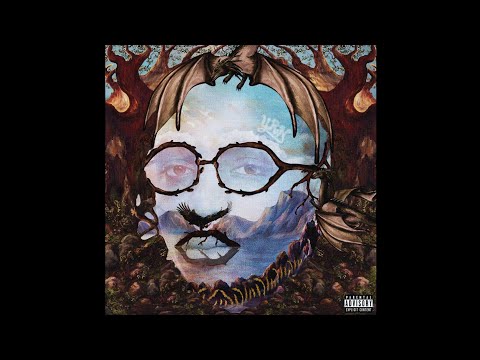


→ More from the 2010s File
View all 2010s hits →



Keep digging