The 2010s File Feature
The Night Is Still Young
The Night Is Still Young: Nicki Minaj's 2015 Standalone Single and Its Place in Her Commercial Story "The Night Is Still Young" is a pop single by Nicki Mina…
01 The Story
The Night Is Still Young: Nicki Minaj's 2015 Standalone Single and Its Place in Her Commercial Story
"The Night Is Still Young" is a pop single by Nicki Minaj released in May 2015 through Young Money Entertainment, Cash Money Records, and Republic Records. The song marked a departure from the more aggressive rap-forward material that Minaj had built her name on, leaning instead into a synth-pop framework that positioned her alongside the dominant sonic trends of mid-decade mainstream pop. It arrived during a particularly busy and consequential year for the Trinidad-born rapper and singer, who was juggling a major album rollout and a high-profile public feud that would briefly overshadow her commercial releases.
The track was produced with a dance-pop sensibility that drew comparisons to the work of Max Martin and Shellback, the Swedish production duo whose fingerprints were all over the sound of pop radio in 2015. The production features pulsing synthesizers, a driving four-on-the-floor beat, and a melodic structure built for stadium singalongs and festival stages, a deliberate shift in register from the hip-hop contexts where Minaj had first established dominance. The song's chorus was designed as an anthem, and its lyrics centered on youthful abandon and the refusal to let a night end before it reaches its full potential.
Minaj released the track as a precursor to and part of the promotional campaign for her third studio album The Pinkprint, which had been released in December 2014. "The Night Is Still Young" served as one of several singles drawn from or associated with that album cycle, though its more overt pop orientation set it apart from many of the record's other standout tracks. The Pinkprint itself debuted at number two on the Billboard 200 and demonstrated Minaj's ability to blend rap, R&B, and pop with genuine commercial effectiveness.
The single chart performance of "The Night Is Still Young" was notable, with the song entering the Billboard Hot 100 and climbing through the pop charts on the strength of Minaj's existing fanbase, known as the Barbz, and the track's undeniable radio-friendly construction. It received significant airplay on pop-formatted stations, an arena where Minaj had previously made inroads with collaborations alongside artists like David Guetta and Ariana Grande but was now pursuing more directly as a lead act.
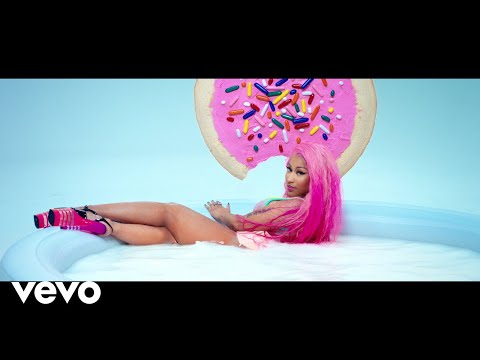
The music video for "The Night Is Still Young" was visually ambitious, featuring Minaj in a series of glossy, high-production set pieces that emphasized her versatility as a visual artist. Videos in this era of her career frequently functioned as fashion statements as much as promotional vehicles, and "The Night Is Still Young" continued that tradition with a cinematic treatment that circulated widely on video platforms. The clip underscored the theme of making the most of a fleeting moment, literalizing the song's message through imagery of celebration and nocturnal excess.
The summer of 2015 became particularly notable for Minaj's public profile. She was nominated for multiple Video Music Awards and drew widespread attention for comments she made on social media about the racial dynamics of MTV's nominations, observations that sparked a broader conversation about representation in the music industry. Her subsequent exchange with Taylor Swift on Twitter became one of the most-discussed celebrity moments of that year and briefly overshadowed the music itself, though Minaj navigated the situation with characteristic confidence at the subsequent award ceremony.
Critics who reviewed the song noted that while it represented a commercial calculation, it also demonstrated Minaj's vocal growth and her willingness to fully inhabit a pop mode rather than treating it as a secondary register to her rap output. Some reviewers observed that the track lacked the lyrical density that made her most celebrated rap work distinctive, but acknowledged that it was an effective piece of mainstream pop songwriting that served its intended purpose.
Within Minaj's discography, "The Night Is Still Young" occupies a meaningful position as evidence of her sustained interest in pop crossover during a period when the boundaries between rap and pop were being negotiated in real time across the industry. She had already appeared on massive pop hits as a featured artist, but this track was part of her effort to build credibility as a pop frontwoman in her own right, a project that yielded both commercial success and critical debate throughout the Pinkprint era.
The song has remained part of Minaj's live set and streaming catalog, continuing to attract listeners who discovered her during that particular phase of her career. For many fans, it captures a specific moment in mid-2010s pop when the genre was particularly open to artist crossovers and when Minaj was at the height of her commercial powers and cultural influence.
02 Song Meaning
Carpe Noctem: The Meaning Behind Nicki Minaj's The Night Is Still Young
"The Night Is Still Young" is built around a deceptively simple premise: the idea that time, at least in the context of a memorable night, is a resource that should not be squandered. The song's narrator pushes back against premature closure, urging a continuation of the evening's possibilities rather than an early exit. On one level, this is a straightforward party anthem aimed at keeping listeners on the dance floor. On a deeper level, it functions as a statement of ambition and self-determination from an artist who had repeatedly refused to accept limits on what she could achieve.
For Nicki Minaj, the song carries biographical resonance that extends beyond its literal narrative. By 2015, she had already navigated a decade of industry skepticism about whether a woman could sustain a long-term career at the top of hip-hop, and her insistence that the night was still young read as much as a career statement as a lyrical theme. The song positions her as someone with more chapters ahead, more stages to conquer, and more records to set, regardless of what the conventional wisdom might suggest about timelines and longevity.
The pop framework the song adopts is itself thematically meaningful. By choosing a sound associated with euphoria, escape, and collective experience, Minaj aligned the track with the emotional register of freedom, specifically the freedom that comes with owning one's own narrative. The synthesizer-driven production does not simply provide a backdrop; it creates an environment in which the declarations made in the lyrics feel inevitable and celebratory rather than defensive.
There is also a romantic dimension to the track that adds texture to its otherwise anthemic surface. The song implies a connection between the narrator and another person, one that the narrator wants to extend rather than allow to dissolve into the morning. This romantic subtext grounds the track's more grandiose ambitions in something personal and specific, giving the broader themes of possibility and continuation a human anchor. This balance between the personal and the universal is a recurring feature of Minaj's most effective pop work.
The song also participates in a broader cultural conversation about women's agency in nightlife and romantic spaces. By asserting that the night belongs to her and that its parameters are hers to determine, the narrator exercises a form of authority that has historically been contested for women in popular music. The Pinkprint as an album engaged with questions of power, vulnerability, and self-definition throughout, and "The Night Is Still Young" offered the most unambiguously triumphant answer to those questions.
In terms of Minaj's emotional arc as a public figure, the song also functions as a corrective to the more vulnerable moments elsewhere on The Pinkprint, where she addressed heartbreak, loss, and the costs of fame with unusual candor. "The Night Is Still Young" reasserts the armor, choosing celebration over confession and projecting a confidence that audiences had come to expect from her but that the album as a whole complicated in productive ways. Together, these contrasting modes make the song feel earned rather than hollow, because the vulnerability that preceded it gives the celebration genuine weight.
→ More from Nicki Minaj
View all Nicki Minaj hits →



→ More from the 2010s File
View all 2010s hits →



Keep digging