The 2010s File Feature
Anaconda
Anaconda — Nicki Minaj's Cultural Earthquake of 2014 Summer 2014 and the Boldest Bet in Pop Few songs have arrived as confrontationally as Anaconda did in th…
01 The Story
Anaconda — Nicki Minaj's Cultural Earthquake of 2014
Summer 2014 and the Boldest Bet in Pop
Few songs have arrived as confrontationally as Anaconda did in the summer of 2014. Before the track even dropped, Nicki Minaj published the single cover art, a photograph so deliberately provocative that it generated days of media coverage on its own merits, or rather on its own demerit according to those who objected to it. By the time the song itself followed, the cultural conversation was already primed, already charged, already divided along the fault lines that would define the record's reception. Minaj had engineered the debate before the music played a single note.
At the time, Minaj was one of the most successful rappers alive, male or female. Her 2010 debut Pink Friday and its 2012 follow-up Pink Friday: Roman Reloaded had established her as a commercial force with genuine artistic range, capable of trading bars with the toughest competitors in hip-hop while also recording pop hooks precise enough to dominate radio. Anaconda was something different again: a statement about body politics, about reclamation, about whose standards of beauty were being enforced and by whom.
The Production Architecture
The track is built on a sample of Sir Mix-A-Lot's 1992 hit Baby Got Back, and that choice was the first layer of the statement. By taking a song that had itself been a flashpoint for conversations about beauty standards and Black female bodies, Minaj positioned Anaconda within a lineage of provocations, connecting her 2014 intervention to one from 22 years earlier. The sample was cleared and used with architectural intentionality, not as nostalgic reference but as argument.
The production around the sample layers contemporary bass weight and trap-influenced percussion over the original's foundational elements, updating the sonic framework while keeping the cultural reference legible. Minaj's verses arrived in multiple flows, shifting registers from rapid-fire technical delivery to conversational narration to theatrical exclamation, the full range of her capabilities deployed in service of a single extended provocation.
The Chart Performance: A Number 2 That Felt Like Number 1
The song's commercial performance matched the intensity of its cultural presence. Anaconda debuted at number 19 on the Billboard Hot 100 on August 23, 2014, then dropped back before making an extraordinary move: it surged to number 2 on the Hot 100 during the week of September 6, 2014. The jump from 39 to 2 in a single week was one of the most dramatic chart movements of the year, driven by streaming numbers and digital download volume that reflected the kind of passionate engagement that only a song with genuine cultural stakes can produce.
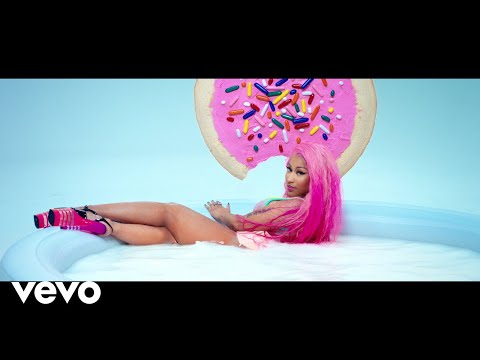
The track spent 22 weeks on the Hot 100 in total, a run that demonstrated sustained listener interest well beyond the initial controversy cycle. It also set a Vevo record at the time for most views in a single day upon the video's release, with the visually extravagant clip, set largely in a jungle environment and including a cameo from Drake, becoming its own cultural event. The video amplified the song's provocations and also its humor, a quality that some of the more earnest critical responses managed to miss entirely.
Minaj's Artistic Statement and Its Reception
The critical reception to Anaconda was divided in ways that revealed as much about the critics as about the song. Those who heard it as simple vulgarity missed the technical precision of the rapping, the layered intertextuality of the sampling, and the strategic intelligence of the body-positive argument being made. Those who celebrated it uncritically sometimes smoothed over the genuine complexity of Minaj's own framing of her themes.
What most thoughtful observers agreed on was that the song was doing something: making an argument, staking a position, demanding a response. In a pop landscape often defined by inoffensive middle-ground productions calibrated not to alienate anyone, Anaconda's willingness to be divisive was itself a kind of artistic courage. Minaj was not asking for approval. She was conducting the conversation on her own terms.
The Long Tail of a Cultural Moment
More than a decade after its release, Anaconda remains a touchstone in discussions of body positivity, Black feminism, pop provocation, and the mechanics of viral marketing within the music industry. Minaj's strategy of building controversy ahead of the release through the album cover became a template studied by artists and labels in the years that followed.
The song's longevity on streaming platforms and in pop culture memory reflects the staying power of art that takes genuine risks. Press play and feel the whole charged summer of 2014 crackle back to life.
"Anaconda" — Nicki Minaj's singular moment on the 2010s charts.
02 Song Meaning
Anaconda — Body Politics, Reclamation, and the Art of the Provocation
The Argument the Song Is Making
To engage seriously with Anaconda is to engage with an argument. The song is not simply a boastful or sexually provocative track, though it is both of those things. It is a deliberate intervention in a conversation about whose bodies are celebrated in popular culture, whose standards of beauty are enforced, and who gets to define the terms of attraction and desirability. Nicki Minaj used the platform of a major pop release to make a claim about Black women's bodies and their right to self-definition, drawing on a tradition that stretched back through the sample she chose to use.
Sir Mix-A-Lot, 1992, and the Sample as Argument
The choice to sample Baby Got Back was not merely a nostalgic gesture or a hook-building strategy. It was a piece of historical argument. Sir Mix-A-Lot's 1992 record had itself been a provocation directed at the beauty standards dominant in mainstream American culture, celebrating a body type that was routinely marginalized or ridiculed in fashion and media. By sampling that song in 2014, Minaj connected her own provocation to an earlier one, noting implicitly that the conversation had not been resolved and that the work of reclamation was ongoing.
The sample turned the song into a kind of conversation across time, with Minaj responding to and extending a debate that Mix-A-Lot had entered more than two decades earlier. This kind of intertextual argument is relatively rare in pop music, which tends to use historical references decoratively rather than argumentatively.
Humor as a Strategic Tool
One of the qualities that serious critical engagement with Anaconda sometimes missed was its humor. Minaj has always been a comedic performer, and the song deploys wit alongside provocation throughout. The exaggeration is deliberate, the theatricality is knowing, and the track is aware of its own absurdity in ways that made it more resilient to criticism than a more earnestly positioned statement would have been.
Humor gave the song strategic cover while also making it more pleasurable, more replayable, more likely to lodge in the listener's memory. The Drake cameo in the video amplified this tonal complexity, adding a layer of comedy to the proceedings that underlined the track's self-awareness. Minaj was in on the joke because she had written the joke.
The Body Positivity Movement and Its Pop Expressions
By 2014, body positivity had established itself as a significant cultural conversation with a growing presence in mainstream media and fashion. Artists and brands were beginning to engage with the movement's core ideas, often in ways that diluted or commercialized the more radical implications of the original framework. Anaconda arrived in this context as something more aggressive and less easily co-opted: a song that did not ask for acceptance of marginalized body types but asserted their desirability forcefully, without apology or mitigation.
The difference in register mattered. Asking to be accepted positions the petitioner as subordinate to the audience's judgment. Asserting desirability on your own terms requires no such subordination, and Minaj's performance throughout the track operated entirely in the assertive register, leaving no room for the condescension that body positivity discourse sometimes attracted.
The Song's Place in Minaj's Larger Project
Taken within the context of Nicki Minaj's career, Anaconda represents one of her most fully realized artistic statements. It combined her technical skills as a rapper, her commercial instincts as a pop artist, her gifts as a comedic performer, and her interest in feminist and racial politics into a single, coherent, deliberately explosive package. The song demonstrated that these qualities were not in tension with each other but could be synthesized into something larger than any one of them. That synthesis is what gave the track its cultural staying power and its place in the ongoing conversation about what pop music can do and say.
"Anaconda" — Nicki Minaj's singular moment on the 2010s charts.
→ More from Nicki Minaj
View all Nicki Minaj hits →
→ More from the 2010s File
View all 2010s hits →


Keep digging