The 2010s File Feature
Don't Come Out The House
Don't Come Out The House — Metro Boomin Featuring 21 Savage (2018) By 2018, Metro Boomin had already established himself as one of the most dominant producer…
01 The Story
Don't Come Out The House — Metro Boomin Featuring 21 Savage (2018)
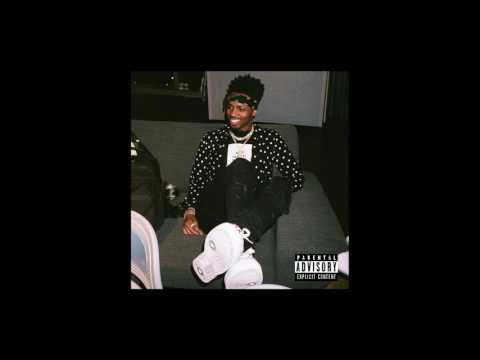
By 2018, Metro Boomin had already established himself as one of the most dominant producers in hip-hop, his signature tag "Metro Boomin want some more" ringing out across a generation of trap anthems. His debut solo studio album, Not All Heroes Wear Capes, released on November 2, 2018, through Republic Records and Boominati Worldwide, arrived as both a career statement and a love letter to the Atlanta trap aesthetic he had helped codify. Among its standout tracks was "Don't Come Out The House," a brooding, atmospheric collaboration with fellow Atlanta native 21 Savage that captured the paranoid, insular mindset at the core of the album's worldview.
Metro Boomin served as the sole producer on the track, constructing a beat built around dark, cavernous low-end pressure and sparse melodic elements that created a sense of dread and claustrophobic tension. The production philosophy on the album leaned heavily into minimalism, letting negative space do as much work as sound itself, and "Don't Come Out The House" exemplified that approach more than almost any other track on the record. 21 Savage, whose collaborative history with Metro dated back to some of his earliest breakout records, delivered a performance that felt naturalistic and lived-in rather than performed.
Not All Heroes Wear Capes debuted at number one on the Billboard 200, moving more than 219,000 album equivalent units in its first tracking week, which represented one of the strongest debut weeks for a trap-focused producer solo project in Billboard history up to that point. The album's commercial success was driven in large part by its streaming performance, and several of its tracks, including "Don't Come Out The House," circulated heavily on platforms like Spotify and Apple Music in the weeks surrounding the release.
The album was crafted with a remarkable roster of guest artists, with "Don't Come Out The House" representing one of the more intimate pairings given the long-standing creative partnership between Metro and 21 Savage. The two had previously collaborated on tracks that helped define 21 Savage's early career, and their chemistry on this track reflected years of studio familiarity. 21 Savage's deadpan delivery worked in direct alignment with the track's sonic texture, creating a unified mood rather than a contrast between performer and production.
Metro Boomin's rise to solo stardom had been building for years. Born Leland Tyler Wayne in St. Louis, Missouri, he relocated to Atlanta as a teenager and began working with a roster of artists that would reshape mainstream hip-hop. His work with Future, 21 Savage, Young Thug, and Drake had made him one of the most sought-after producers in the industry. Not All Heroes Wear Capes was certified platinum by the RIAA, reflecting the commercial heft Metro brought to a project where he held near-total creative control.
The timing of the album's release in late 2018 placed it within a larger cultural moment in which trap music was fully consolidating its dominance over the mainstream pop charts. Metro was not merely a beneficiary of that wave; he was among its primary architects. "Don't Come Out The House" functioned within that context as one of the more contemplative entries in the trap canon, foregrounding mood and atmosphere over pure energy or braggadocio.
Critical reception for the album was broadly positive, with reviewers singling out the consistency of the sonic vision and Metro's ability to curate cohesive moods across a star-studded tracklist. "Don't Come Out The House" was frequently cited as a highlight for listeners who gravitated toward the album's darker, more introspective half. Its streaming numbers reflected genuine audience engagement rather than passive background listening, a distinction that became increasingly relevant as the music industry debated how streaming metrics reflected artistic impact.
The cultural footprint of the track extended beyond its chart presence. It became one of the commonly referenced examples in conversations about how producer-led albums could maintain artistic focus despite featuring multiple high-profile guest contributors. Metro's ability to impose his aesthetic onto collaborators rather than simply adapting to theirs was seen by critics and industry observers as the defining quality of the project. "Don't Come Out The House" remains one of the cleaner illustrations of that dynamic, with Metro's production environment completely shaping how 21 Savage approached his vocal delivery and thematic content.
The album spawned the Billboard Hot 100 hit "Godfather Pt. III" featuring 21 Savage and Offset, but "Don't Come Out The House" maintained a strong fan following as a deep cut that rewarded repeated listening. Its place in the Not All Heroes Wear Capes tracklist as a cohesive artistic statement, rather than as a single designed for radio exposure, gave it a different kind of longevity, the kind built on word-of-mouth and playlist placement rather than promotional cycles.
02 Song Meaning
Meaning and Themes: Don't Come Out The House
"Don't Come Out The House" operates in the emotional register of guarded self-preservation, presenting isolation not as weakness or social anxiety but as a deliberate strategy adopted by someone who has learned through experience that the outside world poses genuine threats. The track frames staying indoors as a form of discipline and survival intelligence rather than fear, giving it a psychological depth that separates it from more straightforwardly boastful trap records.
21 Savage's approach to the subject matter is characteristically understated. He depicts an existence defined by hypervigilance, where movement through public space requires calculation and where trust is a resource too scarce to spend carelessly. The logic running through the track is cumulative: the reasons to stay inside compound on one another until the decision to remain insulated feels less like a choice and more like an obvious conclusion. This fatalistic clarity is one of 21 Savage's most consistent lyrical signatures, and "Don't Come Out The House" gives it a setting that amplifies rather than complicates it.
Metro Boomin's production creates the emotional architecture for this worldview. The beat does not celebrate danger; it reflects it. The darkness of the sonic palette, the cavernous low frequencies, the minimal melodic presence, all of these choices mirror the psychological state of someone whose relationship with the external world has been conditioned by violence and loss. The production is not background music to the performance; it is the performance's emotional foundation, doing as much interpretive work as the lyrics themselves.
At a thematic level, the song engages with a phenomenon that runs throughout the Atlanta trap tradition, namely the way extreme wealth and extreme danger can coexist in the same life simultaneously, producing a kind of gilded captivity. The narrator of the track is not destitute; he is successful, and yet success has amplified the reasons to remain guarded rather than reducing them. Visibility brings exposure; exposure brings risk. This inversion of the expected relationship between achievement and freedom is one of the track's most psychologically acute observations.
The title itself functions as both advice and confession. Addressed to a second person ("you"), the directive to not come out the house carries the weight of hard-won wisdom, the kind of counsel that comes not from abstract caution but from having watched things go wrong when that caution was abandoned. The imperative voice implies an urgency that transforms what might otherwise sound like cynicism into something closer to protective instinct.
Within Metro Boomin's solo catalog, "Don't Come Out The House" represents the album's commitment to emotional authenticity over spectacle. On an album that features some of the biggest names in hip-hop, the track stands out precisely because it strips away any tendency toward showmanship and replaces it with something that feels closer to documentary realism. It captures a specific emotional truth about navigating success and danger simultaneously, and it does so without moralizing or editorializing.
The track's meaning is also shaped by its placement within Not All Heroes Wear Capes. The album's title positions its subjects not as conventional heroes but as survivors operating in conditions that demand unconventional strategies. "Don't Come Out The House" fits that framing with precision, presenting self-imposed confinement as its own form of heroism. The tension between aspiration and constraint gives the song its emotional resonance, anchoring it as one of the more contemplative entries in the trap music canon of that era.
→ More from Metro Boomin Featuring 21 Savage
View all Metro Boomin Featuring 21 Savage hits →



→ More from the 2010s File
View all 2010s hits →



Keep digging