The 2010s File Feature
Trauma
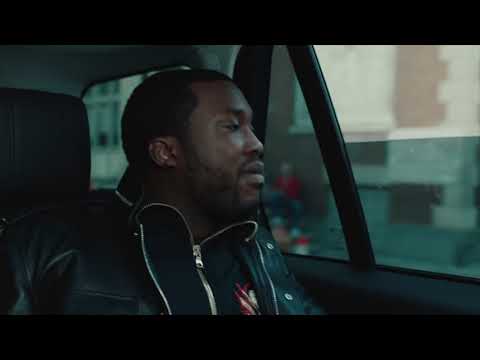
Trauma — Meek Mill Meek Mill released "Trauma" in 2018 as part of his album Championships , which arrived on November 30, 2018 , through Atlantic Records and…
01 The Story
Trauma — Meek Mill
Meek Mill released "Trauma" in 2018 as part of his album Championships, which arrived on November 30, 2018, through Atlantic Records and Roc Nation. The album marked one of the most symbolically charged moments of his career: it was his first full-length project released as a free man following his incarceration, a period that had made him an unlikely but genuine focal point for a national conversation about criminal justice reform. "Trauma" was among the album's most thematically substantive tracks, providing not just biographical detail but a structural framework for understanding the psychological weight that shapes the lives of young men in communities where violence is endemic.
The production surrounding "Trauma" fit the emotional gravity of the subject matter. Rather than the triumphant, bravado-driven energy that characterized many of Meek's earlier performances, the track leaned into something more reflective and musically sober, with production choices that allowed space for the lyrical content to breathe. The instrumental texture conveyed weight without becoming oppressive, matching the tone of testimony that Meek adopted throughout the album's most personal moments.
Championships debuted at number one on the Billboard 200, moving roughly 228,000 album-equivalent units in its opening week, an extraordinary commercial performance that validated the scale of public interest in Meek's post-incarceration narrative. The album's release had been anticipated with unusual intensity given the circumstances of its creation. Much of the writing had been done while Meek was still incarcerated at SCI Chester in Pennsylvania, and he had been released on bail in April 2018 after the Pennsylvania Supreme Court granted a supervised release pending a new trial. Championships was therefore received not simply as a rap record but as a statement from a man who had survived a protracted legal ordeal and emerged with his creative ambitions intact.
The Jay-Z-assisted title track and several other high-profile collaborations on the album generated significant attention, but "Trauma" stood apart because of its focus on community psychology rather than personal triumph. Meek approached the subject with the authority of someone who had grown up in North Philadelphia, a neighborhood marked by cycles of poverty, gun violence, and institutional neglect. Rather than treating trauma as an abstraction or as mere biographical color, the song engaged with it as a structural condition, something transmitted across generations and reinforced by daily lived experience rather than any single catastrophic event.
The album was certified platinum by the Recording Industry Association of America, reflecting both the streaming performance of its songs and the sustained commercial interest in Meek Mill as one of contemporary rap's most prominent voices. "Trauma" contributed to that certified total as one of the album's more emotionally resonant tracks, a piece that listeners returned to as the cultural conversation around mass incarceration, neighborhood violence, and mental health in Black communities continued to develop in the years after the album's release.
Meek's involvement with criminal justice reform organizations during this period gave tracks like "Trauma" an additional platform. His work with the REFORM Alliance, co-founded with Jay-Z following his own legal experiences, meant that his public profile was inseparable from the social issues the song addressed. The alignment between the music and the advocacy was not accidental; Meek had always used his platform to speak about the conditions he had witnessed and survived, and Championships brought that commitment to its most focused and fully realized expression.
Critical response to "Trauma" was broadly appreciative. Reviewers noted that the track demonstrated a dimension of Meek's artistry that his earlier, more commercially oriented output had sometimes obscured. His capacity for detailed, emotionally present storytelling about the specific psychological realities of growing up in a violence-saturated environment was recognized as one of his most distinctive qualities, and "Trauma" gave that capacity room to operate without the distraction of competitive rap braggadocio or commercial calculation.
The song's cultural significance grew in the years following its release as the concept of trauma, particularly community and intergenerational trauma, moved more prominently into mainstream public discourse. "Trauma" had articulated this framework through rap before it became a common vocabulary in media and public health conversations, positioning Meek Mill as a musician whose insights about lived experience preceded and in some ways anticipated broader social recognition of these psychological realities. The track's streaming numbers continued to accumulate well past its initial release window, as new listeners discovered it in the context of both Meek's ongoing advocacy work and the broader cultural conversations that the song had helped to advance.
02 Song Meaning
Wounds That Compound: The Meaning of "Trauma"
"Trauma" by Meek Mill is one of the more unflinching examinations of intergenerational psychological damage in contemporary hip-hop. The song's central argument is that the violence and loss experienced in neighborhoods like North Philadelphia do not remain isolated events; they accumulate, compound, and reshape the nervous systems and emotional frameworks of the people who survive them. Meek approaches this argument not as an outside observer but as someone for whom the described experiences are biographical, which gives the track a moral authority that more abstractly political rap rarely achieves.
The concept of trauma as the song uses it is broader than the clinical definition and more personal than the sociological one. It encompasses the grief of losing friends and family members to violence, the hypervigilance that becomes necessary for survival in high-risk environments, and the way that constant exposure to danger distorts one's relationship to normalcy, hope, and the future. Meek depicts characters, often thinly veiled versions of people he actually knew, whose emotional responses to the world have been calibrated by repeated exposure to loss, making them simultaneously more hardened and more fragile than they appear from the outside.
One of the song's most significant thematic moves is its implicit challenge to the idea of individual responsibility without structural context. Meek does not excuse harmful behavior, but he insists on tracing its roots back through layers of inherited damage that no individual willpower alone can overcome. This positions the song within a long tradition of socially conscious rap that refuses to separate personal conduct from the conditions that shape it, a tradition running from N.W.A through Kendrick Lamar to Meek himself. The difference in Meek's approach is its intimate specificity; the argument is made through detailed narrative rather than manifesto.
The title's double meaning is worth noting. Trauma describes both the original wound and the ongoing condition it produces. A person who has experienced significant trauma does not simply recover once removed from the original source of harm; the nervous system and psyche carry the imprint forward, shaping responses to new situations in ways that can look irrational from the outside but are internally logical given what the person has already survived. Meek's framing asks listeners to hold that complexity, to see the behaviors that society labels as pathological as, in many cases, adaptive responses to genuinely pathological conditions.
The song also speaks to the difficulty of expressing emotional pain within the masculinity frameworks that govern much of the social world Meek depicts. There is vulnerability in naming trauma, in acknowledging that one has been wounded and that the wound has not fully healed. Rap's historical association with emotional stoicism and hardness makes "Trauma" a more courageous artistic statement than it might appear, because it insists on visibility for emotional experiences that the genre's conventions often suppress. In this sense, the track participates in the broader shift toward emotional openness that has characterized the most interesting hip-hop of the 2010s and 2020s.
Within Meek Mill's catalog, "Trauma" occupies a central position in his ongoing project of bearing witness to the conditions that produced him. It extends and deepens a thread visible throughout his career, from the street narratives of Dreamchasers through the personal testimony of Championships, insisting that the story of any individual life cannot be honestly told without also telling the story of the environment that shaped it. That insistence, patient and unsparing, is what makes "Trauma" one of the more enduring tracks in his body of work.
→ More from Meek Mill
View all Meek Mill hits →



→ More from the 2010s File
View all 2010s hits →



Keep digging