The 2010s File Feature
Lord Knows
Lord Knows — Meek Mill's Declaration From the Heights of 2015 Philadelphia's Most Urgent Voice In the summer of 2015, Meek Mill was operating at what appeare…
01 The Story
Lord Knows — Meek Mill's Declaration From the Heights of 2015
Philadelphia's Most Urgent Voice
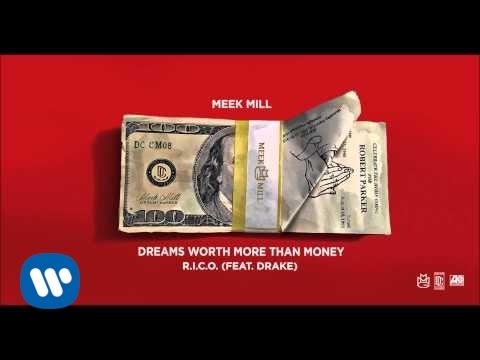
In the summer of 2015, Meek Mill was operating at what appeared to be the highest point of his career. His Dreams and Nightmares album had been released in 2012, and the title track's second half had become something of a cultural touchstone, adopted as entrance music at sporting events and functioning as an unofficial anthem of ambition and persistence. By July 2015, his album Dreams Worth More Than Money was released and immediately reached number one on the Billboard 200. "Lord Knows" was among the tracks from that project that found their way onto the Hot 100, debuting at number 88 on July 25, 2015.
Meek Mill's biography, the years of legal troubles, the community he came from in North Philadelphia, the combination of street credibility and mainstream ambition, had given his music a specific weight that pure commercial artists could not replicate. When he spoke about what he had overcome and what he aspired to, the words carried the authority of lived experience, and his audience responded to that authority consistently. Dreams Worth More Than Money arrived at a moment when that authority was at its most commercially bankable.
The Context of the Track
The track's title invokes divine witness, a form of testimony that positions God as the observer and validator of the narrator's journey. This religious register has deep roots in African American music across genres; invoking a higher witness lends moral seriousness to material that might otherwise be read as pure boasting. "Lord Knows" uses this framing to contextualize Meek's account of his come-up, placing his personal achievement within a larger narrative of faith, perseverance, and the sense that his success was not merely earned but in some sense destined or watched over.
The production aesthetic of the track reflects the hard-hitting, orchestrally influenced approach that had become associated with Meek Mill's sound: large beats, dramatic sonic gestures, an arrangement that supports and amplifies the narrator's sense of the stakes. This production philosophy had made Dreams and Nightmares opener so effective as a motivational piece, and it continued to serve Meek's particular brand of aspirational intensity on this follow-up album.
A Brief Chart Appearance
The single spent two weeks on the Billboard Hot 100. It debuted at number 88 on July 25, 2015, moved to number 96 the following week, and then exited the chart. This trajectory reflects the dynamics of an album with multiple charting singles competing against each other; Dreams Worth More Than Money sent several tracks onto the Hot 100 in the same period, and audience attention was distributed across the project rather than concentrated on any single entry. A two-week chart appearance in this context indicates meaningful streaming activity during the album's launch period.
The more relevant commercial metric for Meek Mill in this period was the album's overall performance. Debuting at number one on the Billboard 200 with over 100,000 album-equivalent units represented a genuine commercial achievement, the kind of opening week that validated years of work and positioned him clearly among the top tier of active hip-hop artists.
The Irony of July 2015
What makes the summer of 2015 a complex chapter in Meek Mill's story is what happened shortly after Dreams Worth More Than Money's triumphant debut. A public conflict with Drake, initiated by Meek over alleged ghostwriting practices, became one of the most-discussed feuds in recent hip-hop history. The sequence of events that followed complicated the album's commercial momentum and shifted the cultural conversation around Meek significantly. The irony of his highest commercial moment coinciding with this particular controversy is well documented in hip-hop history, and it gives "Lord Knows" a retrospective poignancy that the title, with its invocation of divine witnessing, inadvertently amplifies.
Meek's career subsequently demonstrated considerable resilience. His 2018 album Championships, released after a period of incarceration and legal battles that themselves became subjects of public discussion around criminal justice reform, was met with strong reception and positioned him as a symbol of exactly the kind of persistence his early music described. "Lord Knows" sits within this longer arc, a moment of peak success before a difficult period and a subsequent return.
The Philadelphia Voice
Meek Mill's contribution to Philadelphia's musical legacy is significant and ongoing. His connection to the city, his advocacy for communities affected by the criminal justice system, and his music's consistent engagement with the experience of growing up in constrained circumstances have given his catalog a social dimension that outlasts any single chart moment. "Lord Knows" is one data point in that larger story. Press play and listen to a man at the height of his powers, with no idea what the next month would bring.
"Lord Knows" — Meek Mill's singular moment on the 2010s charts.
02 Song Meaning
Lord Knows — Faith, Ambition, and the Witness of a Difficult Journey
The Divine as Audience
When an artist invokes a higher power as witness to their achievements, the rhetorical gesture carries specific weight. It lifts the personal narrative out of the purely individual and places it within a larger frame of meaning, suggesting that what has happened is not merely impressive but significant, not merely accomplished but somehow correct. "Lord Knows" uses this framing deliberately, positioning Meek Mill's account of his rise as something that deserves more than human testimony. The Lord who knows is both guarantor and audience, lending a cosmic weight to what might otherwise read as standard rap braggadocio.
This is a tradition with deep roots. Gospel music's influence on hip-hop runs through multiple channels, and one of the most persistent is this invocation of divine witness: the sense that whatever has been survived, achieved, or aspired to is registered at a level higher than the social. Meek Mill draws on this tradition naturally, given both his biography and the musical community from which he emerged.
Aspiration and Its Real Costs
The Dreams Worth More Than Money album title captures Meek Mill's core thematic territory with unusual efficiency. His music has consistently argued that the aspiration itself, the dreaming, the refusal to accept that one's circumstances define one's possibilities, is the most valuable thing a person from his background can possess. This is a specific philosophical position, one with clear implications for how struggle, success, and setback are understood and narrated.
"Lord Knows" extends this argument by placing it in a moment of actual arrival. The narrator is not dreaming from a position of constraint but speaking from a position of achieved success. The invocation of divine witness at this point, rather than during the struggle, suggests that the arrival has not dissolved the spiritual orientation that sustained the journey. Success, the track implies, does not replace faith; it confirms it.
North Philadelphia as Moral Geography
Meek Mill's connection to North Philadelphia, a community with well-documented challenges around poverty, violence, and the criminal justice system, gives his ambition narratives a specificity that abstract aspiration music lacks. When he describes where he started and where he has arrived, both coordinates are real and verifiable. The distance traveled is not metaphorical but geographical, social, and economic. His audience, particularly the portion of it that shares some version of that background, responds to this specificity because it maps onto their own experience in ways that more abstractly ambitious music cannot.
This is why the divine witness framing carries extra weight in Meek's context. From the perspective of a community where the statistical odds favor certain outcomes and constrain others, arrival at a different outcome requires explanation beyond individual effort. The sense that something larger was working is both psychologically real and narratively compelling.
The Track in the Larger Career Arc
Listening to "Lord Knows" with knowledge of what followed its release is an exercise in appreciating the gap between what is visible at any given moment and what is coming. In July 2015, this track arrived on the Hot 100 as part of a number-one album, a marker of Meek at a professional peak. The subsequent period brought a high-profile feud, legal difficulties, incarceration, and then a sustained comeback that became entangled with much larger public conversations about justice and advocacy. The track now sits at the beginning of this complicated sequence, a document of confidence and arrival before the test of what comes next. The Lord knows; the artist, at this moment, does not yet.
→ More from Meek Mill
View all Meek Mill hits →



→ More from the 2010s File
View all 2010s hits →




Keep digging