The 2010s File Feature
Vivir Mi Vida
Vivir Mi Vida by Marc Anthony There are songs built for arenas, and then there are songs built for the exact moment a crowd realizes it is all in this togeth…
01 The Story
"Vivir Mi Vida" by Marc Anthony
There are songs built for arenas, and then there are songs built for the exact moment a crowd realizes it is all in this together. "Vivir Mi Vida" belongs firmly to the second kind. When Marc Anthony released it in 2013, the salsa veteran handed Latin audiences an anthem of resilience so immediate and so warm that it seemed to have existed before anyone had even heard it, as if it had always been waiting somewhere to be sung at full volume by an entire stadium with its hands in the air.
A Salsa King at the Top of His Game
By 2013, Marc Anthony had long since cemented his place as one of the most celebrated salsa artists in the world, a singer whose voice could fill a stadium and still feel like a private confession whispered just to you. He had also spent years balancing English-language pop crossover work with his deep roots in tropical music, moving between worlds without ever losing himself. With this single, he returned home to salsa with full force, embracing the very sound that had made him a legend in the first place. The track served as the lead single from his 2013 album 3.0, and it marked a triumphant homecoming to the genre he loved most.
From a French Original to a Salsa Anthem
One of the most fascinating threads in the song's story is its origin. The melody was adapted from the Algerian-French raï hit "C'est la vie" by Khaled, reworked with Spanish lyrics and a propulsive, brass-heavy salsa arrangement. The transformation was seamless and joyful. Horns, percussion, and Anthony's soaring delivery turned a Mediterranean groove into a Caribbean celebration without a single seam showing. The phrase at its heart, a simple call to just live your life, translated across cultures and languages without losing an ounce of its urgency or its generosity of spirit.
A Modest Hot 100 Showing, a Massive Cultural Footprint
On the all-genre Billboard Hot 100, the song made only a brief appearance, the kind of cameo that tells almost none of the real story. It debuted and peaked at number 92 on the chart dated August 10, 2013, and logged just 5 weeks on the Hot 100 before slipping away. Those numbers capture only a sliver of the truth, because the song's true dominance unfolded on Latin charts and in living rooms, clubs, weddings, and stadiums across the entire Spanish-speaking world, where it became utterly inescapable for years and refused to fade.
An Online Phenomenon
The gap between its modest crossover chart run and its real reach is genuinely staggering. The official video has amassed roughly 1.3 billion views on YouTube, ranking it among the most-watched salsa recordings of all time and one of the most-viewed Spanish-language songs ever uploaded. That figure reflects something no chart position ever could: a song that families played at every gathering, that fans adopted as a personal motto, that outlived any single chart cycle and became part of daily life for millions. It is the kind of reach that makes a Hot 100 peak look almost beside the point, a reminder that the official American singles chart has never told the full story of how the world actually listens. For an entire global audience, this was simply one of the defining songs of the decade, played until the grooves wore thin.
Why It Endures
The secret is its sheer generosity. The song asks nothing of you except that you keep going, that you laugh, dance, and refuse to let hardship win the day. That message, wrapped in irresistible brass and rolling rhythm, is precisely why it still fills floors more than a decade on. It does not preach; it simply opens its arms.
Turn it up, let the horns hit, and try to stay still; you will lose that battle in seconds.
"Vivir Mi Vida" — Marc Anthony's singular moment on the 2010s charts.
02 Song Meaning
The Meaning Behind "Vivir Mi Vida"
A Hymn to Living Fully
The title says almost everything: to live my life. The song is an unambiguous call to embrace existence in spite of pain, loss, and uncertainty, to choose joy when choosing it feels hardest. The lyrics urge the listener to laugh, dance, and savor each passing moment, framing happiness not as a luxury reserved for easy times but as an act of defiance against hardship. It is the kind of message that could easily curdle into cliché in lesser hands, yet here it lands with genuine conviction and earned warmth.
Turning Sorrow into Movement
What keeps the song from sounding like hollow positivity is its honest acknowledgment of struggle. The lyrics never pretend life is easy or fair. Instead, they recognize tears and difficulty plainly before insisting that the only sane answer is to keep moving forward anyway. The emotional core is resilience, the conscious choice to find joy precisely because life is fragile and short. That balance between sorrow and celebration is what gives the anthem its surprising depth beneath the party.
A Universal Message in a Latin Frame
Though rooted deeply in salsa tradition, the song's philosophy reaches well beyond any single culture or language. Its theme of seizing the present moment echoes across generations and borders, which helps explain why it traveled as far as it did. The salsa arrangement gives the sentiment a physical form you cannot ignore. You do not merely think about living fully when you hear it; you feel the urge rise straight up through your feet and into your shoulders.
Why It Connected
Listeners embraced the song as a deeply personal anthem during difficult seasons of their own lives. The combination of an uplifting message and an irresistible rhythm made it a fixture at celebrations and a comfort in grief. People played it at weddings and funerals alike, drawing real strength from its insistence that life continues and still deserves to be enjoyed, even through tears, even after loss.
A Lasting Mantra
More than a hit, the song became a saying, a phrase people repeat to one another as encouragement when words run short. Its meaning is finally very simple and very powerful: time is brief, so live. That clarity, delivered with full-throated warmth and a smile, is exactly why it still resonates so widely and so honestly. The song does not ask you to ignore your pain or pretend everything is fine; it asks you to dance anyway, to let the rhythm carry you one step past the sorrow. In that small, repeated act of choosing joy, the whole philosophy of the record reveals itself, plainly and beautifully.
→ More from Marc Anthony
View all Marc Anthony hits →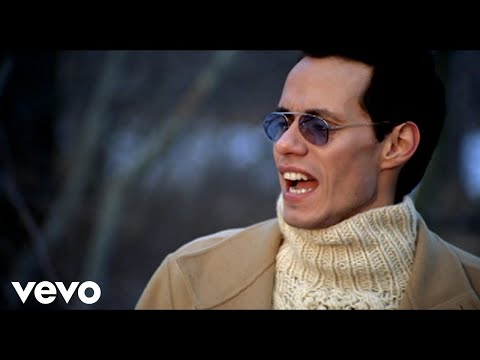


→ More from the 2010s File
View all 2010s hits →



Keep digging