The 2010s File Feature
Hittas
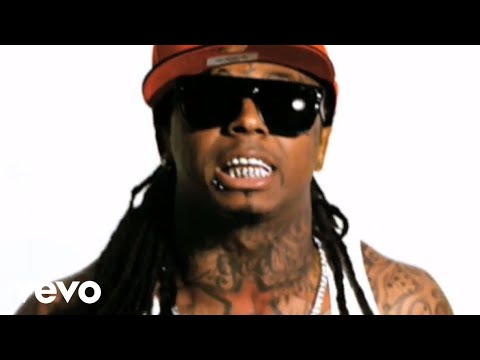
"Hittas" — Lil Wayne's Tha Carter V Moment The Return That the World Had Been Waiting For Few album releases in hip-hop history arrived under the weight of a…
01 The Story
"Hittas" — Lil Wayne's Tha Carter V Moment
The Return That the World Had Been Waiting For
Few album releases in hip-hop history arrived under the weight of anticipation that preceded Tha Carter V. Lil Wayne had announced the project years earlier, and its release had been delayed repeatedly through a complicated series of events involving his label relationship with Cash Money Records, litigation, and a public dispute with Birdman that played out over years in the press and in the courts. When the album finally dropped on September 28, 2018, it landed with the force of something long-deferred finally arriving. The project debuted at number one on the Billboard 200 and shattered streaming records in its first week, confirming that the years of waiting had done nothing to diminish the appetite for Wayne's music.
A Track Among the Many
"Hittas" was one of a substantial number of tracks on an album that ran to nearly twenty-three songs. In that context, individual tracks competed for attention within a release that was itself an event, and "Hittas" registered as one of the project's harder, more assertive moments. The production aligns with the harder trap-influenced sound that had come to dominate hip-hop's commercial mainstream by 2018, while Wayne's performance on the track demonstrates his continued capacity to bring personality and verbal dexterity to that framework. His cadence across the track is characteristically unpredictable, moving against the beat's implied rhythms rather than simply riding them.
The word "hittas" in hip-hop slang refers to reliable, trusted associates, people one can count on when things turn serious. The track's lyrical territory covers loyalty, reputation, and the dynamics of street credibility, themes that Wayne has navigated throughout his career with a vernacular fluency that remains consistent across stylistic eras.
One Week at Number 59
"Hittas" debuted on the Billboard Hot 100 on October 13, 2018, entering at number 59. It spent a single week on the chart, a result typical of the streaming-surge pattern that characterized album track charting in the late 2010s. The bulk of a new album's streams would concentrate in the first week following release, generating a Hot 100 snapshot of the most-played tracks from that opening rush, after which individual tracks would fall off unless sustained by radio play or viral momentum. A debut at number 59 placed "Hittas" among the most-streamed tracks from a historic first week for Tha Carter V, which speaks to the sheer volume of listening the album generated.
Wayne's Position in 2018
The Lil Wayne who released Tha Carter V was an artist reclaiming a position that had never really been taken from him, only obscured by the years of legal noise. In the interim since Tha Carter IV, hip-hop had continued evolving: trap had become the genre's dominant commercial form, and a new generation of artists had emerged who cited Wayne as a foundational influence. The 2018 release allowed Wayne to step into a landscape that had been shaped partly by his own earlier work, occupying a position somewhere between elder statesman and still-active practitioner.
The reception of Tha Carter V suggested that this positioning worked. Critics who had questioned whether the album could live up to its delayed mythology were largely satisfied, and tracks like "Hittas" contributed to the album's reputation for energy and ambition.
The Architecture of a Legacy
"Hittas" stands as one piece of a much larger release that itself represents a chapter in one of hip-hop's most storied careers. Its single-week chart appearance tells only part of the story; the fuller picture includes the streaming context, the album's cultural weight, and the relief that longtime fans felt at finally receiving a project that had become almost mythological in its absence. For new listeners approaching Wayne's catalog, Tha Carter V and its individual tracks offer an entry point into an artist who shaped a decade of hip-hop without any single track needing to serve as the definitive introduction. Press play and hear what the wait produced.
"Hittas" — Lil Wayne's singular moment on the 2010s charts.
02 Song Meaning
"Hittas" — Loyalty, Trust, and the Architecture of Allegiance
The Code Beneath the Track
Hip-hop has always maintained a sophisticated vocabulary for the social structures that govern street life and the music industry simultaneously, and "Hittas" draws on that vocabulary with the fluency of an artist who has spent decades inside both worlds. The term itself encodes a set of values: reliability under pressure, discretion, proven loyalty over time. The track treats these qualities not as abstract virtues but as practical necessities, the kind of operational ethics that determine who survives and who does not in environments where trust is finite and the consequences of misplacing it are severe.
For Lil Wayne, this lyrical territory in 2018 carried a particular resonance. The years preceding Tha Carter V had been publicly marked by betrayal and institutional conflict, with his long and once-celebrated relationship with Cash Money Records collapsing in acrimony. The themes of loyalty and reliable allies that run through the track could reasonably be heard against that biographical backdrop, though the music functions independently of its autobiographical freight.
Bravado as Self-Presentation
A significant dimension of "Hittas" is its function as a form of self-presentation, the performance of power and composure that hip-hop has developed into an art form over four decades. Wayne's delivery projects confidence with a precision that distinguishes it from mere volume, operating on the assumption that control of narrative is itself a form of dominance. The track asserts a position rather than arguing for one, which is the mode of speech of someone who believes the argument has already been won.
This posture, bravado rooted in genuine track record rather than empty claim, was something Wayne had the cultural biography to support in 2018. His influence on multiple generations of rappers was documented, cited openly by artists ranging from Drake to Young Thug to Nicki Minaj, all of whom had publicly credited him with shaping their approach to the form.
The Trap Framework and What Wayne Does With It
By 2018, trap production had become the dominant sonic mode in commercial hip-hop, with its characteristic hi-hat patterns, bass-heavy kicks, and menacing keyboard textures setting the template for how the genre sounded in mainstream contexts. "Hittas" operates within that framework while demonstrating Wayne's ability to impose his own personality on a sound that many artists simply ride. His rhythmic unpredictability and verbal density set him apart from producers' more pliant collaborators, giving the track a restlessness that the production alone does not generate.
Why the Theme Endures
Songs about loyalty endure in part because the experience they describe is universally recognizable across vastly different social contexts. The desire to know who your real allies are, to be surrounded by people whose commitment is proven rather than claimed, is not limited to any particular subculture or demographic. Hip-hop simply addresses this need with more directness and specificity than most other genres, naming the stakes clearly and refusing the euphemisms that other forms of popular music sometimes reach for. "Hittas" is a clear example of that directness, and its emotional core translates well beyond its immediate musical context.
"Hittas" — Lil Wayne's singular moment on the 2010s charts.
→ More from Lil Wayne
View all Lil Wayne hits →
→ More from the 2010s File
View all 2010s hits →


Keep digging