The 2010s File Feature
Word On The Street
Word On The Street — Lil Baby (2018) Lil Baby's rise from the streets of Atlanta's Oakland City neighbourhood to the upper echelons of the rap chart was one …
01 The Story
Word On The Street — Lil Baby (2018)
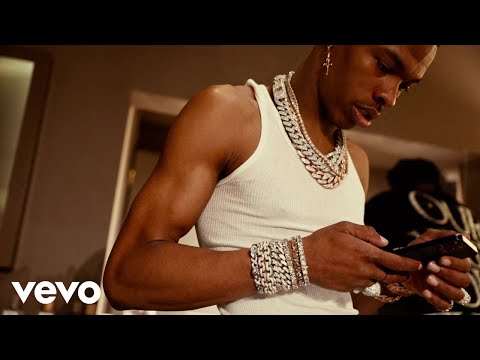
Lil Baby's rise from the streets of Atlanta's Oakland City neighbourhood to the upper echelons of the rap chart was one of the fastest ascents in the history of the genre, and it was achieved with a consistency of output and an authenticity of perspective that set him apart from the dozens of trap artists who were competing for attention in the same period. Word On The Street, released in 2018 as part of the relentless creative output that characterised his early career, exemplified the qualities that made his music connect so immediately with listeners across the country: a melodic delivery that blurred the line between singing and rapping, production built on the Atlanta trap template but executed with an attention to sonic detail that elevated it above the generic, and lyrics that translated the specific textures of his lived experience into imagery that felt both personal and universally recognisable.
By 2018, Lil Baby had been signed to Quality Control Music and Young Stoner Life Records, the Atlanta-based powerhouse that had become the dominant force in the trap music ecosystem through its development of artists including Migos and Lil Yachty. Quality Control's approach to artist development combined intensive studio time with a rapid release cadence, and Lil Baby responded to that environment with a volume of output that was remarkable even by the standards of the streaming era's content-hungry marketplace. The mixtapes and projects he released in rapid succession throughout 2017 and 2018 established his presence in the Atlanta rap scene before a wider national audience had fully caught up with what was happening.
The production landscape of Word On The Street was built on the melodic trap template that producers associated with the Atlanta scene had refined through the mid-2010s. The characteristic elements, a sparse, minor-key beat with reverberant 808 bass, hi-hat patterns with precise rhythmic variation, and a mix that placed the vocal in an intimate relationship with the instrumental, were deployed here with the polish that distinguished professional Atlanta trap production from its imitators. The melodic hooks that Lil Baby constructed over this framework drew on the singing-rapping continuum that had been central to Atlanta's contribution to hip-hop since at least the era of Young Jeezy and T.I., but the specific emotional register was distinctly his own.
The track appeared on his mixtape Harder Than Hard, one of several substantial projects he released in 2018 as part of an output strategy that prioritised momentum and audience building through consistent delivery rather than through the spacing-out of individual album events. This approach was well suited to the streaming economy in which he operated, where platforms rewarded artists who maintained consistent listener engagement through frequent new content, and it contributed to the remarkable speed with which his streaming numbers grew during this period.
The street credibility that the song's content and delivery projected was grounded in biographical reality. Lil Baby had served a two-year prison sentence before beginning his music career at the encouragement of fellow Atlanta rapper Young Thug, and the perspective he brought to his music reflected experiences that were neither simulated nor exaggerated for commercial effect. That authenticity was recognised by listeners who had experienced similar circumstances and valued it accordingly, and it was also audible to listeners from entirely different backgrounds who responded to the emotional directness of his storytelling regardless of whether they shared his specific points of reference.
His chart trajectory in 2018 was one of the most impressive in contemporary hip-hop. Multiple tracks from his various projects accumulated substantial streaming numbers simultaneously, and the aggregate picture was of an artist who had achieved a level of listener engagement that most artists spend years working toward. Radio programmers began paying closer attention to his output, and the crossover from streaming success to traditional radio airplay followed in the months that came after his initial breakthrough period.
The broader context of his 2018 work was a hip-hop landscape that was in the middle of a significant transition, one driven by the shift from sales-based to stream-based measurement on the Billboard charts and by the resulting elevation of artists whose music connected on streaming platforms with particular efficiency. Lil Baby's melodic delivery and emotionally direct lyrics were extremely well suited to the listening behaviour patterns that streaming data revealed, and his rise coincided precisely with a moment when the industry's measurement tools were finally capturing the kind of listening that his audience had already been doing for months.
Critics who reviewed his early work consistently noted the combination of melodic instinct and narrative honesty as the distinguishing factors in his music, and Word On The Street exemplified those qualities in a form compact enough to function as an introduction to his aesthetic for listeners encountering him for the first time. His subsequent trajectory, including the enormous commercial success of Gunna and the landmark album My Turn in 2020, confirmed that the qualities evident in his 2018 output were not accidental but reflected a genuine and sustainable artistic identity that would carry him to the front rank of American rap.
02 Song Meaning
The Meaning of Word On The Street
Word On The Street operates within a lyrical tradition that has been central to trap music since the genre established itself as the dominant mode of Southern hip-hop: the translation of street-level experience into narrative that functions simultaneously as autobiography, social commentary, and artistic self-presentation. For Lil Baby, whose biographical context gave his music an unusually direct relationship to the subject matter he addressed, the track represented the kind of honest accounting of lived experience that his audience recognised and valued as the genuine article rather than as a performed version of authenticity.
The song's core subject matter concerned the intersection of loyalty, reputation, and the particular economics of life in circumstances where conventional pathways to financial security were not available. The phrase "word on the street" as a framing device placed the listener inside a community where information circulated through informal networks rather than through official channels, and where reputation was the currency that determined both social standing and physical safety. Lil Baby's narration of that world drew on specific knowledge that gave his descriptions a texture unavailable to artists who were constructing the same subject matter from the outside.
The emotional register of the track balanced confidence with awareness of vulnerability, a combination that was characteristic of his best early work. The bravado that is conventional in trap music was present, but it was qualified by an understanding of the costs attached to the life being described, an understanding that gave the material an emotional complexity beyond simple celebration of street credibility. The melodic delivery he employed was essential to this effect; by singing as much as rapping, he opened an emotional register that pure rhythmic delivery might have closed off, allowing feelings to surface that a more aggressively confrontational approach would have suppressed.
Within the context of his broader catalog, Word On The Street established thematic and stylistic reference points that he would develop across his subsequent work. The relationship between personal loyalty and the broader social environment, the tension between ambition and the circumstances that had shaped him, and the particular vulnerability that accompanies rapid success and the changes it brings to existing relationships were all themes he would revisit with increasing sophistication as his career developed.
The song's place in the streaming economy of 2018 also carried meaning about how music was being consumed and how artists were connecting with audiences in that period. The track's ability to circulate through playlist ecosystems and social media sharing reflected a model of musical meaning-making that operated differently from the album-cycle paradigm, reaching listeners in contexts that were fragmented and personal rather than unified and public. That the track found its audience through these means, rather than through traditional promotional channels, was itself a reflection of the world it described: a world where information and value moved through informal networks and personal connections rather than through official structures.
→ More from Lil Baby
View all Lil Baby hits →
→ More from the 2010s File
View all 2010s hits →
Keep digging