The 2010s File Feature
Dancin' Away With My Heart
"Dancin' Away With My Heart" — Lady Antebellum's Nostalgic Masterpiece Country's Power Trio at Their Peak Picture a country radio landscape in 2011 and 2012,…
01 The Story
"Dancin' Away With My Heart" — Lady Antebellum's Nostalgic Masterpiece
Country's Power Trio at Their Peak
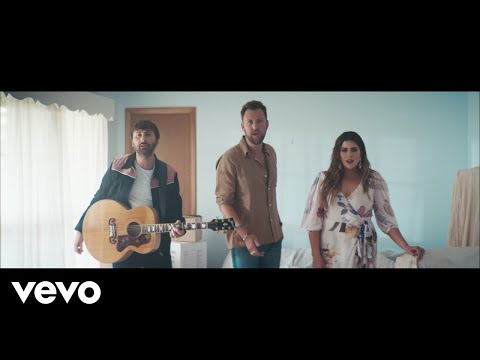
Picture a country radio landscape in 2011 and 2012, one in which Lady Antebellum had become the dominant force. The trio of Hillary Scott, Charles Kelley, and Dave Haywood had arrived seemingly overnight with "Need You Now" in 2009, a track that spent five weeks at number one on the Billboard Hot 100 and won the Grammy for Song of the Year in 2011. The commercial and critical momentum they built from that breakthrough was extraordinary, placing them in a position that few country acts had occupied in the modern era: genuine pop crossover stars who retained complete credibility with the country radio audience. "Dancin' Away With My Heart" came from their third studio album Own the Night, released in September 2011, arriving on a wave of expectation that would have crushed lesser acts.
The track represents a particular mode in Lady Antebellum's songwriting, the nostalgic love story. Rather than dwelling in present-tense romance or the ache of recent loss, the song reaches back toward a memory from the narrator's youth, a high school romance that did not work out, a person who drifted away while taking a piece of the narrator's heart with them. This backward-looking emotional register was territory the trio navigated with particular skill, combining personal specificity with universal relatability in ways that country music does at its best.
The Sound of Memory
The production of "Dancin' Away With My Heart" is designed to feel like recollection, which requires a specific sonic texture: warm, slightly blurred at the edges, carrying the quality of something experienced through the gauze of time. The arrangement builds around the interplay between Hillary Scott and Charles Kelley's voices, a combination that had become one of the most recognized sounds in country radio. The vocal interplay between Scott and Kelley gives the track an emotional depth that a single-voice performance could not achieve, the two voices carrying different perspectives on the same shared memory, suggesting a complexity of feeling that the lyrics make explicit.
The instrumentation choices reflect the trio's instinct for radio-accessible production without sacrificing the emotional content that made their music distinctive within the format. Guitar, piano, and organic rhythm elements create a sonic environment that feels contemporary enough for country radio while also carrying the timeless quality appropriate to a song about permanent memory. The production serves the song's emotional argument rather than displacing it.
A Complex Chart Journey
The track's Billboard Hot 100 journey was unusual. It first entered the chart on September 17, 2011, at position 50, a strong debut that reflected the album's commercial launch. Then it disappeared from the Hot 100 before returning in February 2012 and beginning a slow climb toward its peak. The single reached position 46 on the Billboard Hot 100 on May 5, 2012, spending 19 weeks on the chart across its two stints. This unusual trajectory reflects the dynamics of country singles that depend heavily on country radio airplay, which builds slowly over an extended campaign, intersecting with the Hot 100 at different moments than the initial album-release streaming surge.
On the country-specific charts, the single performed considerably more strongly, fitting the pattern of Lady Antebellum's releases during this period, which consistently outperformed on country formats relative to the mainstream pop chart. Their audience was deeply loyal within the country format, and radio programmers found their material reliable enough to give extended airplay campaigns that accumulated significant spin counts over months-long periods.
The Talent Behind the Track
Lady Antebellum's songwriting has always been a central part of their artistic identity. Charles Kelley, Hillary Scott, and Dave Haywood regularly co-wrote their own material, an unusual quality in the major-label country world where outside song pitching is standard practice. Their direct authorial investment in their material gives the best of their work a personal authenticity that distinguishes it from more committee-assembled commercial country, and "Dancin' Away With My Heart" exemplifies this quality, carrying the feeling of a specific emotional memory translated into song rather than a skillfully constructed generic narrative.
The track's specific imagery, the details of the high school setting, the particularity of the emotional moment it describes, suggest writers working from some reservoir of genuine feeling rather than assembling universally applicable tropes. Whether or not the biographical specificity is literal, it reads as emotionally true, and that quality drives the song's resonance with listeners who find their own memories of first loves and roads-not-taken reflected in its narrative.
Own the Night and Lady A's Legacy
The Own the Night album period represented Lady Antebellum at the height of their commercial powers. The album debuted at number one on the Billboard 200 and produced several charting singles that together maintained their presence on country radio across a period of more than a year. The group subsequently went through a significant period of evolution, including a name change to Lady A in 2020 and ongoing individual creative projects alongside their group work. "Dancin' Away With My Heart" preserves a specific moment in their trajectory when everything they touched seemed to connect with maximum impact.
The song's nostalgia theme has given it an additional layer of meaning as time has passed, the track now serving as a nostalgic reminder of the group's own peak commercial period as much as a nostalgic narrative about teenage romance. Press play and feel two distinct time distances simultaneously: the narrator's memory of lost youth, and the listener's own memory of when this sound was on every radio in the country.
"Dancin' Away With My Heart" — Lady Antebellum's singular moment on the 2010s charts.
02 Song Meaning
"Dancin' Away With My Heart" — First Love, Memory, and the Roads Not Taken
The Peculiar Weight of First Love
First love carries a specific emotional charge that later romantic experience rarely duplicates. The intensity, the newness, the absence of protective emotional scar tissue that subsequent heartbreaks eventually deposit, all these factors combine to make first romantic experience disproportionately memorable relative to its actual duration or apparent significance at the time. "Dancin' Away With My Heart" understands this psychology and builds its entire emotional structure around it. The narrator has not been permanently incapacitated by a high school romance; they have survived, perhaps thrived. But the memory persists with a vividness that ordinary experience does not quite explain, and the song treats that persistence as worthy of serious attention. The emotional argument of the track is that certain memories are not diminished by time but intensified by it, becoming more present as the years separate the narrator from the original experience.
Country music has always had a particular gift for treating apparently small emotional experiences with the seriousness they deserve. The genre insists that the interior life of ordinary people, the first dances and lost loves and roads not taken of people who do not appear in anyone's history books, matters enough to be commemorated in song. "Dancin' Away With My Heart" is a statement of that insistence.
The High School Setting as Universal Territory
The specificity of the high school setting gives the song an unusual universality. Almost every listener can locate themselves in some version of the scenario it describes: the relationship that formed at a formative age, the person who moved on or was moved away from, the question of what might have been that cannot be fully suppressed by the accumulated evidence of a life well lived since. Lady Antebellum's skill in rendering this scenario lies in their ability to suggest the specific without insisting on it, leaving enough room for listeners to project their own particular memories onto the song's emotional framework.
The song does not dwell in bitterness or extended grief about the lost relationship. It treats the memory with affection rather than regret, which is a more sophisticated emotional stance and a more honest one for most people who carry such memories. Time converts sharp pain into something more like wistful appreciation, a recognition of what was good about something that is gone rather than a continued mourning for its absence.
The Two-Voice Dialogue
The interplay between Hillary Scott and Charles Kelley's voices is central to what "Dancin' Away With My Heart" achieves. A single narrator voice would tell the story from one perspective. The duet structure suggests that the memory has two sides, that somewhere out there the other person from this youthful romance might carry their own version of the same wistful recollection. The dialogue structure expands the song's emotional range beyond what a solo performance could contain, allowing the track to acknowledge that romantic memory is rarely unilateral, that both people in a first love typically carry something forward from the experience even as they move into separate lives.
The vocal chemistry between Scott and Kelley, which was one of Lady Antebellum's defining commercial assets throughout their career, serves this material with particular effectiveness. Listeners hear two voices that sound genuinely connected to each other, which reinforces the theme of connection that transcends time and physical separation that runs through the lyric.
Roads Not Taken and the Texture of Regret
The song inhabits a very specific emotional register: not the acute pain of fresh loss but the more complex, settled feeling of what might be called grateful regret. The narrator appreciates what they had, acknowledges that a different choice might have led somewhere valuable, and carries that awareness without being destroyed by it. This emotional texture is common in country music's treatment of the past, which tends toward honest acknowledgment rather than either denial or theatrical grief.
The "roads not taken" theme has deep roots in American culture more broadly, the idea that the choices we make foreclose other possibilities that may have been equally or more fulfilling. What country music adds to this theme is a particular kind of tenderness toward those foreclosed possibilities, an ability to hold them gently rather than with anguish. "Dancin' Away With My Heart" exemplifies this approach, making space for wistful appreciation of a memory without losing sight of the present life that has been built since.
→ More from Lady Antebellum
View all Lady Antebellum hits →



→ More from the 2010s File
View all 2010s hits →



Keep digging