The 2010s File Feature
Female
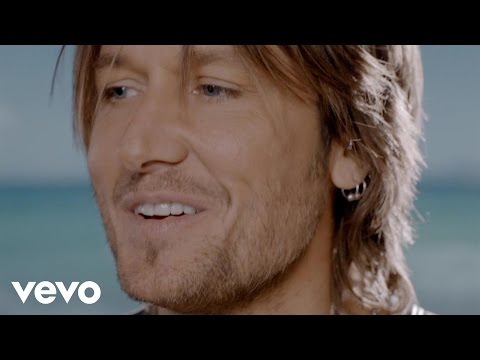
Keith Urban's "Female": A Chart-Crossing Statement at a Cultural Inflection Point When Keith Urban released "Female" in November 2017, the country music worl…
01 The Story
Keith Urban's "Female": A Chart-Crossing Statement at a Cultural Inflection Point
When Keith Urban released "Female" in November 2017, the country music world was navigating a particularly charged cultural moment. The song arrived weeks after the Harvey Weinstein scandal broke and at the height of the early #MeToo movement, timing that lent the track an urgency no marketing campaign could have manufactured. Urban, the Australian-born country star who had built a career on accessible crossover anthems, pivoted sharply with this release, delivering one of the most explicitly feminist messages ever to gain mainstream traction in a genre historically resistant to such framing.
The song was written by Shane McAnally, Nicolle Galyon, and Ross Copperman, three of Nashville's most accomplished songwriters. McAnally and Galyon in particular had spent years establishing themselves as architects of country's more progressive wing, and their collaboration here produced a lyrical catalog that enumerated women across a wide spectrum of identity and experience. Copperman's production gave the track a spare, emotive quality that kept the message front and center without overwhelming it in sonic ornamentation.
Urban released "Female" on November 10, 2017, through Capitol Records Nashville, and the song moved with unusual speed for a new release in a format where chart momentum is typically built over months. Country radio, which had been criticized for years over its treatment of female artists and its gatekeeping of gender politics, responded with notable enthusiasm. The song became a genuine talking point in trade press and mainstream media alike, a rare occurrence for a country single.
On the Billboard Hot Country Songs chart, "Female" reached number one, making it one of Urban's most commercially successful singles in a catalog stretching back to the late 1990s. The achievement was notable not only for the song's content but for the speed with which it climbed, benefiting from a combination of radio airplay and digital streaming that reflected how fundamentally the music industry's measurement tools had shifted in the preceding decade.
Urban performed the song at the Country Music Association Awards in November 2017, a performance that served as both a public declaration and a kind of industry reckoning. The CMA stage had seen controversies of its own in that period, including a publicized decision to restrict media questions about gun control in the aftermath of the Las Vegas shooting, and Urban's choice of this particular song for that particular stage added layers of meaning that audiences and critics parsed in real time.
The track spent multiple weeks at the top of the country airplay charts and accumulated tens of millions of streams across platforms, an impressive figure for a country single in an era when the genre was still calibrating its streaming footprint relative to pop and hip-hop. Its crossover appeal drew coverage from outlets well outside country's traditional media orbit, including national newspapers and general entertainment publications that might not otherwise have devoted column inches to a Nashville single.
Urban discussed the song extensively in interviews, describing his discomfort with aspects of masculinity that he had witnessed and his desire to use his platform constructively. His candor was unusual in a genre where male artists rarely spoke so openly about gender dynamics, and it contributed to the song's reception as something more than a commercial calculation. Critics in the country press noted that Urban had taken a genuine risk, given that the song's explicit feminist framing could have alienated a segment of his core audience.
Co-writer Nicolle Galyon has spoken publicly about the song's genesis, noting that the writers had been working on the track before the Weinstein story broke and that its release timing was coincidental rather than opportunistic. That context mattered to some listeners who might otherwise have been skeptical of a male artist fronting a feminist anthem, and it added a dimension of authenticity to the project's reception.
The song earned Urban a Grammy nomination and considerable year-end critical recognition. It appeared on numerous lists of the best country songs of 2017 and was frequently cited in discussions about the genre's evolving relationship with gender politics. Whether it represented a genuine turning point for country music or a singular moment that did not fundamentally alter the genre's structural biases remained a subject of debate, but its commercial and cultural impact in the short term was undeniable.
In the context of Urban's broader discography, "Female" stands apart as the track most explicitly engaged with social commentary. His previous hits had tended toward romantic themes, driving anthems, and the kind of feel-good country-pop that plays well across demographic lines. "Female" did not abandon accessibility, but it added a layer of intention that gave it a distinct place in his catalog and in the history of country music's engagement with contemporary social movements.
02 Song Meaning
The Meaning of "Female": Cataloguing Womanhood as an Act of Country Solidarity
"Female" by Keith Urban operates through a specific and deliberate structural approach: the song moves through a long, accumulative list of the roles, identities, and experiences that constitute womanhood in contemporary American life. Rather than centering any single narrative, the track's lyrical strategy is one of breadth and inclusion, assembling a portrait of women as daughters, mothers, survivors, workers, dreamers, and everything between. This cataloguing technique, familiar from gospel and folk traditions, gives the song an almost liturgical quality, as though the act of naming is itself a form of honoring.
The emotional register is one of reverence and accountability in equal measure. Urban is not simply celebrating women; he is also, implicitly, acknowledging the ways in which men have failed to see them clearly or treat them with the dignity they deserve. The song's tone refuses both sentimentality and stridency, landing instead in a kind of earnest reckoning that suits the moment of its release. The writing team of Shane McAnally, Nicolle Galyon, and Ross Copperman constructed the lyric so that the accumulated weight of the list carries the emotional argument, rather than any single declarative statement.
For Urban personally, the song represented a public examination of his own position as a man in a world where gender-based harm is pervasive. His willingness to sing from a posture of listening rather than authority was noted by critics as unusual in the country landscape, where male artists rarely position themselves as learners on questions of gender. The song's release in November 2017, during the first months of the #MeToo movement's cultural dominance, meant that its themes landed with particular force, but the writers have clarified that the composition predated the Weinstein revelations, which suggests the cultural readiness for the song's message was already building before the specific news event that seemed to explain its timing.
Thematically, "Female" participates in a long tradition of country music's engagement with the lives of working women, but it updates that tradition by moving beyond the domestic sphere and into a broader assertion of value that encompasses professional, personal, and emotional dimensions simultaneously. The song does not restrict its vision of womanhood to any single class or geography, which is part of what gave it crossover appeal and allowed it to resonate with audiences beyond country radio's core demographic.
The song also functions as a commentary on the music industry itself, even if obliquely. Country radio's documented history of underplaying female artists, a pattern that had been quantified and debated in the years immediately preceding this release, made a prominent male artist's female-centered anthem more pointed than it might have been in another context. Urban's CMA performance of the song in 2017 was widely interpreted as a statement directed at least in part at the industry he operates within, and it generated the kind of conversation that rarely surrounds a country music television performance.
In the arc of Urban's artistic identity, "Female" marks a moment of deliberate expansion. His catalog is largely built on love songs and lifestyle anthems that avoid political territory, so the choice to release this track, and to perform it prominently, signaled a willingness to accept the risks that come with taking public positions. Whether one reads the song as a sincere artistic statement, a savvy reading of cultural winds, or some combination of the two, its place in his discography as the track that most overtly engages with the social world around it seems secure. The Grammy nomination it earned confirmed that the broader music industry recognized it as more than a genre novelty, treating it instead as a meaningful contribution to the ongoing cultural conversation about how women are seen, named, and valued.
→ More from Keith Urban
View all Keith Urban hits →
→ More from the 2010s File
View all 2010s hits →



Keep digging