The 2010s File Feature
I Wouldn't Be A Man
I Wouldn't Be A Man: Josh Turner and Country Music's Quiet Masculine Tradition Josh Turner arrived in country music from an unusual background for a contempo…
01 The Story
I Wouldn't Be A Man: Josh Turner and Country Music's Quiet Masculine Tradition
Josh Turner arrived in country music from an unusual background for a contemporary Nashville artist. Born in Hannah, South Carolina, in 1977, he grew up singing in church and developed the deep, resonant bass-baritone voice that would become his most immediately identifiable commercial asset. He attended Belmont University in Nashville on a music scholarship and landed a record deal with MCA Nashville that resulted in his debut single in 2003. "Long Black Train," that debut, announced a performer who was temperamentally and aesthetically aligned with the traditional country values that the format's mainstream was increasingly moving away from during the country pop era of the early 2000s.
Turner's commercial success over the following decade was built on a combination of his distinctive vocal instrument and a consistent commitment to emotionally earnest, traditionally grounded country material. He was not a trendsetter or a sonic adventurer, but he was a reliable commercial performer with a devoted audience that valued his consistency. "Your Man," released in 2006, became his biggest hit, reaching number one on the Billboard Hot Country Songs chart and demonstrating that his brand of traditional-leaning country had genuine mainstream appeal even in a format drifting toward pop production values.
"I Wouldn't Be A Man" appeared on Turner's fifth studio album, "Punching Bag," released in June 2012 on MCA Nashville. The album was produced by Frank Rogers, who had been Turner's primary production collaborator throughout his career and who understood how to construct sonic environments that showcased the voice without overwhelming it. Rogers's production choices consistently favored melodic clarity and emotional directness over sonic novelty, qualities that suited both Turner's vocal strengths and the preferences of his core audience.
"I Wouldn't Be A Man" was released as a single in 2011, serving as an advance track from the "Punching Bag" album. The single reached number thirty-two on the Billboard Hot Country Songs chart and found meaningful airplay in the adult country radio ecosystem that supported artists who leaned toward traditional values in their songwriting and production. The song also appeared on the Country Airplay chart, reflecting its consistent performance across country radio formats.
"Punching Bag" debuted at number one on the Billboard Top Country Albums chart upon its release, an achievement that confirmed Turner's continued commercial relevance in the format he had inhabited since 2003. The album's success also demonstrated that a significant segment of the country music audience maintained its appetite for the kind of music Turner made, even as the format's pop mainstream moved steadily in other directions. His position as a reliable performer for that segment of the audience was commercially secure if not spectacular.
The song was written by Will Nance, Wendell Mobley, and Neil Thrasher, three experienced Nashville songwriters who understood the craft requirements of the format well. The writing team brought a lyrical sensitivity to the subject matter, the role of love and feminine influence in shaping male character, that avoided the sentimentality that could undermine songs with similar subject matter in less skilled hands. The specific articulation of what makes a man worthy of the title, and the acknowledgment that this quality depends on the love and guidance of specific people, gave the lyric genuine emotional content rather than mere formulaic assertion.
Turner's vocal performance on the track benefited from the additional depth that his voice had acquired through nearly a decade of professional performing. His bass-baritone, always his most distinctive asset, carried a warmth and emotional authority that suited the subject matter perfectly. A song about the formative influence of love required a voice capable of expressing genuine gratitude and genuine tenderness, and Turner's instrument was well suited to both.
The broader context of Turner's career in 2011 illustrated the position of traditional country within a format that was simultaneously his commercial home and, in some respects, a difficult environment for the values he represented. His audience remained loyal, his albums continued to debut well, and his concerts drew enthusiastic crowds. "I Wouldn't Be A Man" represented another point of contact in a long, productive relationship between a performer and an audience that shared a set of values about what country music should be and do. Turner's earlier hit "Your Man" had spent five weeks at number one on the Billboard Hot Country Songs chart in 2006, establishing the commercial credibility that made his subsequent releases commercially viable despite his resistance to the format's pop mainstream.
02 Song Meaning
What Love Makes Possible: The Meaning of "I Wouldn't Be A Man"
"I Wouldn't Be A Man" belongs to a tradition in country music of songs that approach masculinity not as a fixed quality of character but as something that is developed, shaped, and maintained through relationship. The speaker acknowledges that his capacity to be the kind of man he is depends on the love and influence of specific people, particularly the women who have been central to his life, and frames this dependence not as weakness but as the honest recognition of how human character actually forms. This is a more psychologically realistic portrait of masculinity than the genre often provides, and it is one of the reasons the song connected with listeners who found conventional assertions of male self-sufficiency unsatisfying.
The song's emotional core is gratitude. Not the passive gratitude of someone who has received a gift and acknowledged it, but the active gratitude of someone who has genuinely considered what his life would look like without the love that shaped him and found the prospect genuinely troubling. This active dimension gives the lyric its emotional weight; it is not merely pleasant to have been loved, the song argues, but constitutive of the self in ways that cannot be separated from identity.
Josh Turner's particular voice gave this material unusual depth. His bass-baritone carried connotations of gravitas and sincerity that lighter voices might not have achieved with the same lyrical content. When a voice with that specific quality expressed gratitude and emotional dependence, the expression felt earned rather than calculated, genuine rather than performed. The match between the vocal instrument and the emotional content of the lyric was one of the production decisions that served the song most effectively.
The song also participates in a broader conversation within country music about what constitutes authentic masculinity. Against the aggressive, self-sufficient model of male identity that dominated much of the format's mainstream in the late 2000s and early 2010s, "I Wouldn't Be A Man" proposed a vision of masculine identity rooted in relatedness rather than independence. The man the speaker describes is not diminished by his need for love; he is completed by it, made more fully himself rather than less.
This framing connected to the values that Turner's audience had consistently rewarded throughout his career. His listeners were not, by and large, seeking the ironic distance or sonic experimentation that characterized indie music of the period; they were seeking emotionally direct statements that reflected their own values about relationships, family, and the role of love in making a life meaningful. "I Wouldn't Be A Man" delivered exactly that, with a lyrical craft and a vocal performance that honored the seriousness of the subject.
The song's placement within the specific tradition of country music that takes the domestic and the relational as its primary subject matter gives it a context in which it makes complete sense. Country music has always understood, at its best, that the private life is not less significant than the public one, and that what happens between people who love each other is as worthy of serious artistic attention as anything that happens in a larger arena. "I Wouldn't Be A Man" is a small, sincere addition to that tradition, a song that does its limited job with care and delivers its emotional content without waste or pretension.
→ More from Josh Turner
View all Josh Turner hits →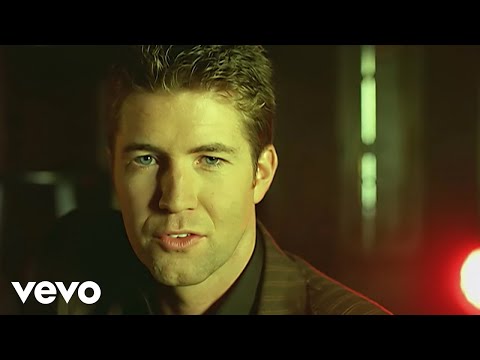




→ More from the 2010s File
View all 2010s hits →



Keep digging