The 2010s File Feature
We Back
We Back: Jason Aldean's Arena-Ready Return By the time Jason Aldean released "We Back" in September 2019 , the Georgia-born country superstar had spent nearl…
01 The Story
We Back: Jason Aldean's Arena-Ready Return
By the time Jason Aldean released "We Back" in September 2019, the Georgia-born country superstar had spent nearly two decades accumulating the kind of commercial muscle that most artists only dream about. The song arrived as the lead single from his ninth studio album, 9, and it functioned as both a career statement and a defiant announcement that he had no intention of stepping back from the top tier of mainstream country radio. The title was not metaphorical. After a year marked by tragedy and public controversy following the October 2017 Route 91 Harvest festival shooting in Las Vegas, Aldean had continued to tour and record, and "We Back" crystallized that determination into a two-minute burst of arena country bravado.
The track was produced by Michael Knox, Aldean's long-standing collaborator who had shaped much of the sound on his most commercially potent records. Knox's production favored a wall of electric guitars layered over a driving mid-tempo beat, leaning into the hard country and southern rock hybrid that had defined Aldean's most successful radio moments. The song was written by Kurt Allison, Tully Kennedy, John Morgan, and Michael Whitworth, a team that understood how to write for Aldean's vocal authority and for the high-wattage context of a stadium closing number. Every element, from the chugging guitar riff to the chant-ready chorus, was calibrated for maximum live impact.
On the Billboard charts, "We Back" performed with the reliability that had become Aldean's trademark. It entered the Billboard Hot Country Songs chart and climbed steadily, benefiting from a robust radio push and Aldean's formidable streaming base. The song also registered on the all-genre Billboard Hot 100, a crossover territory that few country acts could claim with the consistency Aldean had shown throughout the 2010s. His label, Broken Bow Records, coordinated a wide-release campaign timed to coincide with a fall touring cycle that kept the song visible in markets across the United States.
Critical reception was measured. Publications that cover country radio acknowledged the song's blunt efficiency and the way it played to Aldean's strengths, while more literary critics noted that its lyrical territory was well-trodden. But commercial country has rarely been evaluated primarily on lyrical novelty, and by the metrics that govern the format, the song was a success. It anchored the rollout for 9, which debuted at number one on the Billboard 200, Aldean's fourth consecutive number-one album, confirming that his audience remained exceptionally loyal and that the controversy of prior years had not eroded his commercial foundation.
Contextually, "We Back" arrived at a moment when country music's mainstream was under more scrutiny than usual. Questions about genre identity, the treatment of artists from minority backgrounds, and the politics embedded in country's dominant commercial lane were circulating more openly than they had in decades. Aldean had long occupied a position at the center of that conversation, partly because of his stylistic choices, which leaned harder rock than many of his contemporaries, and partly because of the personal narrative that had formed around him after Las Vegas. The song offered no direct engagement with any of those conversations. Instead, it doubled down on the persona his audience had already ratified, presenting a version of country masculinity built on resilience, loyalty, and the implicit promise of the loud, celebratory live show.
As a lead single, "We Back" did exactly what lead singles from major country acts are supposed to do. It reminded radio programmers, playlist curators, and casual listeners that Aldean was active, potent, and not moving toward the margins. The album 9 arrived in November 2019 and was supported by one of the most ambitious touring footprints in country music that year, with Aldean continuing his run as one of the top-grossing live acts in the format. "We Back" served as the sonic front door to all of that activity, a handshake between the artist and the audience confirming that the terms of their relationship remained unchanged.
The song's legacy is less about individual artistic risk than about institutional durability. Jason Aldean had built one of the most consistent commercial machines in the genre, and "We Back" was a reliable piece of that machine doing what it was built to do. In an era when country radio was shifting its gatekeeping patterns and streaming was beginning to reorganize how the format measured success, the song stood as evidence that the old routes, a strong lead single, heavy radio rotation, and a national tour, still worked for artists with Aldean's level of capital.
02 Song Meaning
Defiance as Brand: What "We Back" Communicates
"We Back" operates on a frequency of collective triumphalism that Jason Aldean had been fine-tuning for years before the song was released. The lyrical premise is simple and direct: the artist and his audience are announcing a return, whether from a difficult period, from any temporary absence, or simply from the slight against which country music's dominant commercial strain defines itself. The "we" in the title is doing important work. It is not merely inclusive grammar. It is a declaration of tribal belonging, a signal to a specific audience that their shared identity remains intact and that the artist standing at the center of that identity is still there, still loud, and still unapologetic.
Thematically, the song sits in a long tradition of country music's comeback and defiance narratives. Aldean's catalog had repeatedly returned to the idea of persistence in the face of pressure, and "We Back" sharpened that tendency into its most efficient form. There is very little ambiguity in the song's emotional register. It communicates pride, confidence, and a kind of chest-out territorial assertion that plays perfectly in the outdoor festival and arena context where Aldean was spending the bulk of his live career. The listener is invited not to interpret or question the sentiment but to participate in it.
The song also functions as a piece of identity politics in the broadest, most culturally nonpartisan sense. Country music at the end of the 2010s had been wrestling publicly with questions of who the format belonged to, who it spoke for, and whether its commercial gatekeeping structures were equitable. "We Back" is not a song that engages with those questions at the lyrical level. But its very posture, the unapologetic pride in a specific kind of rugged, hard-driving, southern-rock-inflected country, carries a subtext that Aldean's core audience reads clearly. The song affirms a version of country identity that is traditional, loud, and resistant to softening.
In the context of Aldean's personal narrative at the time of release, the song also carried a more intimate weight. He had performed onstage at the Route 91 Harvest festival in October 2017 when the mass shooting that killed 60 people and wounded hundreds more began. The trauma of that night, for Aldean and for the broader country music community, had been processed and re-processed in the years that followed. By the time "We Back" appeared, Aldean had continued performing, continued releasing music, and continued drawing audiences. The song did not directly address that history, but its defiant energy was, for many listeners, implicitly connected to the idea of continuing in the face of profound adversity.
The production choices reinforced the lyrical stance. The electric guitar tones, the arena-ready dynamics, and the chant-structured chorus all pointed toward a song designed to be experienced collectively in large physical spaces. This is music that works best when it is loud, when there are many people singing the chorus simultaneously, and when the shared experience of that noise confirms the communal identity the song is asserting. The meaning of "We Back" is partly sonic, built into the way the track sounds and feels when it fills a stadium rather than a listening room.
For Aldean's catalog specifically, the song reinforced a creative philosophy that had served him commercially even when critics found it limiting. He had never been an artist who prioritized lyrical complexity or sonic experimentation. His catalog was built on consistency, on delivering a particular experience reliably and at scale. "We Back" was one of the clearest expressions of that philosophy, a song that knew exactly what it was, who it was for, and what it needed to do. Those qualities, combined with the personal context surrounding its release, gave the track a resonance that went slightly beyond its literal subject matter.
→ More from Jason Aldean
View all Jason Aldean hits →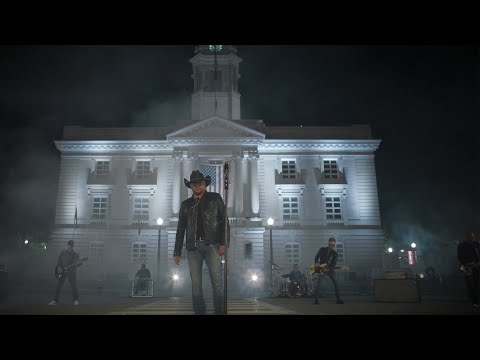


→ More from the 2010s File
View all 2010s hits →



Keep digging