The 2010s File Feature
Tattoos On This Town
Jason Aldean's "Tattoos On This Town": Small-Town Memory and Country's Mainstream Moment When Jason Aldean released "Tattoos On This Town" in the fall of 201…
01 The Story
Jason Aldean's "Tattoos On This Town": Small-Town Memory and Country's Mainstream Moment
When Jason Aldean released "Tattoos On This Town" in the fall of 2011, he was operating from one of the most commercially powerful positions in country music. His fourth studio album, My Kinda Party, released in October 2010, had become one of the best-selling country albums of its era, and the singles it produced demonstrated a consistent ability to connect with both country radio and the broader mainstream audience that was becoming increasingly important to the genre's commercial strategy. "Tattoos On This Town" appeared as a follow-up in that commercial environment, and its twenty-week run on the Billboard Hot 100 — peaking at number 38 — reflected both the strength of Aldean's existing fanbase and the broadening appeal of the sound he represented.
Aldean had built his career on a version of country music that drew heavily from Southern rock influences, incorporating the rhythmic weight and guitar textures of that tradition into arrangements that remained recognizable as country while pushing at the genre's established boundaries. His collaborators consistently included producers and co-writers who understood how to balance these competing influences, and the resulting records had a muscular, anthemic quality that distinguished them from the smoother mainstream country of the era.
"Tattoos On This Town" was written by Wendell Mobley and Neil Thrasher, a prolific songwriting team whose work with Aldean and other major country acts had established them as among the most reliable commercial craftsmen in Nashville. The song's central metaphor — the idea that meaningful experiences leave permanent marks on the places where they occurred, just as tattoos leave permanent marks on skin — was both accessible and genuinely evocative. It captured something real about the relationship between memory and place that gave the lyric more durability than a simple nostalgia anthem would have possessed.
The song's perspective is that of someone looking back on their hometown from a position of comfortable retrospect, not with the bitterness of someone who needed to escape but with the affection of someone who recognizes how formative those early experiences were. This was a well-established country music tradition , the small-town-as-origin-point narrative , but Mobley and Thrasher found a fresh angle through the tattoo metaphor, which brought both the permanence and the personal ownership of those memories into clearer focus.
The single entered the Billboard Hot 100 on October 8, 2011, debuting at number 81. Over the following weeks it climbed through positions 66, 60, 53, and 51, continuing a gradual ascent that reflected the methodical way that country singles could build airplay accumulation into Hot 100 performance. It reached its peak of number 38 on December 17, 2011, in a chart run that extended to twenty weeks. This extended presence reflected not just initial enthusiasm but sustained radio support, which was the primary driver of country music's crossover chart performance in the early 2010s.
The context of 2011 country music was one of significant commercial energy. The genre was experiencing a period of mainstream visibility that had brought several country acts into genuine crossover territory. Aldean occupied a central position in this moment, his catalog consistently performing at the upper levels of the country charts while making meaningful inroads on the Hot 100. "Tattoos On This Town" participated in this broader pattern, demonstrating that country content framed within a sonically contemporary production could find an audience beyond the genre's traditional demographic.
Aldean's vocal performance on the track was characteristic of his approach: grounded, straightforward, and emotionally direct without resorting to theatrical excess. He had built his career on a vocal quality that suggested authenticity rather than performance, which suited material concerned with genuine memory and genuine place. The production surrounding his vocal was carefully calibrated to reinforce that impression, with guitar textures and rhythmic choices that positioned the song firmly in the Southern-inflected country rock territory he had made his own.
The song's chart performance also illustrated how country music's relationship with the Billboard Hot 100 had evolved. Earlier eras had seen country acts struggle for crossover recognition even when their domestic charts performance was exceptional. By 2011, the mechanisms of digital download tracking and radio airplay aggregation had created a more level playing field, allowing country acts with broad radio support to register meaningfully on the Hot 100 rather than existing in a parallel commercial universe.
02 Song Meaning
The Meaning of "Tattoos On This Town": Memory, Place, and Permanence
"Tattoos On This Town" by Jason Aldean constructs its emotional argument around a central metaphor that is more carefully chosen than it might first appear. The comparison between meaningful experiences and tattoos does specific and useful work: it insists on the permanence of what has been felt and lived, while also acknowledging that permanence does not require ongoing visibility to be real. A tattoo is always there, whether seen or not. The mark persists beneath the surface of ordinary daily life, present as a fact even when attention is directed elsewhere.
The song's narrator is recalling a small town and the formative experiences that took place there. The framing is retrospective: the narrator has moved beyond that world, at least in temporal terms, but the experiences themselves have not released their hold. The town has been marked by what happened in it, and the narrator has been marked in return. This reciprocal marking is the song's central insight: that place and person shape each other, that the relationship between where one grows up and who one becomes is not merely circumstantial but constitutive.
This is familiar territory for country music, which has long made the small town a primary setting for its emotional narratives. The genre has explored small towns as sites of escape, as sources of nostalgia, as measures of authenticity, and as symbolic counterweights to urban modernity. "Tattoos On This Town" inhabited the nostalgic register of this tradition but introduced the tattoo metaphor as a way of making the nostalgic impulse more specific and more physically grounded. Rather than simply remembering fondly, the narrator is describing something that has been inscribed, that exists as a permanent feature of his identity rather than merely a pleasant recollection.
The song's emotional tone was one of grateful retrospection rather than regret. The narrator does not mourn what has been left behind or wish to return; he simply acknowledges the formative weight of what occurred and recognizes that those marks are part of who he is. This is a psychologically mature position, one that accepts the past as the foundation of the present without either sentimentalizing it or dismissing it. Wendell Mobley and Neil Thrasher, who wrote the song, found a way to express that maturity without making it sound like wisdom literature — the feeling remained accessible and personal rather than instructional.
The specific experiences referenced within the song include the kinds of adolescent milestones that recur throughout the country catalog: first loves, nights out with friends, the particular freedom of youth before adult responsibilities arrive. These specifics are conventional, but they function conventionally precisely because they are genuinely universal. The metaphor of permanent marking elevated these conventional materials into something more resonant, suggesting that even the most ordinary experiences of growing up leave their trace in ways that cannot be fully erased.
Aldean's vocal delivery served the song's meaning by maintaining an emotional directness that resisted sentimentality. His approach throughout his career had been to communicate feeling without ostentatious display of emotion, and "Tattoos On This Town" suited that approach well. The narrator's attachment to his past is evident and genuine, but he does not perform grief or excess. He describes his condition with the straightforwardness of someone who has made peace with his history, who values it without being imprisoned by it.
The broader cultural resonance of the song touched on questions about identity formation and geographic rootedness that have preoccupied American popular culture across multiple generations. The question of where one is from, and what that origin means for who one becomes, has animated a great deal of American storytelling, from regional literature to Hollywood film to country music. "Tattoos On This Town" contributed to that tradition in compact and accessible form, making its argument with the directness that commercial songwriting requires while finding genuine emotional truth within those constraints.
→ More from Jason Aldean
View all Jason Aldean hits →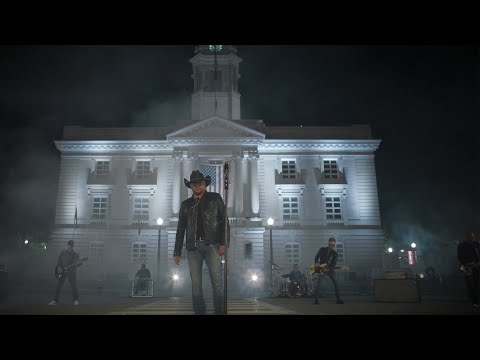




→ More from the 2010s File
View all 2010s hits →




Keep digging